
Choosing a 90° Long Radius Elbow manufacturer in China involves more than comparing prices. The fitting must turn flow smoothly while matching the pipe’s dimensions, material, and connection requirements. In practice, small details matter: a clean bevel, consistent wall thickness, and clear material traceability.
ASME B16.9 sets dimensional and tolerance requirements for factory-made wrought buttwelding fittings. It offers buyers a useful reference when reviewing drawings and inspection documents. The World Steel Association reported 1,882.6 million tonnes of global crude steel production in 2024. That figure describes the wider materials supply chain; it does not measure elbow production or demand. A useful distinction.
A polished product page is not proof of consistent quality. Ask for material test certificates, dimensional inspection records, and evidence that the supplied fitting matches the agreed specification. Check how the manufacturer handles production changes and nonconforming items, too. Those answers can reveal more than a low quotation.
This introduction does not include a named expert quotation because no verifiable, attributable quote was provided. Inventing one would weaken the trust buyers need when assessing suppliers. The guide that follows compares manufacturers through practical criteria: product range, documented quality controls, customization capability, and communication. The best choice is not automatically the largest factory. It is the supplier whose evidence fits your project.
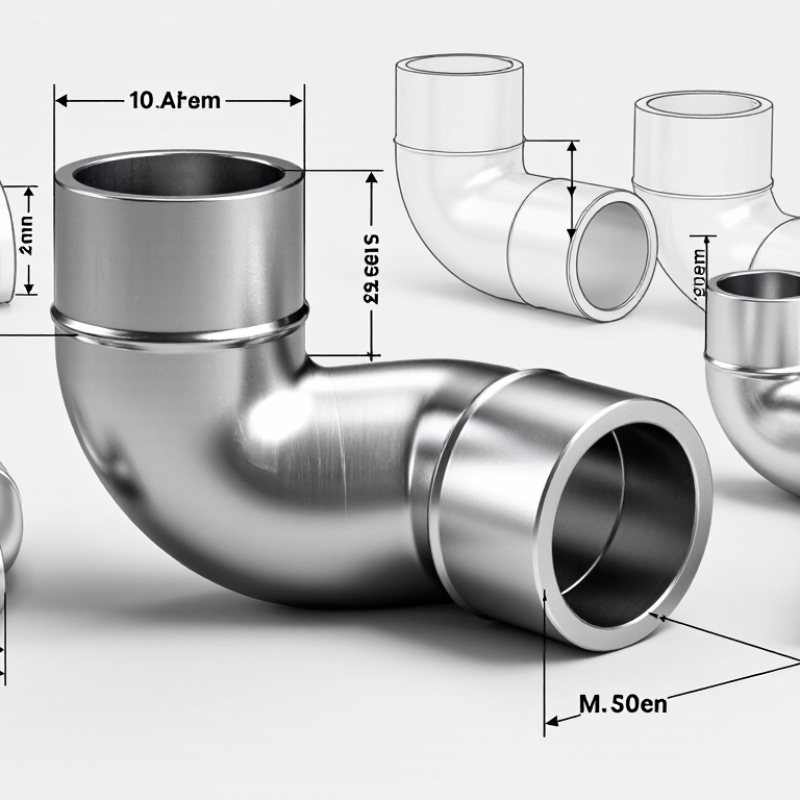
For a 90° long radius elbow, “1.5D” describes the bend radius measured along the pipe centerline. It means the centerline radius is 1.5 times the pipe’s nominal size, not 1.5 times its outside diameter. This distinction matters. For example, a nominal 6-inch elbow has a nominal centerline radius of 9 inches. The actual outside diameter is different, so using it in the calculation gives the wrong result.
The centerline radius runs from the elbow’s center of curvature to the midpoint of its bore. On a standard 90° elbow, this radius also corresponds to the center-to-end dimension shown on many dimensional tables. Check the applicable product standard and drawing, since dimensions and tolerances can vary by size and specification. Measure from the tangent end, not the outer curve. A tape measure on the outside arc can mislead.
For procurement, confirm whether dimensions are listed in NPS, DN, or millimeters, and verify wall thickness separately. Radius alone does not confirm fit or flow performance. Manufacturing checks may also include end-to-center dimensions, ovality, and wall thinning at the bend. These details are easy to overlook. A clear drawing helps, though ambiguous notation still deserves a question before production.
ASME B16.9 and ASTM A234 cover different parts of a carbon-steel elbow specification. ASME B16.9 defines dimensions, tolerances, marking, and other requirements for factory-made wrought butt-welding fittings. ASTM A234/A234M specifies materials and manufacturing requirements for wrought carbon- and alloy-steel fittings used in moderate- and high-temperature service. WPB is a common carbon-steel grade.
For a 90-degree long-radius elbow, the centerline radius is typically 1.5 times the nominal pipe size. An NPS 6 elbow, for example, has a 9-inch centerline radius. Check the fitting’s schedule and wall thickness against the connected pipe; a dimensional match alone does not guarantee a suitable fit. Small mismatch, big trouble.
Standards matter, but they do not replace careful receiving inspection. Compare markings and material test reports with the purchase specification, then check dimensions, bevel condition, and visible surface defects. A tidy certificate can still leave questions if heat numbers are unclear or the bevel is rough. Confirm the applicable standard editions and any project-specific requirements before ordering, since details can vary by specification.
A 90° Long-Radius Elbow looks simple on a piping drawing, but its manufacturing route affects the finished component. Seamless elbows usually start as a hollow billet or pipe, then take shape through hot forming over a mandrel or other tooling. The process avoids a longitudinal weld seam. Wall thickness still needs attention. Forming can leave thinner areas around the outside curve, so dimensional checks matter.
Welded elbows are made from formed plate or pipe sections joined at a seam. They can suit larger sizes, but buyers should ask how welds are inspected and how the seam is positioned. Hot bending takes a straight pipe and bends it with controlled heat, often induction heating. The bend radius and temperature need close control. Too much heat can affect the material; uneven heating may distort the cross-section. Not every supplier explains these limits clearly.
For a sourcing comparison, request the manufacturing route, material test records, dimensional results, and applicable weld or bend inspection reports. Check the elbow’s radius, end preparation, ovality, and wall thickness against the project specification. A polished surface is not proof of sound construction. I would also compare sample records with the actual delivery; paperwork can look complete while leaving practical questions unanswered. No route is automatically best. The right choice depends on size, material, service conditions, and the evidence available.
The manufacturing route changes how an elbow is formed; the long-radius geometry is defined by its dimensions.
For a standard long-radius elbow, the centerline radius is commonly 1.5 × nominal pipe size (D). For a 90° bend, the centerline arc length is π/2 × radius, or approximately 2.36D. Seamless, welded, and hot-bending methods can produce this geometry, subject to the applicable product standard and specifications.
For a 90° long-radius elbow, quality checks should connect the drawing, material record, and inspection plan. ASME B16.9 tabulates fitting dimensions; for a 6-inch elbow, the standard center-to-end dimension is 9 inches, or 228.6 millimeters. Measure both ends and the center-to-end distance, then compare them with the specified size and tolerance. Check ovality, wall thickness, and bevel condition too. Small gaps matter. A dimension sheet without the actual fitting’s identification is weak evidence.
For pressure-service fittings, ASTM A234/A234M covers wrought carbon and alloy steel grades, including requirements tied to material properties. A certificate should identify the grade and heat number, with chemistry and mechanical-test results traceable to the fitting. EN 10204 Type 3.1 certificates are one common document format; verify that the heat number matches the marking and purchase records. Then define NDT by method, coverage, and acceptance criteria. ISO 9712 addresses personnel qualification for several NDT methods, but does not decide how much of each elbow must be examined. That scope belongs in the purchase specification. One awkward truth: more testing is not automatically better if the procedure or acceptance criteria are unclear.
When comparing Chinese manufacturers of 90° long radius elbows, define the required material, size, wall thickness, and governing standard before requesting quotations. A long radius commonly means a centerline radius of 1.5 times the nominal pipe size, but confirm the drawing and project specification. Ask whether the elbows are seamless or welded, and how dimensions and surface condition are checked.
Paper trails matter. Request a sample material test certificate and confirm that its heat number matches the product marking and packing list. For critical service, ask how the supplier manages inspection records, nonconformance reports, and any required third-party checks. A document alone is not proof; verify that the traceability process can be followed from raw material to finished elbow.
Capacity is more than floor space. Ask for realistic monthly output, current lead times, and evidence of equipment suited to your sizes and wall thicknesses. Export readiness also deserves specific questions: can the supplier provide agreed certificates, accurate commercial documents, suitable export packing, and shipment records? Requirements vary by destination and contract, so confirm them in writing. Factory visits help, but they do not reveal everything. This comparison is not perfect. A clear sample order and documented inspection plan can expose gaps before a larger commitment.
Use this evidence-based checklist to compare suppliers. It does not rank or make unverified claims about individual manufacturers.
| Comparison Dimension | Supplier Information to Request | How to Verify | Comparison Signal |
|---|---|---|---|
| Product and dimensional standard | Applicable standard and edition; nominal size range; schedule or wall thickness; material grade; end preparation; dimensional tolerances. | Check the quotation and drawings against the purchase specification. ASME B16.9 covers factory-made wrought buttwelding fittings; confirm that the specified fitting and dimensions fall within the applicable scope. | Clear, consistent standard and edition; deviations stated before order acceptance. |
| 90° long-radius geometry | Center-to-end dimensions, nominal size, angle, wall thickness, and drawing for each requested size. | Compare the drawing and inspection records with the governing dimensional standard and the buyer’s specification. Long-radius elbows conventionally use a centerline radius of 1.5 times the nominal pipe size; verify the required standard dimensions for each size. | Documented dimensions and inspection method; no reliance on a generic “1.5D” description alone. |
| Material identification | Material specification and grade, such as ASTM A234 WPB for specified carbon-steel fittings or ASTM A403 grades for specified stainless-steel fittings; manufacturing route and heat treatment where applicable. | Confirm that the material standard and grade match the order. Review the material test certificate and ensure its heat number corresponds to the product marking and traceability records. | Certificates and markings agree on specification, grade, heat number, and product identification. |
| Traceability and inspection records | Sample heat-traceability procedure; material test certificates; dimensional and visual inspection records; nonconformance and corrective-action process. | Ask for a redacted sample record set and trace one sample fitting from its marking back to the heat certificate and inspection documentation. Agree on any required inspection or release documentation before production. | Records are legible, internally consistent, and linked to the delivered items. |
| Production capacity and lead time | Current capacity for the requested sizes and materials; available production slots; quoted lead time; peak-period constraints; subcontracted processes, if any. | Request capacity by product range rather than a single total figure. Compare the proposed schedule with the order quantity, inspection plan, and shipping date; ask how schedule changes are communicated. | Capacity and dates are specific to the order and supported by a realistic production plan. |
| Quality management and process control | Quality-management-system certificate, issuing body and validity; inspection plan; calibration controls; handling of defects and customer complaints. | Verify certificate scope and validity with the issuing body where possible. Confirm that the listed site and processes are relevant to the products being quoted; do not treat certification alone as proof of product conformity. | Current, relevant documentation and a defined inspection and corrective-action process. |
| Export documentation | Commercial invoice, packing list, transport document, certificate of origin when required, and product certificates or inspection documents specified by the buyer. | Confirm document names, responsible issuer, consignee details, and timing before shipment. Check destination-country and transaction requirements with the importer, customs broker, or relevant authority. | Supplier can prepare the agreed document set accurately and on the required schedule. |
| Customs classification and trade compliance | Proposed product description and HS classification; country of origin information; requested sanctions, restricted-party, or other compliance declarations. | Have the importer or customs broker confirm the classification and destination-specific requirements. HS codes and import rules can vary by product details and jurisdiction; do not accept a code without checking its applicability. | Product description, origin information, and customs documents are consistent and reviewable. |
| Packaging and shipment readiness | Packaging method; protection of bevels and machined surfaces; item labels; packing dimensions and weights; loading and dispatch plan. | Specify packaging and marking requirements in the purchase order. Review packing photos or inspection records before dispatch when required, and confirm that package data match shipping documents. | Packaging protects the product and labels can be matched to the order and shipping paperwork. |
| Commercial terms and after-sales response | Quotation validity; currency; delivery term and named place; payment schedule; warranty terms; claims procedure; response contacts. | Ensure the quotation, purchase order, and contract use consistent specifications and delivery terms. Define the evidence and time limits required for claims before placing the order. | Terms are complete, consistent, and clear about responsibilities and remedies. |
Suggested comparison status for each item: Verified, Partially Verified, or Not Evidenced. Confirm project-specific requirements with the applicable standard, purchaser, and destination-country authorities.
Copyright © 2025 · All Rights Reserved · Franchino Mold & Engineering