What is an Air Conditioning Controller and How Does It Work?
In today's climate, maintaining comfort indoors is essential. An efficient Air Conditioning Controller is a vital component for achieving this. According to industry expert Dr. Emily Thompson, “A well-designed controller can greatly enhance the performance and efficiency of any air conditioning system.” These devices help regulate temperatures and improve energy consumption, making them crucial in both residential and commercial settings.
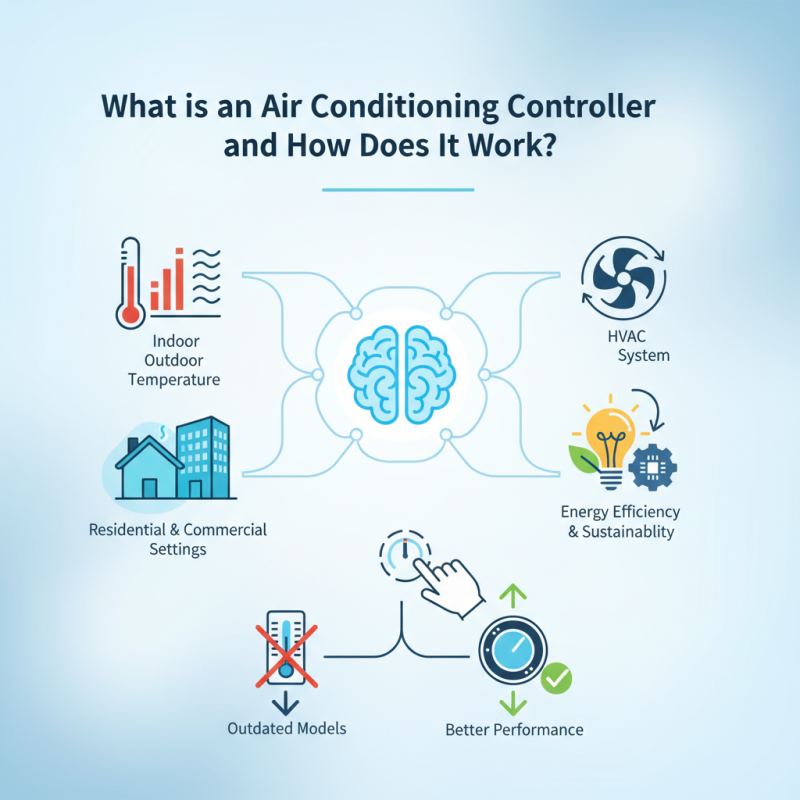
An Air Conditioning Controller functions by using sensors to monitor indoor and outdoor temperatures. It communicates with the HVAC system to maintain a desired temperature. This interaction is key for balancing comfort and energy efficiency. However, it’s essential to understand that not all controllers offer the same level of functionality. Some may lack user-friendly features, leading to frustrations.
As technology evolves, the capabilities of Air Conditioning Controllers are expanding. Yet, many systems still rely on outdated models that may not maximize efficiency. Users should be aware of their options and not accept mediocrity. A proactive approach can reveal paths to better performance and lower energy bills. Exploring these controllers means investing in comfort and sustainability.
What is an Air Conditioning Controller?
An air conditioning controller is a pivotal component in managing indoor climate conditions. This device regulates the temperature and humidity levels within a space, ensuring comfort. It communicates with the air conditioning unit to make adjustments based on user settings and environmental changes. Through sensors, it efficiently monitors conditions and responds in real-time.
Many controllers are programmable, allowing users to set schedules. For instance, your system can cool down before you arrive home. Some models offer smart technology features, connecting to Wi-Fi for remote access via mobile apps. This can enhance convenience but may introduce complexity. Users might face challenges in navigating apps or settings, leading to potential errors in operation.
While air conditioning controllers are designed for ease of use, they require understanding. Misinterpretation of features can lead to inefficient use. Moreover, over-reliance on automation may cause issues if systems fail or settings are incorrect. It's vital to be aware of these factors to optimize performance and maintain a comfortable environment.
What is an Air Conditioning Controller and How Does It Work?
| Feature | Description | Functionality |
| Temperature Control | Maintains the desired temperature set by the user. | Uses thermostats to regulate cooling/heating. |
| User Interface | Allows users to set temperature and modes. | Touchscreen or physical buttons for controls. |
| Energy Efficiency | Optimizes energy usage for cost savings. | Adjusts compressor speed and fan operation. |
| Remote Control | Allows operation from a distance via mobile app. | Wi-Fi enabled for smart home integration. |
| Timers | Ability to set schedules for operation. | Automates on/off times for convenience. |
| Air Quality Sensors | Monitors indoor air quality. | Triggers ventilation or filtration as needed. |
Components of an Air Conditioning Controller
Air conditioning controllers are pivotal for maintaining optimal indoor climates. They consist of several key components that work together to regulate temperature and humidity effectively. At the core is the thermostat, which monitors the ambient temperature. Many newer models use programmable or smart thermostats. According to a 2022 report by the International Energy Agency, smart thermostats can lead to energy savings of up to 10-15%.
Another essential component is the control board. This acts as the brain of the air conditioning system, processing signals from the thermostat. It manages the operation of the compressor, fan, and other critical parts. Quality control boards can significantly enhance system reliability and efficiency, but they can also fail unexpectedly, leading to costly repairs.
Sensors are equally important. They detect temperature, humidity, and even air quality. These inputs allow the controller to make real-time adjustments. However, faulty sensors can provide incorrect data. This may lead to discomfort or increased energy costs. Regular maintenance is necessary to ensure all components function properly. Reports suggest systems that undergo regular check-ups perform significantly better and last longer.
How Air Conditioning Controllers Regulate Temperature
Air conditioning controllers play a crucial role in maintaining indoor comfort. They use sensors to measure the temperature and humidity inside a space. When the temperature strays from the set point, the controller activates the cooling system. This interaction helps keep your environment pleasant.
The regulation process is not always flawless. Sometimes, sensors can malfunction or become dirty, leading to inaccurate readings. This can cause discomfort, as the air conditioning may not respond correctly. Regular maintenance is essential for optimal performance. Checking sensors and cleaning air filters ensures effective operation.
Moreover, these controllers can adapt to user preferences. They learn from past settings to create a comfortable atmosphere. However, there can be limitations. Not all controllers accommodate diverse needs perfectly. Users might find themselves adjusting settings frequently. This highlights the importance of user understanding in achieving the best air conditioning experience.
Different Types of Air Conditioning Controllers
Different types of air conditioning controllers can significantly influence how efficiently cooling systems operate. Basic models include manual controls and programmable thermostats. Manual controls allow users to set temperatures manually. However, this can lead to energy wastage if left unattended.
Programmable thermostats enhance efficiency. According to the U.S. Department of Energy, they can save up to 10% on energy bills. These devices adjust temperatures automatically based on users' routines. Smart thermostats take this further by learning individual preferences. They can be accessed remotely and adjusted through smartphone apps.
Tips: When selecting a controller, consider user-friendliness. Complex interfaces can lead to frustration and improper use.
In addition, advanced controllers use sensor technology. They detect occupancy and outdoor conditions. However, not all systems are foolproof. Users sometimes overlook updates or fail to fine-tune settings for seasonal changes. Monitoring these factors can maximize performance and reduce energy costs.
Overall, understanding the type and function of an air conditioning controller is crucial. Small adjustments can yield significant benefits.
Benefits of Using an Air Conditioning Controller
Air conditioning controllers have become essential in managing indoor climates efficiently. They offer numerous benefits that enhance comfort and reduce energy costs. By allowing users to set specific temperatures, these controllers help maintain a stable environment. This stability is crucial for both residential and commercial spaces.
One significant advantage of an air conditioning controller is energy efficiency. When programmed correctly, these devices can adjust cooling based on occupancy. For example, if no one is home, the system can operate at a higher temperature. This helps conserve energy without sacrificing comfort when people return. Additionally, some smart controllers can learn preferences over time, further optimizing performance.
Another benefit is the improved user experience. Simple interfaces and remote access via mobile devices allow users to control their systems easily. However, it is essential to recognize that over-reliance on technology can lead to delays in adjustments. Users may forget to program their settings or may not react promptly to changing conditions. Balancing technology with attentive management is key to fully leveraging the advantages of air conditioning controllers.
Benefits of Using an Air Conditioning Controller
