
Tools rarely disappear all at once. More often, a drill sits in the wrong van, a torque wrench misses inspection, or a crew loses ten minutes searching. Rfid Tool Tracking can make equipment movements easier to see by pairing tagged tools with readers and inventory software. Yet a dashboard is only useful when its records match the worksite.
The best system for one business may frustrate another. A maintenance shop with fixed storage has different needs from contractors moving cases between vehicles and job sites. This guide compares seven systems on tag durability, read range, mobile access, reporting, setup effort, and fit with existing asset processes. Small details matter. Metal surfaces can affect tag performance, while dense storage may cause missed or overlapping reads. Ask vendors for demonstrations using tools like yours, not just polished sample data.
We also consider implementation and ongoing costs, including tags, readers, software, support, and staff training. No product removes the need for sensible check-in habits. That is worth saying plainly. Before choosing, confirm how the system handles offline work, user permissions, audit trails, and data export. Request references from organizations with similar fleets, and test a small group of tagged tools before a wider rollout. Some findings may feel unglamorous. That is often where reliable tracking begins.
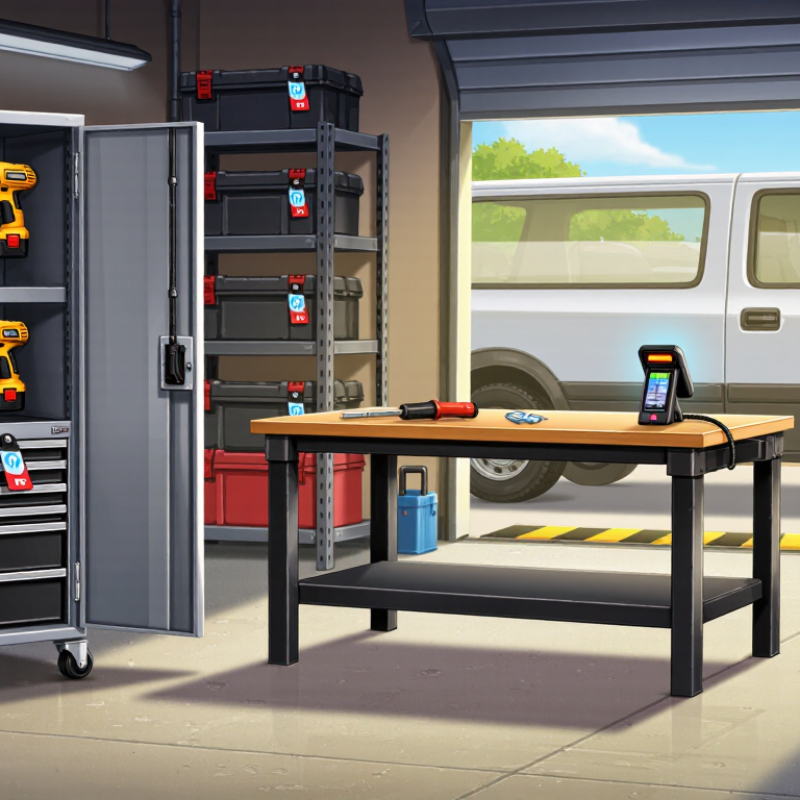
RFID tool tracking systems can connect daily tool movement with broader business operations. When tagged tools arrive at a receiving area, staff can record them quickly instead of typing every serial number. A reader near a storage cage can log checkouts and returns, helping supervisors see which crew has a drill, meter, or torque wrench. Small details matter. A missed return can delay a job.
Across departments, the system can support inventory checks, job allocation, maintenance planning, and purchasing decisions. Usage records may show that certain tools sit idle while others are repeatedly shared. That can help managers redistribute equipment before buying more. Maintenance teams can also link inspection dates and service notes to individual assets, rather than relying on a paper sheet that gets misplaced. The records still need review. RFID data can be incomplete when tags are damaged, readers are poorly positioned, or several tools move together.
For operations managers, useful reporting is less about watching every item and more about spotting patterns: recurring shortages, long repair times, or tools that move between sites without clear ownership. A practical rollout starts with a small set of high-use assets and tests read accuracy in real working conditions. Warehouses are tidy on paper. Job sites aren’t. Teams may also need clear rules for tagging, checking exceptions, and correcting records, or the system can preserve mistakes as confidently as facts.
Representative operating frequencies for common RFID bands. UHF frequencies vary by region; 915 MHz is a representative U.S. value.
RFID tool-tracking systems can record check-in and check-out, tool crib inventory, returns, and movement through monitored checkpoints. Frequency helps determine read characteristics, but actual performance also depends on tags, readers, the environment, and system setup.
GS1 EPC Gen2 UHF RFID operates across the 860–960 MHz range, although available channels vary by region. A reader sends a radio signal, and a compatible tag returns its identifier through backscatter. That identifier can connect a tool to its maintenance record, assigned crew, or checkout history. Fast scans help. Workers can capture several tagged items without aiming a barcode scanner at each label. The system identifies tags, not tool condition, so inspection records still matter.
Metal surfaces can interfere with radio signals, and tool shape or tag placement can affect read reliability. Not every scan succeeds. Test tags on actual wrenches, drills, and cases before choosing a mounting position. At a crowded cabinet, nearby tagged tools may respond together, so read zones and reader settings need careful testing. A tidy bench test can mislead. An honest pilot should include busy work areas, closed drawers, and routine handling. Regional frequency requirements also differ, so use equipment configured for the installation location.
The seven RFID tool-tracking systems should be compared by what they can reliably prove: which tool moved, where it was last detected, and when. Test read accuracy around metal cabinets, crowded workbenches, and busy doorways—not only in an empty demo room. Measure missed reads, duplicate records, update delay, and battery life during a normal shift. Small gaps matter. A missing drill recorded in the wrong storage bay still wastes time.
Score each system on tag options, fixed and handheld readers, location detail, alerts, and integration with existing maintenance or inventory software. Also compare setup effort, support, offline operation, and total cost over several years. The Materials Handling Institute’s 2024 Annual Industry Report found that 88% of surveyed supply-chain leaders expected technology investment to increase over the following five years. That signals growing interest, not proof that RFID alone improves performance. Ask vendors to run the same on-site test with the same tools and layout. Track results before and after deployment. Some results may be messy; record exceptions rather than smoothing them away. A practical scorecard beats an impressive feature list.
| System Type | Typical RFID Setup | Tracking Strength | Automation Potential | Connectivity and Integration | Best-Fit Use Case | Main Trade-Off | Relative Fit for Tool Tracking |
|---|---|---|---|---|---|---|---|
| 1. Fixed-Portal Check-In/Check-Out | UHF RFID reader and antennas installed at a tool-room doorway or issue counter; tools carry passive UHF tags. | Records tagged tools passing through a defined exit or entry point. Read performance depends on tag placement, orientation, nearby metal, and portal setup. | High at controlled exits | Can send event records to inventory or maintenance software through a local network or system integration. | Central tool rooms where tools are issued and returned through a small number of controlled routes. | Less effective when tools bypass the portal or several tagged items pass close together without a well-tuned read zone. | High |
| 2. RFID Tool-Cabinet System | RFID antenna or reader built into a cabinet, drawer, or storage compartment; access may be controlled by a badge or login. | Associates tool removal and return with a storage location and, when configured, a user or transaction. | High for managed storage | May connect access events and tool records with inventory, identity, or work-order systems. | High-value tools, shared workshops, and facilities that need accountable access to stored equipment. | Requires tools to be stored in the instrumented cabinet; metal cabinets and closely packed tools need careful read-zone design. | High |
| 3. RFID Tool Crib and Inventory System | Handheld or desktop RFID readers used at a staffed issue counter, with tags attached to tools and storage locations. | Supports tool identification, stock counts, and issue/return transactions at the crib. | Medium to high | Often supports data exchange with inventory, purchasing, maintenance, or job-management records. | Organizations with a staffed tool crib and established sign-out procedures. | Transaction quality depends on staff following the process; it does not automatically locate tools outside read areas. | High |
| 4. Handheld RFID Audit System | Portable RFID reader used to scan tagged tools in storage areas, vehicles, work zones, or job sites. | Provides periodic inventory visibility within the reader’s effective range; results are strongest when areas are scanned systematically. | Medium | Audit results can be uploaded to inventory or asset records, depending on the application and network availability. | Periodic audits, mobile teams, and sites where fixed readers are impractical. | Visibility is periodic rather than continuous, and scan coverage depends on the operator and the environment. | Medium to high |
| 5. Mobile Tool-Kit or Case Tracking System | RFID tags applied to individual tools or cases; readers are used at dispatch points, vehicles, or designated check areas. | Can verify which tagged items are associated with a kit or shipment at configured checkpoints. | Medium to high at checkpoints | Can link kit contents and movement events to job, vehicle, or dispatch records when those integrations are available. | Field-service teams, contractors, and businesses that move tool kits between depots and job sites. | Checkpoint reads show movement events, not precise location between checkpoints; individual tagging adds setup work. | Medium to high |
| 6. Fixed-Zone Workshop Tracking System | Multiple fixed readers or antennas placed at selected workshop zones, storage areas, or work-cell entrances. | Can provide zone-level movement or presence events where coverage has been designed and tested. | High within covered zones | May feed event data to dashboards or asset-management systems; integration depends on the deployment. | Large workshops that need more frequent visibility across several defined areas. | More infrastructure and tuning are usually needed than for a handheld-only system; zone detection is not the same as exact positioning. | Medium to high |
| 7. Hybrid RFID and Tool-Management System | Combines RFID tags and readers with inventory records, user transactions, and, where useful, barcode or maintenance workflows. | Balances automated checkpoint reads with manual verification and broader tool-history records. | High when workflows are configured | Designed to connect tool events with inventory, maintenance, identity, or job records; actual integration scope varies. | Businesses managing tools across multiple departments, locations, or operational processes. | Requires thoughtful configuration, data ownership, and workflow maintenance; broader scope can increase implementation effort. | High for multi-site needs |
Evaluation note: These are system categories, not named commercial products or vendor rankings. Relative-fit ratings are qualitative comparisons, not measured product scores. RFID read performance varies with tag type and placement, reader configuration, tool material, nearby metal or liquids, and the physical environment. Validate the intended workflow with a site test before selecting a system.
RFID tool tracking works best when matched to how tools move. Handheld readers suit small workshops and crews that scan kits at shift changes. Fixed portal readers record tagged tools passing through a store-room doorway. RFID cabinets fit shared, high-value equipment: each worker checks tools in or out at the cabinet. They add control, but require installation and user training.
For large maintenance bays, mobile readers on carts let staff scan shelves without moving every item. Passive tags are a lower-cost choice for tracking many tools at close range; active tags can support longer-range location updates for critical assets. A hybrid system combines RFID with barcodes or maintenance software, helping multi-site teams connect tool records with work orders. It also takes more setup. MHI’s 2024 Annual Industry Report found that 55% of respondents planned to increase investment in supply-chain innovation and technology, reflecting wider interest in operational visibility.
The seventh option is a fixed reader network across several zones, useful where tools move frequently between stores, benches, and service vehicles. Metal surfaces can interfere with reads, so test tags on actual tool shapes before buying at scale. No system is flawless. A dashboard may show a tool in a cabinet when it was simply missed during a scan. Pilot one work area, compare records with physical counts, and refine the process before expanding.
Plan deployment around how tools move, not just where they sit. Map storage rooms, service carts, and checkout points, then tag a small tool group first. Record a baseline: count accuracy, time spent searching, missed returns, and replacement costs. Auburn University’s RFID Lab has reported inventory accuracy improving from roughly 60% to 95% in RFID-enabled retail settings. Treat that as a benchmark, not a promise; tool sizes, metal surfaces, and reader placement can change results.
Tips: Test tags on actual tools. Metal can interfere with reads. Walk each reader zone with a loaded cart, and note missed scans. Keep a manual check during the pilot. It may feel repetitive, but it can expose gaps before a full rollout.
Measure accuracy with scheduled physical counts against system records. Track both the percentage of correct locations and the number of unrecorded tools. For ROI, compare annual savings in labor, replacement purchases, and downtime with tags, readers, software, and training costs. Use the same measurement period before and after deployment. A quick payback estimate can look convincing while ignoring maintenance and staff time. Review those costs quarterly, and adjust reader coverage or work steps when the data shows persistent blind spots.
Copyright © 2025 · All Rights Reserved · Franchino Mold & Engineering