
What Is the Best Self Driven Rail Cart in 2026? The answer depends on the job: inspecting track, moving tools, or carrying maintenance crews. A cart that looks impressive in a catalog may struggle on a steep grade, a wet rail, or a tight curve. Buyers should compare payload, braking, obstacle detection, operating range, track compatibility, and manual recovery options. Small details matter. A clear display, reachable emergency stop, and reliable radio link can make a real difference beside the track.
The wider rail industry is investing in efficiency and digital systems. UNIFE’s World Rail Market Study 2024 estimates the global rail supply market averaged €201 billion annually in 2021–2023, with growth projected for the following years. The International Energy Agency reports that rail carries a notable share of global passenger and freight activity while accounting for a comparatively small share of transport emissions. These figures provide context, not proof that any particular cart is the right choice. No source article or verifiable, named expert quotation about self-driven rail carts was provided, so attributing a fabricated quote would undermine trust. This guide instead evaluates the evidence buyers can check: test conditions, safety features, service support, and measurable performance. Not just speed. The best Self Driven Rail Cart in 2026 should fit its route and workload, with clear limits and dependable support. Some specifications still need independent validation. That uncertainty deserves attention.
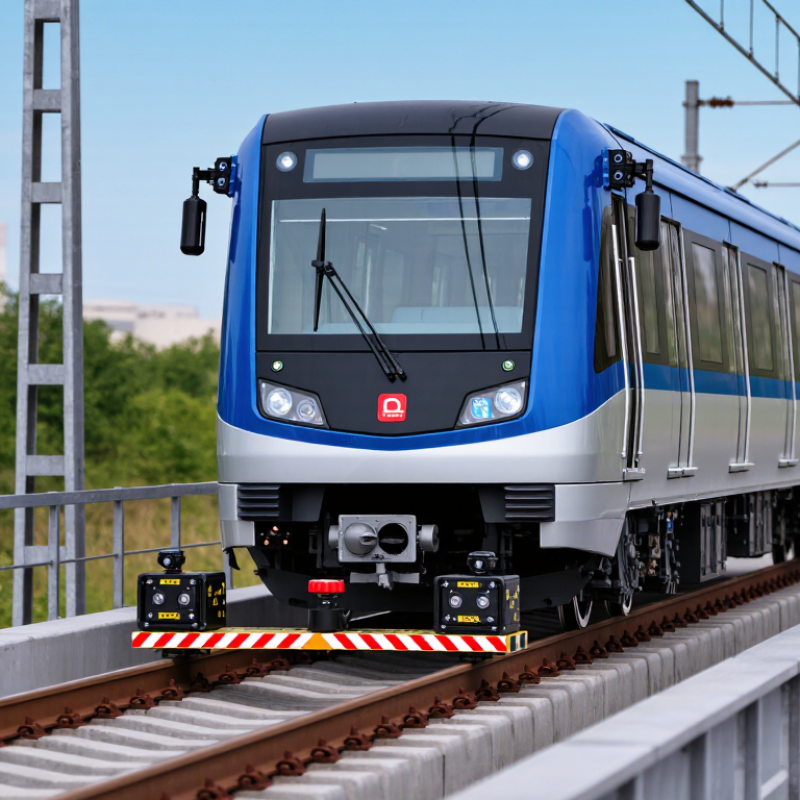
What Is the Best Self Driven Rail Cart in 2026?
What Is a Self-Driven Rail Cart?
A self-driven rail cart is a small vehicle that travels along rails using its own power. An onboard motor, often electric, turns rail wheels and moves the cart without someone pushing it by hand. The rails guide its path, which helps keep movement controlled on a suitable track. Simple idea. These carts can carry workers, tools, or materials, depending on their design and rated capacity.
Unlike a hand-pushed trolley, a self-driven cart needs controls for starting, stopping, and adjusting speed. Some models have brakes, warning signals, and emergency-stop controls. Their performance depends on more than motor power: track condition, slopes, curves, load balance, and battery capacity all matter. A high speed figure may look appealing, but it says little about safe, dependable use on a particular route. A specification sheet can be reassuring, yet real site conditions may reveal details it misses.
Tips: Check the cart’s rated load, braking system, and compatibility with your rail gauge. Inspect the route for loose joints, sharp bends, and steep sections. Ask how the cart behaves with a full load, not just when empty. Leave room for a careful trial; choosing by one headline feature is an easy mistake.
A self-driven rail cart moves along a fixed track using an onboard motor and control system. A battery supplies power, while drive wheels provide traction against the rail. The controller receives route instructions and uses position information to manage movement. That information may come from track markers, sensors, or a facility guidance system. Exact setups vary.
At a loading point, an operator or automated system assigns a destination. The cart accelerates, follows the route, and slows at a programmed station. Sensors can help detect obstacles or confirm position, but their capabilities differ by installation. Braking systems are essential when the cart must stop reliably, including during a power or control fault. Not always simple.
A clean diagram can make operation look effortless. In practice, rail alignment, wheel condition, payload, and debris can affect travel. A cart carrying steel parts may need different speed settings from one moving empty bins. Operators should check stopping behavior and load limits under real working conditions, not just ideal ones. The best choice in 2026 depends on route length, cargo, duty cycle, and how easily the system can be maintained.
One detail is easy to miss: a cart is only as dependable as its track and operating procedures.
A self-driven rail cart is best chosen by route pattern, load, and duty cycle, not by speed alone. Fixed-route powered carts suit repeated transfers between workstations, such as moving steel blanks beside a press. Battery-powered carts work better when routes change or cables would obstruct aisles. They need charging plans, however, and battery capacity can fall short during long shifts.
Rail-guided autonomous carts follow set tracks and suit predictable line-side replenishment or pallet movement. Their sensors help detect obstacles, but operators still need clear procedures for stops and recovery. Track-inspection and maintenance carts serve crews carrying tools, measuring equipment, or replacement parts along rail corridors. Smaller payloads may matter more than speed here.
Small detail, big consequence.
IFR’s World Robotics 2024 report counted 541,302 industrial robot installations worldwide in 2023. The report covers factory robots, not rail carts, so it signals broader automation adoption rather than proving a cart’s suitability.
Compare payload, gradient limits, stopping distance, and daily operating hours against real site conditions. A simpler cart may be the better fit; route changes can make even a well-specified system frustrating.
A high-quality self-driven rail cart should match its load, route, and operating conditions. Check the rated capacity, then consider how weight shifts when tools or materials move. A cart that handles a steady load may feel different on a curve. Details matter. Its wheels should fit the rail profile, while the frame resists corrosion and repeated vibration. Ask for clear specifications and maintenance intervals, not just a headline speed.
Tips: Test it loaded. Confirm the service and emergency brakes stop the cart smoothly on the steepest section you use. Check that speed controls are easy to reach, and that alerts remain audible in a noisy work area. If possible, inspect battery access and charging instructions before choosing.
Reliable controls matter as much as motor power. Look for gradual acceleration, predictable braking, and a clear indication of remaining battery charge. A low center of gravity can help limit sway, but it does not replace suitable track conditions or careful loading. Weather protection should match actual exposure, including dust and damp surfaces. One detail is easy to overlook: access for routine wheel and brake checks. I would not judge a cart from a brief empty run; a representative trial gives a more useful picture.
A useful 2026 comparison starts with the route, not the cart’s advertised speed. Measure track gauge, curve radius, gradients, floor transitions, and stopping distance under a real load. Then match payload capacity and duty cycle to the heaviest shift, not an average run. Measure the route. Check whether the cart can stop safely when sensors encounter dust, glare, or an unexpected obstruction.
Automation figures offer context, but not a direct rail-cart score. The International Federation of Robotics’ World Robotics 2024 report recorded about 113,000 professional service robots sold for transport and logistics in 2023, up 35 percent. That growth signals wider automation adoption; it does not prove rail carts deliver the same results. Ask vendors for verified braking tests, loaded runtime, recovery procedures, and maintenance intervals. Compare these under the same route and load conditions. A spreadsheet still misses real-world delays, and that matters. Include charging or battery-change time, operator training, and how the cart integrates with existing controls. Request a site trial before deciding.
| Cart Configuration | Typical Fit | Power and Runtime Considerations | Track and Route Requirements | Main Advantages | Key Trade-Offs | Best Choice When… |
|---|---|---|---|---|---|---|
| Battery-powered rail cart | Indoor or outdoor material transfer on fixed rails; suitable for routes where a cable or continuous power feed would be inconvenient. | Uses rechargeable onboard batteries. Runtime varies with payload, travel distance, starts and stops, gradients, and battery capacity. Charging time and battery-swap options should be checked against the production schedule. | Requires compatible rails, appropriate wheel guidance, and charging access. Route length and gradients affect energy use. | No trailing power cable; flexible operation; can work across multiple rail sections if the route is connected and controlled appropriately. | Needs planned charging, battery maintenance, and suitable charging infrastructure. Heavy-duty or multi-shift use may require larger batteries or spare packs. | You need a flexible powered cart and can schedule charging or battery changes around operations. |
| Cable-reel-powered rail cart | Long, repeated routes with predictable travel and frequent operation. | Receives power through a cable managed by a reel. Continuous power can support sustained duty, subject to the electrical system and cable design. | Needs a planned cable path, reel mounting, and protection from crushing, snagging, and excessive bending. Route layout and travel limits must be defined. | Avoids routine battery charging and can support regular, repeated trips. | The cable and reel add components to inspect and maintain. Cables can restrict route flexibility and require careful traffic and safety planning. | The route is fixed, power access is available, and frequent operation makes charging interruptions undesirable. |
| Conductor-rail-powered cart | High-use routes where a permanent powered track is practical. | Draws electrical power from an installed conductor-rail system. Operating availability depends on the power supply, protection system, and site maintenance plan. | Requires a designed and installed conductor system along the route, with suitable electrical protection and safeguards at crossings and access points. | Supports regular operation without onboard battery charging or a trailing cable. | Higher infrastructure and installation requirements; less adaptable if the route changes. Electrical design and access protection are essential. | You have a stable, heavily used route and can justify permanent powered-track infrastructure. |
| Autonomous or remotely dispatched rail cart | Repeated transfers that benefit from scheduled dispatch, route coordination, or reduced manual driving. | May use onboard batteries or a track-based power supply. Runtime and availability depend on the selected power system, controls, and operating cycle. | Needs defined stopping points, reliable position detection, suitable communications where required, and safeguards for crossings, people, and obstacles. | Can help standardize repeated trips and coordinate movement with production systems. | Controls, integration, commissioning, and safety validation add complexity. Automation does not remove the need for site procedures and operator oversight. | Trips are repeatable, the route can be controlled, and the expected productivity benefit justifies automation work. |
| Manually controlled powered rail cart | Routes needing powered movement but also frequent operator judgment, variable stops, or straightforward controls. | Power may come from batteries, a cable reel, or conductor rails. Select the power source according to trip frequency and route layout. | Requires suitable rails and controls that match the operator’s position, visibility, stopping needs, and site rules. | Offers powered travel with direct operator control; can be simpler to adapt to changing work patterns than a fully automated system. | Performance depends on operator procedures and training. The chosen power system still determines charging or infrastructure needs. | Loads and routes vary, and an operator needs direct control of each movement. |
Selection checklist: Confirm rated payload and load distribution, rail gauge and condition, wheel and braking design, route length and gradients, travel speed, stopping accuracy, duty cycle, power availability, environmental conditions, guarding, emergency stops, maintenance access, and applicable local safety requirements. There is no single best configuration for every site; validate the final specification with a qualified supplier and a site-specific risk assessment.
Copyright © 2025 · All Rights Reserved · Franchino Mold & Engineering