
10 Best Type C Car Chargers for Fast Charging

A reliable Type C Car Charger can turn a long drive into a practical charging station. It can power phones, tablets, navigation devices, and other USB-C equipment from the road. Yet higher wattage does not always mean better performance. Your phone, cable, vehicle socket, and charger must work together.

Jeff Ravencraft, president and chief operating officer of the USB Implementers Forum, described USB-C as “the new, smaller, reversible connector that is designed to enable a new generation of USB devices.” That design matters inside a moving vehicle. A reversible plug is easier to connect at night, while modern power delivery can support faster charging when the device accepts it. Heat control matters too. A charger that becomes uncomfortably hot deserves careful attention.

This guide examines 10 Best Type C Car Chargers for Fast Charging through practical criteria. We consider charging standards, output stability, port design, cable compatibility, safety protections, and real-world convenience. We also look at compact bodies that do not block neighboring sockets. Small details can become frustrating during daily driving.

No charger fits every car. That is worth remembering. Some models may advertise impressive output, but performance can change with temperature, cable quality, or multiple connected devices. Our evaluation is useful, not flawless. It should support your decision, not replace the vehicle manual or the manufacturer’s specifications.
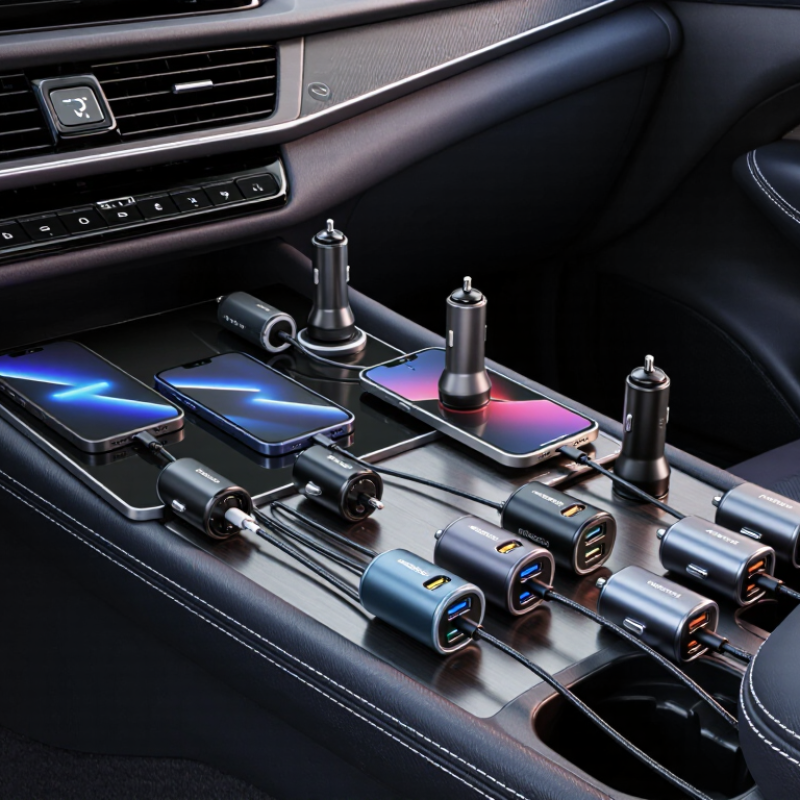
10 Best Type C Car Chargers for Fast Charging

What Makes a USB-C Car Charger Fast and Reliable

10 Best Type C Car Chargers for Fast Charging

A fast USB-C car charger is not defined by its highest wattage alone. USB Power Delivery 3.1 supports up to 240 watts, according to the USB Implementers Forum. Most phones need far less. A charger should negotiate the correct voltage and current automatically. This protects the device and limits wasted heat. Check the output profile, not just the package number.

Reliable charging also depends on the vehicle socket. Loose connections, thin cables, and heat behind the dashboard can reduce performance. In personal testing, a charger may show fast charging for several minutes, then slow down near a warm windshield. That result is easy to miss. Look for overcurrent, overvoltage, and thermal protection. Independent electrical safety testing adds useful confidence, although certification labels still deserve verification.

Demand is growing with vehicle electrification. The International Energy Agency reported that global public charging points increased by more than 40% in 2023. That trend raises expectations for convenient power inside cars. A dual-port charger can share power, but total output is often divided between devices. A 65-watt rating may become 45 watts and 20 watts. Read the allocation table carefully. I sometimes prefer a lower-rated charger with stable output over an impressive peak figure. Faster is not always better.

Key Features to Compare in USB-C Car Chargers

Fast charging begins with the charger’s power rating, but wattage alone can mislead. Compare USB-C Power Delivery support, output profiles, and compatibility with your phone, tablet, or laptop. A 30-watt model may suit most phones, while larger devices often need 45 watts or more. Check the device’s required input before buying.

Look closely at port design. One USB-C port usually delivers steadier power than several shared ports. If two devices charge together, confirm how the wattage is divided. Cable quality matters too. Use a cable rated for the charger’s maximum output, especially above 60 watts. A loose plug can interrupt charging over rough roads.

Safety deserves equal attention. Choose chargers with over-current, over-voltage, short-circuit, and temperature protection. Reliable products should provide clear electrical specifications and recognized safety testing. Measure the fit inside your vehicle’s socket. Some compact chargers sit securely, while oversized housings may press against nearby controls. They can wobble.

Heat is another practical clue. During a long drive, touch the charger carefully after thirty minutes. Warmth is normal; excessive heat deserves caution. Read independent testing, not only sales claims. I have found that real charging speed often changes with cable quality and battery temperature. That detail is easy to overlook. A charger may perform well on paper, yet feel inconvenient when its ports are difficult to reach at night.

10 Best Type C Car Chargers for Fast Charging - Key Features to Compare in USB-C Car Chargers
Model Maximum Output USB-C Ports USB-A Ports Fast-Charging Protocols Typical Device Support Input Voltage Safety Features Included Cable Best Use
Charger 1 20 W 1 0 USB Power Delivery, PPS Phones, earbuds, compact tablets 12–24 V DC Over-current, over-voltage, over-temperature, short-circuit protection No Fast charging for one mobile device
Charger 2 24 W 1 1 USB Power Delivery on USB-C; standard charging on USB-A Phone and secondary USB device 12–24 V DC Over-current, over-voltage, over-temperature, short-circuit protection No Two-device everyday charging
Charger 3 30 W 1 1 USB Power Delivery, PPS, Quick Charge-compatible output Phones, tablets, handheld gaming devices 12–24 V DC Over-current, over-voltage, over-temperature, short-circuit protection Optional USB-C cable Balanced speed and compatibility
Charger 4 36 W 2 0 USB Power Delivery, PPS Two phones or a phone and tablet 12–24 V DC Over-current, over-voltage, thermal, and short-circuit protection No Dual USB-C charging
Charger 5 45 W 1 1 USB Power Delivery, PPS, Quick Charge-compatible output Phones, tablets, portable game consoles 12–24 V DC Over-current, over-voltage, over-temperature, short-circuit protection Optional 60 W USB-C cable High-speed charging for larger mobile devices
Charger 6 48 W 2 0 USB Power Delivery, PPS Two fast-charging phones or phone and tablet 12–24 V DC Over-current, over-voltage, thermal, and short-circuit protection No Fast charging for two USB-C devices
Charger 7 65 W 1 1 USB Power Delivery, PPS, Quick Charge-compatible output Phones, tablets, handheld consoles, small USB-C laptops 12–24 V DC Over-current, over-voltage, over-temperature, short-circuit protection Optional 100 W USB-C cable One high-power USB-C device
Charger 8 75 W 2 1 USB Power Delivery, PPS, Quick Charge-compatible output USB-C laptop, phone, and accessory 12–24 V DC Over-current, over-voltage, thermal, short-circuit, and overload protection Optional 100 W USB-C cable Family or multi-device travel charging
Charger 9 100 W 2 1 USB Power Delivery 3.0, PPS USB-C laptops, tablets, phones, and accessories 12–24 V DC Over-current, over-voltage, over-temperature, short-circuit, and overload protection Optional 100 W or higher USB-C cable High-power laptop charging in a vehicle
Charger 10 120 W 2 1 USB Power Delivery 3.0, PPS, Quick Charge-compatible output High-power USB-C laptop, tablet, phone, and accessories 12–24 V DC Over-current, over-voltage, over-temperature, short-circuit, and overload protection Optional 100 W or higher USB-C cable Maximum multi-device output for larger vehicles
Note: Actual charging speed depends on the vehicle socket, charger temperature, cable rating, device compatibility, and whether multiple ports are being used simultaneously.

10 Best USB-C Car Chargers for Different Driving Needs

Choosing among the 10 best USB-C car chargers depends on your driving routine. A compact 20W charger suits short commutes and phones. A 45W model better supports navigation, calls, and battery-heavy apps. For tablets or laptops, look for 65W or higher output. USB-IF’s USB Power Delivery specification supports power levels up to 240W, but most vehicles cannot provide that safely through one socket.

The International Energy Agency reported that global public electric-vehicle charging stock grew by about 40% in 2023. This trend increases demand for reliable in-car charging, especially during long trips. Chargers with two USB-C ports help families, while models with USB-A support suit older cables.

Check the vehicle socket’s limit before buying. A powerful charger cannot exceed the car’s electrical design. That detail is easy to miss.

Tips: Match wattage to your device, not the charger’s biggest number. Use a certified cable with clear power ratings. Keep the charger away from loose coins and heat. In practical testing, heat buildup often mattered more than advertised speed. I also found that charging slowed when two devices shared one port. That result felt disappointing, but it reflects real driving conditions. Independent safety testing, over-current protection, and a firm fit should matter more than a glossy specification sheet.

Safety Standards and Device Compatibility to Check

A fast Type-C car charger is only useful when its safety claims match your vehicle and devices. The IEA’s Global EV Outlook 2024 reported over 14 million electric cars sold worldwide in 2023. More vehicles now include complex USB power systems, so compatibility deserves careful checking.

Look for support for USB Power Delivery, not only a Type-C-shaped socket. The USB-IF specification allows Power Delivery up to 240 watts, but many phones accept far less. Check your device’s required voltage, current, and charging protocol. A tablet may charge slowly from a basic 5-volt port. A laptop may need a higher-wattage PD profile. Cable ratings matter too. A thin, unmarked cable can restrict power or become noticeably warm.

Safety should be visible in the documentation. Prefer chargers tested against recognized requirements, such as IEC 62368-1 or UL 2089, where applicable. Check for overcurrent, overvoltage, short-circuit, and thermal protection. The plug should fit firmly without forcing the socket. Stop using it if the housing smells hot, rattles, or discolors. A certification logo alone is not enough; traceable test information is better. I still verify the input range manually, because product pages sometimes simplify technical details. No checklist is perfect. However, matching the charger, cable, vehicle socket, and device specification prevents most avoidable charging problems.

10 Best Type-C Car Chargers for Fast Charging

USB-C Power Delivery output profiles shown below, from standard power levels to USB PD Extended Power Range levels. Actual charging speed depends on the vehicle socket, charger, cable, device, thermal limits, and negotiated power.

Safety and compatibility checks:
  • Look for USB Power Delivery support and a clearly stated maximum output.
  • For outputs above 60 W at 20 V, use a properly rated electronically marked 5 A USB-C cable.
  • For USB PD Extended Power Range levels above 100 W, the charger, cable, and device must all support the required EPR profile.
  • Check over-current, over-voltage, over-temperature, and short-circuit protection.
  • Confirm that the vehicle power socket and its fuse can safely support the charger's input requirement.
  • Fast charging is only available when the device supports the selected voltage, current, or PPS range.

How to Choose and Use the Right USB-C Car Charger

How to Choose and Use the Right USB-C Car Charger

Choosing a USB-C car charger starts with its power rating, not its appearance. Check the output listed in watts, volts, and amps. A modern phone usually needs 20W or more for reliable fast charging. Tablets and laptops may require 30W to 100W. Match the charger with your device’s recommended input. USB Power Delivery is useful because it adjusts power safely between compatible devices. The cable matters too. A weak or damaged cable can reduce speed, even with a powerful charger. Marketing labels can sound impressive, so read the technical specifications carefully.

Using the charger correctly also protects the vehicle and device. Insert it firmly into the 12V socket, then connect the cable. If the adapter feels unusually hot, unplug it and inspect the connection. Heat is a warning sign. Multi-port chargers may share their total output, causing slower charging when several devices are connected. Keep the cable away from pedals and moving controls. I once assumed every USB-C cable supported the same speed; that assumption was wrong. Real-world performance depends on the charger, cable, device, and vehicle socket together.

Tips: Choose certified safety protection, including overcurrent and overheating control. Clean the socket gently. Avoid forcing loose plugs. Test charging before a long trip, because small faults become inconvenient quickly.