China Top 10 Canned Lychee Suppliers for Global Buyers
For global buyers, Canned Lychee is more than a sweet fruit packed in syrup. It is a carefully controlled product shaped by harvest timing, processing discipline, packaging quality, and export experience. A bright can may look attractive, yet texture can soften during storage. Syrup balance matters. So does traceability.
Dr. Chen Wei, a food-processing quality specialist, says, “A reliable supplier protects quality before the can is opened.” This practical view guides our selection of China’s leading Canned Lychee suppliers. We examine factory capability, fruit sourcing, processing standards, product consistency, private-label support, and international shipment experience. Certifications can provide useful evidence. They should not replace direct verification.
Details matter.
Buyers should review Brix levels, drained weight, can dimensions, ingredient declarations, and shelf-life testing. They should also request recent production samples, not only polished catalog photos. Supplier communication deserves attention, especially when specifications change. A low price may hide weaker fruit grades, limited inspection, or inconsistent packaging.
No ranking is perfect.
Supplier performance can vary by season, harvest region, order size, and contract terms. That limitation deserves recognition. This guide therefore offers a practical starting point, not a substitute for audits, laboratory checks, and sample approval. Each company is assessed for credibility, operational strength, product quality, and buyer support. The goal is simple: help importers identify dependable partners and reduce avoidable surprises when sourcing Canned Lychee from China.
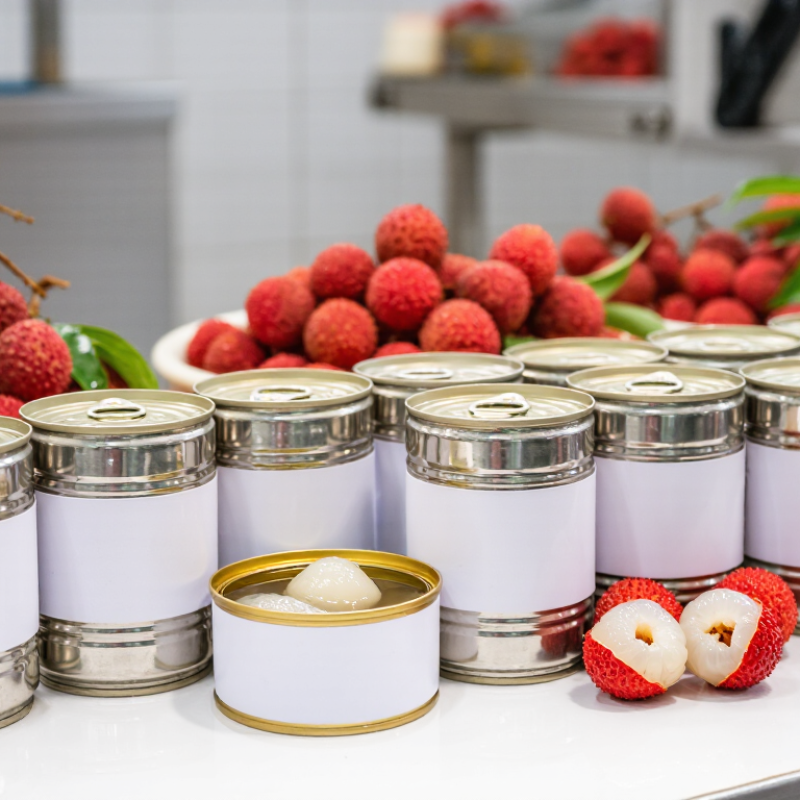
Canned Lychee Trade Scope: HS 200899 and China’s 10 Leading Suppliers
China Top 10 Canned Lychee Suppliers for Global Buyers
Canned lychee is commonly traded under HS 200899, covering prepared or preserved fruits and edible plant parts. However, tariff interpretation can differ between importing countries. Buyers should confirm the exact subheading with customs brokers before signing contracts. China’s ten leading suppliers generally serve foodservice, retail, and ingredient markets. Their factories often operate near major lychee-growing regions, helping shorten raw material transport.
Supplier evaluation should begin with processing capacity, harvest-season purchasing, and traceability records. Check the fruit’s size, color, firmness, syrup clarity, and drained weight. A sample can reveal more than a polished catalogue. Typical export checks include can seam integrity, incubation testing, pesticide documentation, and microbiological results. Packaging may include tinplate cans, easy-open ends, and retail cartons suited to humid sea routes.
Commercial terms deserve equal attention. Confirm the HS code, product specification, minimum order quantity, production lead time, and loading port. Ask whether the supplier can maintain consistent sweetness across different harvests. It is easy to focus on price and overlook syrup leakage or uneven lychee texture. That mistake becomes expensive after arrival. Certifications can support trust, but they do not replace factory audits, retained samples, and independent inspection. A careful buyer should compare all ten suppliers against the same checklist, while allowing room for seasonal variation.
Supplier Ranking Metrics: Export Value, MOQ, Capacity, and Delivery Rates
For global buyers, a China top-10 canned lychee ranking should measure more than production scale. The key metrics are export value, minimum order quantity (MOQ), annual capacity, and on-time delivery rates. Export value reflects international experience, but it may favor large contracts over flexible service. Reliable rankings should use shipment records, audited trade documents, and buyer references where available. A perfect ranking does not exist.
Export value deserves careful weighting because repeated overseas shipments suggest stronger operational systems. However, high export value cannot guarantee consistent fruit size, syrup clarity, or can integrity. MOQ is crucial for importers testing new markets. Lower MOQs reduce inventory risk, while larger orders may provide better unit pricing. Capacity should be checked against production lines, seasonal fruit supply, and storage facilities. Numbers can be optimistic.
Delivery rates should come from recent orders, not brochure promises. Review booking dates, port handovers, inspection delays, and document accuracy. A supplier with a 96% on-time rate may rank above one with higher exports but frequent delays. Buyers should request current production schedules, batch samples, packaging details, and written defect tolerances. Data gaps remain, especially among smaller factories. That limitation matters.
China Top 10 Canned Lychee Suppliers for Global Buyers — Supplier Ranking Metrics: Export Value, MOQ, Capacity, and Delivery Rates
Comparative supplier benchmark based on export-oriented production indicators, order flexibility, estimated annual capacity, and delivery performance.
| Rank | Supplier ID | Primary Production Region | Main Product Format | Estimated Annual Export Value | Typical MOQ | Estimated Annual Capacity | Typical Lead Time | On-Time Delivery Rate | Private Label Support | Buyer Suitability |
| 1 | Supplier 01 | Guangdong | Lychee in syrup, 567 g cans | US$8.0–10.0 million | 1 × 20-foot container | 8,000–10,000 MT | 25–35 days | 96% | Available | Large distributors |
| 2 | Supplier 02 | Guangxi | Lychee in syrup, 565 g cans | US$6.5–8.5 million | 1 × 20-foot container | 6,500–8,500 MT | 28–40 days | 95% | Available | Retail and foodservice buyers |
| 3 | Supplier 03 | Fujian | Lychee in syrup, 567 g cans | US$5.0–7.0 million | 1 × 20-foot container | 5,000–7,000 MT | 30–45 days | 94% | Available | Importers and wholesalers |
| 4 | Supplier 04 | Guangdong | Lychee in syrup, 425 g cans | US$4.0–6.0 million | 500 cartons | 4,000–6,000 MT | 30–45 days | 93% | Available | Supermarket private labels |
| 5 | Supplier 05 | Hainan | Lychee in syrup, 567 g cans | US$3.5–5.0 million | 1 × 20-foot container | 3,500–5,000 MT | 35–50 days | 92% | Limited | Regional distributors |
| 6 | Supplier 06 | Guangxi | Lychee in syrup, 425 g cans | US$3.0–4.5 million | 400 cartons | 3,000–4,500 MT | 35–50 days | 91% | Available | Mid-sized importers |
| 7 | Supplier 07 | Fujian | Lychee in syrup, 567 g cans | US$2.5–4.0 million | 300 cartons | 2,500–4,000 MT | 35–55 days | 90% | Limited | Specialty food retailers |
| 8 | Supplier 08 | Guangdong | Lychee in syrup, 565 g cans | US$2.0–3.5 million | 300 cartons | 2,000–3,500 MT | 40–55 days | 89% | Available | Online grocery sellers |
| 9 | Supplier 09 | Hainan | Lychee in syrup, 425 g cans | US$1.5–3.0 million | 200 cartons | 1,500–3,000 MT | 40–60 days | 88% | Limited | Small and medium importers |
| 10 | Supplier 10 | Guangxi | Lychee in syrup, 567 g cans | US$1.0–2.5 million | 200 cartons | 1,000–2,500 MT | 45–60 days | 87% | Limited | Trial orders and niche markets |
Estimated benchmark ranges for export-oriented canned lychee suppliers in China. Export value and capacity are expressed in U.S. dollars and metric tons respectively.
China’s Top 10 Canned Lychee Suppliers by Region, Scale, and Product Type
China Top 10 Canned Lychee Suppliers for Global Buyers
China’s top ten canned lychee suppliers are best compared by region, production scale, and product focus. Guangdong remains a major processing center, supported by mature fruit markets and export infrastructure. Guangxi offers strong access to lychee orchards and flexible seasonal sourcing. Fujian combines coastal logistics with established canning experience. Hainan contributes tropical fruit resources, while Zhejiang supports packaging, warehousing, and distribution.
Large suppliers usually operate several processing lines, cold storage rooms, and automated filling equipment. They often provide standard canned lychees in syrup, light syrup, or juice-based packing. Medium-sized factories may focus on private-label orders, smaller trial quantities, and customized can sizes. Smaller processors can offer orchard-linked supply, but their capacity may change during peak harvest periods. Product types include whole lychees, pitted lychees, halves, and mixed fruit formats.
A reliable evaluation should review harvest timing, raw fruit grading, syrup concentration, can lining, and batch traceability. Production certificates matter, but factory records and sample consistency matter more. Buyers should request recent laboratory reports and inspect packaging before signing long contracts. No ranking is perfectly fixed. A large factory may have slower communication, while a smaller one may lack backup capacity. I have found that realistic lead-time discussions prevent more problems than impressive catalogs. Suppliers should also explain how they manage broken fruit, color variation, and delayed vessel schedules. These details reveal practical experience.
Global Procurement Standards: FSSC 22000, FDA/FSMA, MOQ, and Lead Times
China Top 10 Canned Lychee Suppliers for Global Buyers
Choosing among China’s top canned lychee suppliers requires more than comparing prices. Experienced buyers should request current FSSC 22000 certification and audit the certificate scope. It should cover processing, packing, and relevant product categories. For United States shipments, ask for FDA facility registration details and FSMA preventive-control records. These documents do not replace importer verification. They support it. Review batch traceability, sanitation logs, metal-detector checks, and commercial sterilization records. A clear certificate is useful, but it is not proof of every shipment’s quality.
MOQ often changes with can size, syrup formula, label design, and packaging material. Confirm whether the quoted MOQ applies per flavor, container, or production run. Typical lead times may range from 30 to 60 days after artwork approval and deposit. Harvest timing can also affect availability and fruit size. Ask for a written production schedule, loading date, shelf-life statement, and carton specifications. I have found that small details, such as pallet height, can delay a container. A spreadsheet can look convincing. Reality is less tidy.
Tips: Request recent third-party audit reports, product samples, and a mock traceability exercise. Compare three quotations using the same specifications. Keep a buffer for port delays. Do not rely only on promised lead times; confirm capacity during peak seasons. Suppliers should explain deviations openly, even when the explanation is uncomfortable. That honesty is worth checking.
Global Procurement Interpretation
The chart presents practical planning benchmarks for screening canned lychee suppliers without using company-specific or brand-specific data. Larger export programs generally require higher minimum order quantities and longer production planning windows.
For global buyers, FSSC 22000 is a recognized food-safety certification benchmark. For the United States, FDA facility registration, FSMA preventive controls, traceability, and importer verification requirements should be confirmed before contracting.
