
Choosing a reliable Turbidity Sensor supplier in China takes more than comparing prices. Buyers need instruments that deliver stable readings, clear documentation, and practical support after delivery. In water treatment, food processing, and environmental monitoring, a small shift in turbidity can affect process decisions. The right supplier should explain how its sensor performs under real operating conditions.
Water-treatment expert Dr. James K. Edzwald’s work offers a useful guiding principle: turbidity readings must be interpreted in context. That matters when comparing sensor designs, measurement ranges, and calibration methods. Ask whether the device uses a flow-through cell or immersion installation. Check its stated accuracy, output options, ingress protection, and compatibility with your controller. Request calibration instructions and sample test records. Details matter.
Global buyers should also examine communication and service. Can the supplier answer technical questions in clear English? Are replacement parts available? Does the quotation specify lead time, packaging, warranty terms, and support channels? A polished brochure is not enough. Request a demonstration or test data where possible, especially for samples with changing particle sizes or air bubbles. These conditions can complicate readings.
This guide introduces Chinese suppliers and the points worth checking before shortlisting them. It does not treat every company as interchangeable. Specifications can look similar on paper, while installation needs differ sharply between a clean laboratory and a muddy process line. Some details may remain uncertain until a sensor is tested at your site. That uncertainty deserves attention.
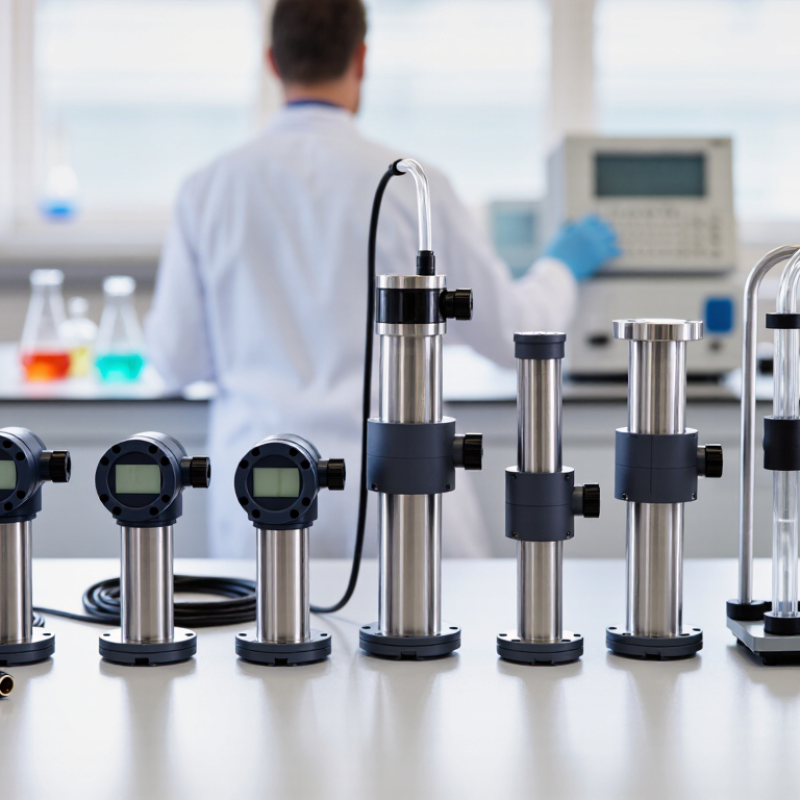
Turbidity describes how suspended particles scatter or block light in water. A turbidity sensor estimates this effect and reports a reading, commonly in NTU or FNU. Many optical instruments detect light scattered by particles, often at a fixed angle. The reported value depends on the measurement method and instrument design. The sensor does not identify which particles are present. Small changes matter.
In drinking water treatment, operators use turbidity readings to monitor filtration and detect changes in water clarity. Wastewater facilities track suspended material as treatment conditions shift. Environmental teams also measure turbidity in rivers and reservoirs after rainfall, construction, or seasonal runoff. These readings help reveal trends, but they do not replace laboratory testing when detailed particle analysis is needed. Bubbles, colored water, and deposits on the sensor window can affect results.
Choosing a sensor means matching its measurement range, installation method, and maintenance needs to the application. A probe in a fast-flowing channel faces different conditions from one in a controlled process line. Buyers should review calibration guidance, cleaning requirements, output options, and technical support. A clean specification sheet cannot predict every field condition. That is not always easy. Routine checks with suitable reference standards, plus inspection of the optical window, help keep readings dependable over time.
Selected operational and regulatory benchmarks, measured in nephelometric turbidity units (NTU).
The U.S. EPA filtration benchmark is 0.3 NTU or less in at least 95% of monthly measurements, with a 1 NTU maximum. WHO guidance says turbidity should ideally be below 1 NTU for effective disinfection; where that is not achievable, below 5 NTU may be tolerated if disinfection remains effective. These values refer to different guidance and treatment contexts.
Sources: U.S. EPA Surface Water Treatment Rules · WHO Guidelines for Drinking-water Quality
China’s turbidity sensor supplier market is organized around several types of businesses. Some manufacturers produce probes, optical components, and signal circuits in-house. Others assemble sensors from sourced parts and focus on integration or customization. Export-oriented suppliers may also coordinate documentation, packaging, and communication for overseas buyers. Their capabilities can differ considerably.
The product range often reflects different measurement needs. A compact probe for a water tank may use a different optical path from a sensor designed for a treatment plant’s continuous monitoring line. Buyers should compare measurement range, output options, cable length, and installation requirements. Ask how calibration is performed, and whether test records refer to the delivered unit. Details matter.
Supplier directories can make the market look more uniform than it is. A listed factory may specialize in assembly rather than optical design, which is not automatically a problem. It does affect spare-part support and engineering changes. Request clear answers about maintenance intervals, cleaning methods, and response times. A sample test in water similar to the intended application can reveal issues that a product sheet misses. Even then, results may vary with bubbles, color, or suspended particles. Worth checking. A careful comparison should weigh verified performance alongside price and production consistency.
A reliable turbidity sensor supplier should provide more than a measurement range and a polished brochure. Check whether the stated range, resolution, accuracy, and repeatability suit your water and process conditions. Ask for test data and the methods used to produce it. Numbers matter.
Look closely at calibration procedures, response time, and maintenance requirements. A sensor tested in clean water may behave differently in a sample containing bubbles, color, or suspended particles. Ask how the supplier controls these conditions during testing. Request clear guidance on cleaning the optical window and replacing consumable parts. Easy to miss.
Assess construction details, too. Confirm the wetted materials, enclosure rating, cable length, and available output or communication options against your installation needs. Ask about spare parts, technical support, and typical lead times, preferably in writing. A prompt, specific answer can indicate how well the supplier handles issues after delivery, though it is not proof of product quality. Datasheets also leave gaps sometimes. Compare documented specifications with a sample test or third-party report when possible, and note any unanswered questions before placing an order.
| Evaluation Criterion | What to Check | Useful Evidence | Buyer Guidance |
|---|---|---|---|
| Measurement method and standard | Confirm whether the instrument uses an ISO 7027-1 infrared method or a method intended to align with U.S. EPA Method 180.1. | Datasheet specifying light source, measurement geometry, applicable method, and reported units. | Do not assume results in NTU and FNU are interchangeable across methods; match the method to local requirements and the application. |
| Measurement range and performance | Check the stated range, resolution, repeatability, and accuracy under specified conditions. | Full-range performance specifications and test conditions, including temperature and sample characteristics where applicable. | Choose a range suited to expected process values; request data at the low end if low-turbidity monitoring is critical. |
| Calibration and verification | Review calibration procedure, supported standards, interval guidance, and availability of calibration accessories. | Written procedure and sample calibration or verification record identifying the standard used. | Confirm the standard and procedure are suitable for the selected measurement method and your quality system. |
| Sample and installation conditions | Check whether the sensor is designed for immersion, insertion, or a flow-through cell, and identify flow, bubble, and fouling limitations. | Installation drawings, operating limits, cleaning instructions, and recommended mounting orientation. | Assess the actual sample for bubbles, suspended solids, color, and deposits, as these can affect readings or maintenance needs. |
| Wetted materials and enclosure | Verify wetted-part materials, chemical compatibility, cable construction, and the enclosure protection rating. | Material list, dimensional drawing, and documentation for the stated IP rating and its test basis. | Select materials for the process chemistry and temperature; confirm the protection rating fits the intended installation. |
| Outputs and system integration | Confirm analog or digital outputs, communication protocols, power requirements, and controller compatibility. | Wiring diagram, protocol documentation, output scaling details, and configuration instructions. | Check electrical and communications requirements against the existing PLC, data logger, or monitoring system before ordering. |
| Quality and compliance documentation | Identify applicable quality-system and product-compliance requirements for the destination market. | Current certificates or declarations with scope, issuing body, model coverage, and validity details. | Verify that documents apply to the offered product and intended market; a factory quality certificate alone does not establish product approval. |
| Testing and sample evaluation | Assess whether the supplier can provide a sample, acceptance criteria, and test support using representative conditions. | Sample test report, test setup description, and a written procedure for evaluating the sensor on site. | Compare readings with an appropriate reference method and record repeatability, response, and cleaning requirements. |
| Service, spare parts, and warranty | Review warranty terms, repair process, spare-part availability, and technical support coverage. | Written warranty policy, parts list, service contact process, and response or repair-time commitments. | Clarify who handles troubleshooting, shipping, and repair costs for international orders before purchase. |
| Export readiness and delivery terms | Confirm export packaging, delivery terms, lead-time basis, documentation, and responsibility for freight and customs. | Written quotation stating model configuration, quantity, delivery term, estimated lead time, and included documents. | Compare quotations on the same configuration and delivery basis; treat lead times as estimates unless contractually confirmed. |
Note: Performance, certification, compatibility, and delivery claims should be verified against current product-specific documentation before purchase.
For global buyers, comparing turbidity sensor suppliers means looking beyond quoted price. Check which measurement ranges they offer and whether the stated accuracy suits your water conditions. A sensor used in clear process water may not perform equally well in wastewater with changing particle sizes. Ask about response time, probe materials, output options, and compatibility with existing controllers. Small details matter.
Product range can reveal how well a supplier supports different installations. Some buyers need compact probes for a narrow pipe; others need immersIon Sensors, long cables, or automatic cleaning features. Confirm whether replacement windows, wipers, and calibration tools are available. Request clear installation guidance, too. A broad catalogue is useful, but only if the specifications are easy to verify.
Quality is best assessed through evidence, not confident wording. Review calibration procedures, inspection records, and the stated operating limits for temperature and pressure. Ask how each unit is checked before shipment and what documentation accompanies it. If possible, test a sample against your site’s reference method. A polished data sheet can still leave practical gaps, and suppliers may not explain every limitation unless buyers ask directly.
Global buyers should assess turbidity sensor suppliers against the actual installation, not a catalogue headline. Confirm the measurement range, required accuracy, response time, and whether the sensor suits a flow-through cell or an open channel. Ask for a current datasheet and calibration record for the offered configuration. Small differences matter. A probe with the wrong cable length or wetted material can create delays after arrival.
Export preparation needs the same attention as technical selection. Request a commercial invoice, packing list, country-of-origin details, and shipping dimensions before dispatch. Product classification and import documents can vary by destination, so have a qualified customs broker verify the applicable requirements. Check that the declared product description matches the invoice, datasheet, and physical label. That detail is easy to overlook. Also confirm whether the shipment needs a certificate of calibration or other destination-specific paperwork.
Before placing a large order, request a sample or arrange a documented acceptance test. Record readings against a known reference, inspect connectors, and verify the output signal with the intended controller. Discuss packaging for long transit, including protection for optical windows and connectors. A spreadsheet can make supplier comparisons look precise, yet it may hide unresolved assumptions about calibration or after-sales support. Buyers should write those assumptions down and ask the supplier to confirm them in writing.
Copyright © 2025 · All Rights Reserved · Franchino Mold & Engineering