
How to Choose a Corrosion Resistant Metal Cable Gland in 2026

Choosing a Corrosion-Resistant Metal Cable Gland in 2026 starts with the environment, not the product label. Will it face coastal salt spray, chemical washdown, standing water, or only occasional rain? Each condition changes the risks. Mars G. Fontana, author of Corrosion Engineering, defined corrosion as “the destructive attack of a metal by chemical or electrochemical reaction with its environment.” That definition is a useful reminder: even robust hardware can fail when its materials, seals, and surroundings do not match.

Look closely at the gland body, entry thread, sealing surfaces, and cable jacket. Stainless steel grades such as 316 are common choices in aggressive environments, but the grade alone cannot guarantee service life. Dissimilar metals can create galvanic corrosion, while a poorly compressed seal can let moisture track inside. Check the enclosure’s required ingress protection, operating temperature, thread compatibility, and the manufacturer’s documented test conditions. A salt-spray result may help compare products, but it does not perfectly predict years of field exposure. Details matter.

Installation matters too. A sound gland can still perform poorly if the cable is undersized or the seal is overtightened. Keep records of material specifications and inspection intervals. This is practical, not glamorous. No single metal suits every site, and “corrosion resistant” is not the same as corrosion proof. A careful choice balances exposure, compatibility, maintenance, and cost—and leaves room to review assumptions when real operating conditions differ.
How to Choose a Corrosion Resistant Metal Cable Gland in 2026

What a Corrosion-Resistant Metal Cable Gland Does

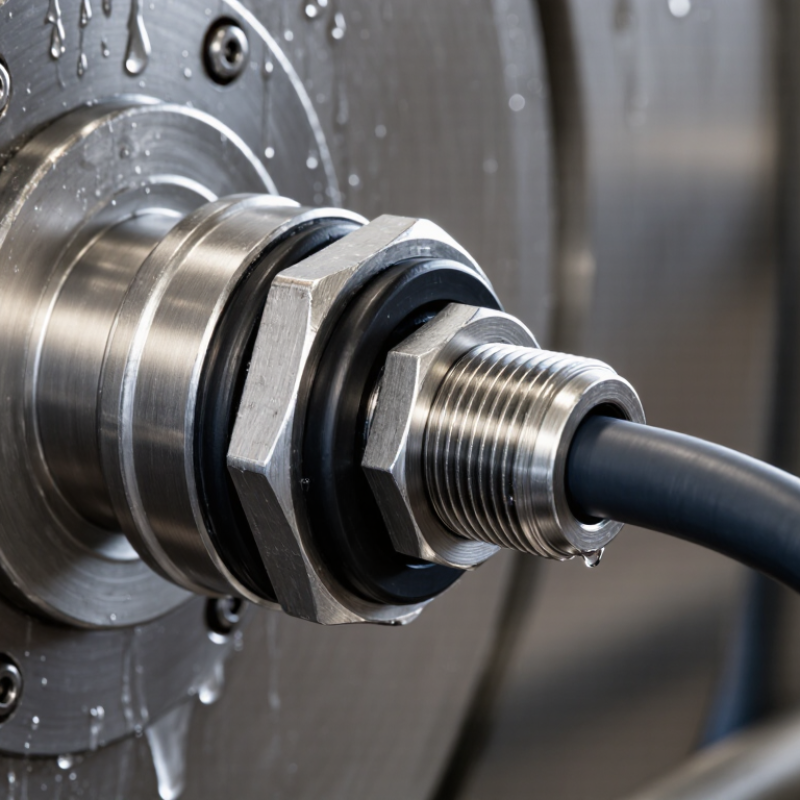
A corrosion-resistant metal cable gland protects the point where a cable enters an enclosure. It grips the cable, limits movement, and helps keep water, dust, and corrosive substances away from sensitive components. The metal body also provides a durable connection to the enclosure; conductive designs can support electrical bonding when correctly selected and installed. That matters near vibrating pumps, outdoor control panels, and equipment exposed to salt spray.

Material choice depends on the actual environment. Nickel-plated brass suits many general industrial settings, while stainless steel may be preferable where moisture or cleaning chemicals are common. But “stainless” is not a complete specification. Chlorides, temperature, and contact with dissimilar metals can still cause corrosion. Check the gland’s material, seal compatibility, and stated protection rating against the enclosure and cable. Details matter.

Installation counts too. A gland that is too large may not seal; one that is overtightened can damage the cable jacket or seal. Keep the cable entry clean, use the specified components, and inspect the seal after fitting. A datasheet cannot predict every site condition. Sometimes the overlooked issue is the cleaning fluid used each week.

Which Environmental Conditions Affect Corrosion Risk

Salt in coastal air can settle on a cable gland long before visible rust appears. Add wind-driven rain, and moisture may collect around threads or beneath a locknut. A dry-looking enclosure can still trap condensation overnight. Small details matter.

Industrial atmospheres bring different risks. Cleaning agents, fertilizer dust, and acidic vapors can attack metals at different rates. Temperature swings may also weaken seals, letting moisture reach the gland’s metal surfaces. Heat alone is not the whole story. Repeated wet-and-dry cycles often make exposure more severe, especially where deposits remain after evaporation.

Match the gland material to the actual site, not just its general location. Stainless steel may suit many damp or saline settings, but grade and surface condition matter. Nickel-plated brass can work in some environments, yet damaged plating exposes the base metal. Dissimilar metals deserve attention too: contact between a gland and an enclosure can encourage galvanic corrosion when an electrolyte is present. Check the enclosure material, seal compatibility, and chemical exposure together. I would not rely on a catalog label alone; field conditions are rarely that tidy. Inspect threads, sealing faces, and coating damage during maintenance, particularly after seasonal weather changes.

How to Match Gland Materials to the Installation

Match the gland material to what it will actually touch: salt spray, washdown chemicals, standing water, or dry indoor air. ISO 9223 places first-year carbon-steel corrosion loss in the C5 category at 80–200 micrometres. That figure describes atmospheric exposure, not gland service life. For coastal or chloride-rich sites, 316 stainless steel is often a sound choice, but inspect threads and crevices where salt can collect. In sheltered industrial areas, nickel-plated brass may suit the exposure; scratched plating changes the picture. Small details matter.

Weight can favor aluminum in dry installations, though dissimilar-metal contact deserves attention when choosing the enclosure and fittings. Check the sealing material against operating temperature and process chemicals, too. A metal body alone does not guarantee water or dust protection; confirm the required ingress rating for the complete assembly.

NACE’s 2016 IMPACT study estimated corrosion costs at US$2.5 trillion globally, about 3.4% of world GDP. That broad estimate is not a gland-selection formula, but it shows why exposure assessment matters.

I would verify the site conditions twice. A sheltered drawing can miss salt-laden spray at the actual cable entry.

How to Check Ratings, Sealing, and Cable Compatibility

How to Choose a Corrosion Resistant Metal Cable Gland in 2026

A cable gland’s rating is only useful when it matches the installation. Check the required ingress-protection rating and confirm that the complete assembly, including its seal, maintains that protection. An IP rating describes resistance to dust and water under specified tests; it does not measure corrosion resistance. For coastal air, washdown areas, or chemical exposure, compare the gland material with the actual environment. Stainless steel and nickel-plated brass can perform differently depending on the contaminant and maintenance conditions. Small details matter. A rating printed on a component may not reflect the assembled installation.

Check the seal against the cable’s measured outside diameter, not just its nominal size. The jacket material, temperature range, and cable construction can affect grip and sealing. For armored cable, verify that the gland suits the armor type and provides the intended mechanical connection. Match the thread form and enclosure entry, too; a mismatch can leave a gap or damage threads. Do not guess. Installation torque matters, but overtightening may deform a seal or cable jacket. Inspect the finished connection for even compression and secure retention.

Tips: Measure the cable at several points, then compare the range with the gland’s specified clamping range. Confirm material, temperature, and ingress ratings from technical documentation. If the cable jacket is unusually soft or uneven, pause and check compatibility before installation. I would not rely on a quick visual fit alone.

How to Choose a Corrosion Resistant Metal Cable Gland in 2026 - How to Check Ratings, Sealing, and Cable Compatibility

Selection guide for comparing metal cable glands. Ratings and clamping ranges must be confirmed for the exact gland size and configuration.
Check or data dimension What to look for How to verify Common selection guidance
316L stainless steel body Chromium-nickel-molybdenum stainless steel; molybdenum improves resistance to chloride-related pitting compared with 304 stainless steel. Confirm the stated material grade for the body and exposed metal parts. Check whether the application includes salt spray, coastal air, washdown chemicals, or crevices where moisture can collect. Often considered for marine, coastal, food-processing, and other corrosive environments. It is corrosion resistant, not corrosion proof; chemical concentration, temperature, deposits, and installation affect service life.
304 stainless steel body Chromium-nickel stainless steel without the molybdenum addition found in 316 grades. Verify the material grade and assess the actual exposure rather than relying on the word “stainless.” Inspect the full assembly for compatible nuts, washers, and other exposed parts. May suit many indoor or mildly corrosive environments. For frequent chloride exposure, compare the application requirements with the supplier’s corrosion guidance and consider a more suitable material.
Nickel-plated brass body Brass with a nickel surface finish; performance depends on the substrate, plating quality, and condition of the coating. Check the specified plating and environmental limitations. Avoid assuming the finish remains protective if it is scratched, worn, or damaged during installation. Commonly used in general industrial environments. For persistent saltwater exposure or aggressive chemicals, verify suitability for the exact conditions before selection.
Aluminum body Lightweight metal option; surface treatment and alloy influence corrosion performance. Confirm the alloy and any protective finish. Check for dissimilar-metal contact, especially in wet or salty conditions, and follow the enclosure or equipment manufacturer’s isolation guidance. Can be useful where low weight matters. Do not assume bare aluminum is suitable for every marine or chemical environment; consider galvanic corrosion risks at connected metal surfaces.
Ingress protection rating An IP code is a tested enclosure-protection rating, not an inherent property of a metal grade. The assembled gland, seal, cable, and mounting arrangement affect the result. Check the exact IP rating and test conditions in the product documentation. Under IEC 60529, IP66 indicates dust-tight protection and protection against powerful water jets; IP67 covers temporary immersion under the specified test conditions; IP68 immersion conditions are specified by the manufacturer. Choose a rating that meets the installation exposure. Do not treat IP68 as a universal immersion depth or duration, and do not assume a gland’s rating applies after changing seals, cable sizes, or accessories.
Seal and thread arrangement Check the sealing insert, entry thread, locknut, washer, and enclosure surface as one assembled system. Confirm the thread type and size match the enclosure entry. Follow the specified assembly method and torque where provided; check that the sealing surface is clean, flat, and undamaged. A correctly selected gland can still leak if the cable is outside the clamping range, the entry thread is mismatched, or the sealing washer is unsuitable for the enclosure surface.
Cable outside diameter The cable’s measured overall diameter must fall within the gland’s stated clamping range for the selected insert and size. Measure the cable at the point of entry with a suitable measuring tool. Compare the measurement with the manufacturer’s published minimum and maximum clamping diameters. For example, a cable measuring 8–12 mm needs a gland configuration whose stated clamping range covers that diameter. Do not select by nominal cable size alone.
Cable construction Determine whether the cable is unarmored, armored, shielded, or otherwise constructed, and whether the installation requires armor termination or screen continuity. Match the gland type to the cable construction and armor form. For armored cables, verify the armor range and the required electrical bonding arrangement. For shielded cables, confirm the specified screen-termination method. A general-purpose gland may not provide the required armor clamping, bonding, or EMC connection. Check the cable datasheet and applicable installation requirements.
Hazardous-area requirements Where explosive atmospheres are present, the gland must have the required approval and be suitable for the equipment protection method and cable type. Check the marking, certificate, permitted cable construction, thread, ambient-temperature range, and installation instructions against the project requirements and applicable regulations. An IP rating alone does not establish hazardous-area suitability. Use only a gland with the required certification for the specific installation.
Temperature and chemical exposure Seals and non-metallic components can set practical limits even when the metal body is suitable. Confirm the gland’s operating-temperature range and seal-material compatibility with oils, fuels, cleaning agents, UV exposure, and process chemicals. Assess the complete assembly, not just the body material. A chemically incompatible or temperature-damaged seal can compromise clamping and ingress protection.

Important: Ratings, material grades, thread options, and cable clamping ranges vary by product and size. Confirm the current technical documentation for the exact gland assembly and installation conditions before specifying or installing it.

How to Verify Compliance and Plan Long-Term Maintenance

Compliance starts with evidence, not a product label. Before ordering, define the enclosure, cable type, operating temperature, and exposure to salt, chemicals, or washdown. Ask for test reports and certificates that match the exact gland material and configuration. Check that ratings apply to the assembled installation, including the cable diameter and sealing components. Confirm the required ingress protection and hazardous-area approvals against the rules for your site. Names on a certificate should match the supplied documentation.

Material compatibility deserves close attention. Stainless steel may resist many environments, but grade, finish, and contact with other metals affect performance. Salt spray results can help compare products, yet they do not predict every field condition. Do not treat a corrosion rating as a maintenance schedule. A test result has limits.

At installation, inspect threads, seals, and cable jackets for damage, then tighten to the maker’s stated method. Keep records. Log the fitting location, material, installation date, and inspection findings. Check glands for rust, looseness, cracked seals, or water tracks during planned shutdowns and after severe exposure. Replace damaged parts with compatible components, and document why they failed. Small details matter. Even a careful checklist can miss a change in chemicals or cleaning routines, so review site conditions when the process changes.