How to Choose the Right Hex Socket Bolt?
Choosing the right Hex Socket Bolt is not simply a matter of matching diameter and length. The correct choice depends on load, installation space, material compatibility, and service conditions. A bolt used inside a compact machine may need a low-profile head, while an outdoor assembly may require stainless steel or a protective coating. Small details matter.
Start with the joint.
An experienced technician checks the thread size, pitch, grip length, and required clamping force before ordering. The socket size must fit the tool precisely, especially where access is limited or repeated maintenance is expected. Internal hex drives can perform well in tight spaces, but damaged recesses often result from poor tool engagement or excessive torque. That lesson is easy to overlook.
Material selection also deserves careful attention. Alloy steel bolts can provide high strength for structural or mechanical applications, while stainless steel may resist corrosion more effectively. However, stainless steel is not automatically the strongest option. Galling, temperature changes, vibration, and contact with dissimilar metals can alter performance. Checking the manufacturer’s specifications and relevant standards, such as ISO 4762 or ASME B18.3, improves reliability.
Do not guess the grade.
A dependable selection process also considers washers, locking methods, tightening equipment, and inspection access. Real-world conditions rarely match a catalog photograph. Threads can be contaminated, surfaces can be uneven, and a bolt that appears suitable may fail after months of vibration. This guide explains how to compare these factors and select a Hex Socket Bolt with greater confidence, while recognizing that every application deserves a final engineering review.
Define Hex Socket Bolt Types and Key Features
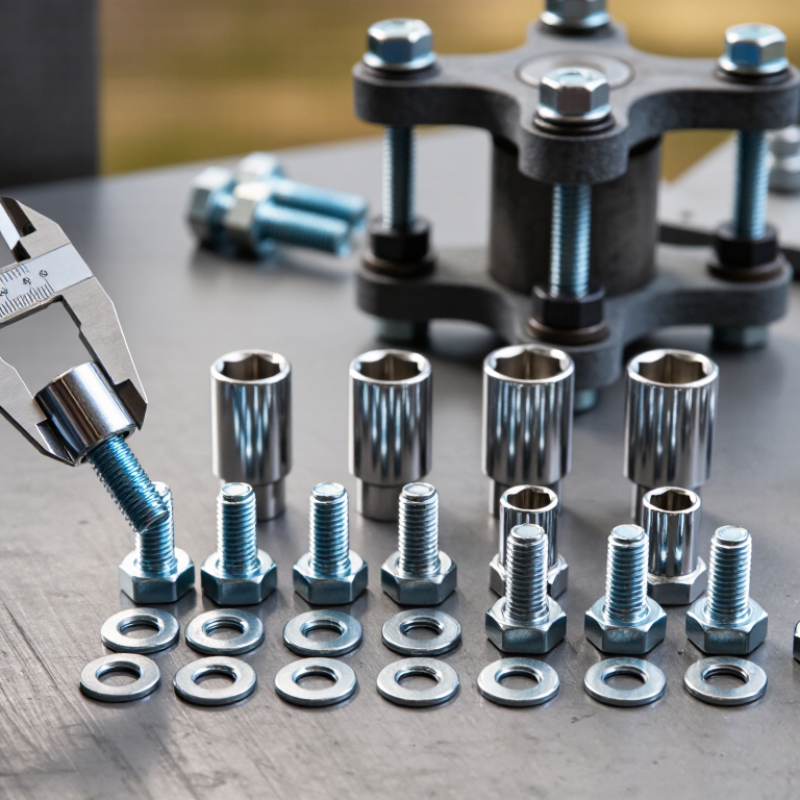
Choosing the right hex socket bolt begins with identifying its type and working environment. A socket head cap screw has a deep hexagonal recess and a cylindrical head. It suits high-clamp applications where space is limited. A button head offers a lower, rounded profile. Use it when appearance and reduced snagging matter. A countersunk socket bolt sits nearly flush with the surface. A shoulder bolt includes a smooth, accurately sized section for pivots or moving parts.
The drive recess is only one feature. Check the thread diameter, pitch, length, and engagement depth carefully. A longer bolt is not automatically stronger. Too much thread can interfere with internal components. Common materials include alloy steel, stainless steel, and corrosion-resistant coatings. Match the material to moisture, heat, vibration, and chemical exposure. Grade markings also matter because tensile strength and proof load can vary significantly.
In workshop inspections, I have seen damaged recesses caused by poor tool fit and excessive torque. The correct hex key should sit fully inside the socket. Clean contact surfaces improve torque transfer. Follow the specified tightening value, preferably with a calibrated torque wrench. I still recheck clearances after assembly, because drawings can miss real-world access problems. That small step prevents avoidable disassembly. Surface finish, washer use, and locking methods deserve attention too, especially under repeated vibration.
How to Choose the Right Hex Socket Bolt?
Hex socket bolts are selected by head style, thread size, material grade, load requirements, and installation space.
Estimated tensile load for an M6 coarse-thread fastener, calculated from the ISO 898-1 nominal tensile strength and an M6 tensile stress area of approximately 20.1 mm². Actual working loads must include safety factors, joint design, preload, and installation conditions.
Socket Head Cap Screw
Deep head and internal hex drive provide high clamping capability in compact assemblies.
Button Head Screw
Rounded, low-profile head suited to applications where appearance and reduced protrusion matter.
Flat Countersunk Screw
Tapered head sits flush with a countersunk surface, reducing interference with adjacent parts.
Shoulder Screw
Unthreaded precision shoulder supports rotating or sliding components and controls spacing.
Match Bolt Size, Thread, and Length to Your Application
Choosing the right hex socket bolt starts with the joint, not the tool drawer. Measure the parts being clamped, then select a diameter that provides strength without damaging thin material. A bolt that is too small may loosen under vibration. An oversized bolt can distort the joint. In field maintenance, I check clearance around the socket head before ordering. Tight spaces may require a smaller head or a different drive arrangement. This detail is easy to miss.
Thread choice matters just as much. Match the bolt diameter, pitch, and thread form to the nut or tapped hole. Do not force a coarse thread into a fine-thread hole. It may feel engaged while holding poorly. Count several threads with a gauge when identification is uncertain. For steel joints, verify material compatibility and use suitable washers where surface pressure could mark the assembly. Clean threads improve torque consistency, but excessive lubricant changes the tightening result. I have seen “correct” torque fail because the actual thread condition was overlooked.
Bolt length should provide enough engagement without bottoming out. The bolt should pass through the clamped parts and enter the nut or threaded hole fully. Extra length is not automatically safer. It may interfere with moving components or leave an exposed snag point. Consider joint compression, washer thickness, and any locknut before selecting the final length. For critical loads, check engineering drawings, fastener specifications, and the required property class. Tighten to the specified torque, then inspect the seated head. Recheck after initial operation when vibration, heat, or settling may alter the joint.
Check Load Capacity, Environment, and Corrosion Resistance
How to Choose the Right Hex Socket Bolt?
A hex socket bolt should match the joint’s load, environment, and maintenance conditions. Start by defining the tensile, shear, and vibration forces. Check the bolt’s proof load, yield strength, and allowable working load. Do not rely on diameter alone. A larger bolt may still fail when threads are short or poorly engaged. The joint design matters too. Calculate the required clamping force and confirm sufficient thread engagement. Torque alone can mislead. Lubrication and surface roughness change the final preload. Use recognized mechanical standards and manufacturer test data when verifying grade and performance.
Environmental exposure can weaken a suitable bolt over time. Moisture, salt spray, chemicals, and high temperatures require careful material selection. Stainless steel may resist corrosion well, but it can gall during installation. Hardened alloy steel can carry high loads, yet it may need protective plating. For mixed-metal assemblies, check galvanic compatibility. A practical detail: inspect washers, threads, and contact surfaces together. Corrosion often starts in hidden gaps. In field inspections, neglected drainage has caused more damage than expected. That lesson is easy to miss. Specify coatings, sealing methods, inspection intervals, and replacement criteria. If the service conditions are uncertain, test a sample assembly before full installation.
Verify Fit, Installation Tools, and Torque Requirements
Choosing the right hex socket bolt starts with a clean fit. Match the bolt’s thread diameter, pitch, length, and strength class to the joint drawing. Then check the socket carefully. A six-point socket should sit fully on the head, without rocking or touching nearby edges. ASME B18.3 dimensional requirements help confirm socket clearance, while ISO 16047 defines methods for measuring tightening torque and clamp force. A loose fit can round the head before the joint reaches its required preload.
Installation tools matter as much as bolt selection. Use a calibrated torque wrench with the correct drive size. Keep the socket square to the bolt. Avoid long extensions unless the procedure allows them. NASA Fastener Design Manual, NASA RP-1228, explains that only about 10% of applied torque may create bolt tension; most energy is lost through thread and bearing friction. Lubrication changes that friction, so a dry-torque value may be unsafe when lubricant is added. A neat torque number can still be wrong.
Tips: Confirm whether the specification is dry or lubricated. Mark the bolt head after tightening. Recheck suspicious movement. I have seen correct-looking hardware fail because the socket was imperial, not metric. That small mistake is easy to miss. Record the tool’s calibration date, torque setting, lubricant condition, and final inspection result. If no torque value exists, stop and obtain an engineering requirement rather than guessing.
