Choosing the right plastic mold supplier can determine whether a product launches smoothly or becomes an expensive engineering lesson. A polished sample does not prove reliable production.
The global injection molded plastics market was valued at approximately USD 265 billion in 2023, according to Grand View Research. Its forecast reflects strong demand across automotive, medical, packaging, and consumer electronics. These sectors demand tighter tolerances, stable cycle times, and consistent material control. Supplier selection, therefore, requires more than comparing quotations.
“Injection molding is a team sport,” says John Bozzelli, an injection molding consultant and founder of Scientific Molding. His observation is practical. Mold designers, toolmakers, processors, and quality engineers must solve problems together. A supplier that only sells steel may overlook cooling balance, draft angles, or maintenance access.
Look beyond the showroom.
Review machining equipment, mold-flow analysis, inspection records, and documented corrective actions. Ask how the supplier measures cavity dimensions after heat treatment. Request evidence from comparable projects, not generic promises. ISO 9001 certification can support process discipline, but certification alone cannot guarantee mold life.
The Plastics Industry Association continues to identify injection molding as a major manufacturing process in the United States. That scale creates many supplier choices, yet capacity can hide weaknesses. A cheaper mold may contain undersized cooling channels, poor venting, or unclear spare-part arrangements. These defects often appear later, when production pressure is highest.
A useful evaluation should include steel grade, expected cycle life, tolerance capability, trial-shot procedures, warranty terms, and after-sales response. Even experienced buyers can miss one detail. That is why supplier audits and sample reviews remain valuable. The best partner explains risks clearly, documents assumptions, and accepts technical questions before signing.
Defining your plastic mold requirements should come before comparing suppliers. Record the resin, part dimensions, wall thickness, tolerances, surface finish, annual volume, and target cycle time. A sample part should show difficult details, such as ribs, clips, deep corners, or visible weld lines. Do not describe quality as “good enough.” That phrase creates expensive arguments later.
Set measurable project goals. Decide whether the mold must support 50,000 shots or several million. Include maintenance access, expected delivery date, acceptable rework, and total tooling cost. Grand View Research reports continued growth in the global injection molding machine market, driven by automotive, medical, and packaging demand. That growth increases supplier choices, but it also makes technical screening more important. Ask for mold-flow analysis, steel specifications, inspection methods, and a documented trial plan. These records reveal practical competence better than polished sales language.
In my experience, many delays begin with missing information. A supplier may quote quickly, yet overlook shrinkage, gate location, or ejection marks. That happened on a small enclosure project. The drawing was complete, but the cooling expectations were not. We had to revise the mold concept after the first trial. It was avoidable. ISO 20457 provides guidance for molded plastic parts and their tolerances, so use applicable standards when defining acceptance criteria. Leave room for honest review. Your first specification may be incomplete. That is normal. A capable supplier should challenge unclear requirements, explain trade-offs, and connect every recommendation to your production goals.
Choosing the Right Plastic Mold Supplier: Assess Supplier Expertise, Equipment, and Production Capabilities
A reliable mold supplier should understand your product, material, and expected production volume. Ask how many similar molds the team has completed. Request sample parts, dimensional reports, and evidence of problem-solving experience. An experienced supplier can explain draft angles, cooling design, shrinkage, and gate placement in practical terms. Their answers should be specific, not promotional.
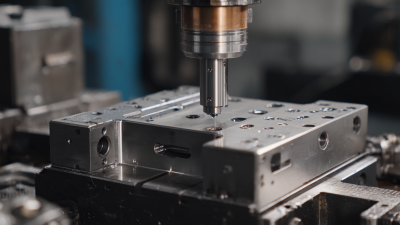
Inspect the equipment list carefully. Modern CNC machines, EDM systems, wire cutting machines, and measurement equipment support tighter tolerances. However, newer equipment does not guarantee better results. Ask about machine accuracy, maintenance records, and operator training. Visit the workshop if possible. Look for clean production areas, organized tool storage, and documented inspections. These details often reveal working habits. Some suppliers may provide impressive machinery but lack enough skilled technicians. That is worth questioning.
Tips: Compare the supplier’s mold capacity with your product’s size and complexity. Check available steel grades, surface finishing methods, trial-shot procedures, and repair support. Ask for a realistic timeline with design review, machining, assembly, testing, and revisions. A dependable supplier should explain possible risks before accepting the order. They should also share test results and respond clearly when a sample fails. No supplier is perfect. A small design issue may appear late, so choose a team that communicates honestly and corrects problems without hiding them.
Practical evaluation criteria and reference benchmarks for comparing plastic mold suppliers
| Evaluation Dimension | Key Indicator | Recommended Evidence to Request | Reference Benchmark | Priority |
|---|---|---|---|---|
| Industry Expertise | Experience with the target product category and resin types | Relevant project portfolio, material-processing experience, and technical case studies | At least 3 comparable projects using similar materials and part geometries | High |
| Mold Design Capability | Ability to develop manufacturable and serviceable mold designs | DFM reports, mold-flow analysis, cooling-layout examples, and design review process | Formal DFM review before steel cutting, with documented design approvals | High |
| Engineering Team | Availability of experienced mold designers and process engineers | Team structure, CAD/CAM software capability, engineering qualifications, and escalation process | Dedicated engineering support from design through mold validation | High |
| CNC Machining | Precision, repeatability, and ability to machine complex mold components | Machine specifications, inspection records, machining tolerances, and sample component reports | Typical mold-component tolerances documented at approximately ±0.01–0.03 mm, depending on geometry | High |
| Electrical Discharge Machining | Capability for deep ribs, sharp details, narrow slots, and hardened steel features | EDM equipment list, electrode strategy, surface-finish samples, and dimensional reports | Documented EDM process controls and measurable surface-finish results | High |
| Mold Materials | Correct selection and traceability of mold steel and wear-resistant components | Material certificates, heat-treatment records, steel grades, and component traceability | Material certificates available for mold base, core, cavity, and critical inserts | High |
| Injection-Molding Trial | Ability to validate mold performance under production-representative conditions | Trial-shot records, machine specifications, process parameters, part samples, and defect reports | T1 trial followed by documented dimensional, cosmetic, and functional review | High |
| Dimensional Inspection | Measurement accuracy and control of critical part dimensions | CMM reports, gauge records, inspection plans, calibration certificates, and capability studies | Inspection equipment calibrated on a defined schedule, with critical dimensions clearly identified | High |
| Surface Finishing | Ability to achieve specified textures, polish levels, and appearance requirements | Texture standards, polished samples, surface-finish specifications, and acceptance criteria | Approved reference sample or measurable finish standard before final acceptance | Medium |
| Production Capacity | Available machining, assembly, testing, and injection-trial capacity | Equipment utilization, monthly mold capacity, staffing plan, and capacity-reservation policy | Capacity plan demonstrates that the project can be completed without overloading critical equipment | High |
| Lead-Time Control | Ability to manage design, machining, assembly, trials, and corrective actions on schedule | Detailed project schedule, milestone review process, progress reports, and contingency plan | Milestones defined for design approval, steel cutting, first trial, correction, and final acceptance | High |
| Quality Management | Consistency of processes and prevention of recurring defects | Quality certifications, inspection procedures, nonconformance records, and corrective-action reports | Documented incoming, in-process, final, and pre-shipment inspection procedures | High |
| Maintenance Support | Availability of replacement parts, preventive maintenance, and repair services | Maintenance schedule, spare-parts list, service response procedure, and repair terms | Maintenance documentation includes wear components, recommended intervals, and service contacts | Medium |
| Communication | Clarity and speed of technical and commercial communication | Communication workflow, meeting cadence, project-report format, and designated project manager | One accountable project contact with regular written updates and documented decisions | High |
| Change Management | Control of engineering changes after design approval or trial feedback | Engineering-change procedure, revision history, approval records, and cost-impact process | All design changes are revision-controlled and approved before implementation | Medium |
| Total Cost Transparency | Clarity of mold price, trials, modifications, spare parts, and logistics costs | Itemized quotation, payment milestones, modification terms, warranty coverage, and shipping assumptions | Quotation clearly separates tooling, trial, correction, spare-part, packaging, and freight costs | High |
| Risk Management | Identification and mitigation of technical, schedule, material, and supply-chain risks | Risk register, backup-process plan, alternative material options, and escalation procedure | High-risk features and critical suppliers are identified before production begins | Medium |
| Overall Selection Score | Weighted assessment of expertise, equipment, quality, capacity, communication, and cost | Completed supplier questionnaire, site-audit results, sample evaluation, and reference checks | Use a 1–5 scoring scale and select suppliers that meet all critical requirements, not only the lowest price | High |
Evaluation note: Reference benchmarks are general industry guidelines. Final requirements should be adjusted according to part size, resin, tolerance, surface appearance, expected production volume, mold life, and applicable regulatory standards.
Choosing a plastic mold supplier starts with material evidence, not polished sales language.
Request resin certificates, batch numbers, and traceability records for every production lot. Confirm the grade matches the drawing, temperature range, shrinkage requirement, and end-use environment.
A material certificate without independent test results deserves careful questioning.
Small gaps become expensive defects.
Manufacturing standards reveal how consistently a supplier works.
Check calibration records, mold-flow analysis, dimensional inspection reports, and corrective-action history.
ISO’s Survey 2022 recorded 1,265,216 ISO 9001 certificates worldwide, showing the standard’s broad adoption.
Certification still does not prove excellent tooling. Audit the actual workshop. Observe storage conditions, moisture control, tool-room cleanliness, and how operators record deviations.
Certifications should fit the application.
Ask whether the supplier holds current ISO 9001 certification and, when relevant, ISO 14001 or ISO 13485. Verify certificate numbers through the issuing body, not a copied PDF.
For safety-sensitive components, request documented testing under applicable ASTM or ISO methods.
The Plastics Industry Association has repeatedly emphasized contamination control and resin traceability in manufacturing guidance. That matters when pellets sit in open bags beside a molding machine.
I have seen impressive samples fail after repeated heat cycles.
A supplier should provide retest plans, retention samples, and clear acceptance limits.
No record is perfect. Review the weak points openly.
Choosing a plastic mold supplier starts with evidence, not polished promises. Ask for a prototype made from comparable resin and geometry. A test mold can reveal weld lines, sink marks, ejection damage, and poor parting lines before full tooling begins. In my experience, a supplier that explains these defects clearly is often more dependable than one claiming perfect results. Still, prototypes can mislead when production steel, cooling channels, or machine settings differ. Request the material grade, mold concept, and inspection notes in writing.
Pricing should be separated into tooling, sampling, revisions, and production support. A low quote may exclude texture, inserts, spare components, or dimensional corrections. Check what happens when the first trial fails. Is another sampling round included? Lead time needs similar precision. Ask for dates for design review, steel ordering, machining, trial shots, and approval. A four-week promise sounds attractive, but it may hide rushed machining or limited testing. Build a small buffer. Delays are irritating, yet an unrealistic schedule costs more.
Quality controls should be observable, not decorative language. Look for documented steel certificates, mold inspections, first-article measurements, and cavity balance checks. Ask how critical dimensions are measured and which gauge is used. Review sample reports, but inspect actual parts under consistent lighting and temperature when possible. I once trusted a neat report too quickly; later, a tight tolerance shifted after cooling. That mistake changed my review process. Reliable suppliers welcome questions, record revisions, and explain limits without blame. You need clear records.
Choosing the right plastic mold supplier requires more than comparing quotations. Communication reveals how the supplier will handle pressure later. Ask who answers technical questions, and how quickly. A reliable team shares drawings, tolerances, steel choices, and production risks in writing. During a trial project, request a short design review call. Listen for questions about resin flow, cooling, parting lines, and cycle time. Vague confidence is not expertise.
After-sales support becomes visible when the first molded parts show defects. Clarify the response process before signing an order. The supplier should explain inspection records, mold maintenance, spare components, and repair responsibilities. Ask for sample reports, not promises. A useful support plan names response times and corrective actions. For example, the team might review flash around a thin rib within one business day. It should then send measured evidence and a revised action plan. This is practical reliability.
Long-term reliability depends on consistent records and honest limits. Check whether the supplier documents changes, test results, and tool usage. Speak with recent customers if possible, but interpret praise carefully. One smooth project proves little. I once treated fast replies as proof of reliability; missing revision records later caused avoidable delays. That mistake changed my checklist. Now I value traceable decisions over polished presentations. Still, no supplier performs perfectly. The important question is whether problems are admitted early, investigated competently, and prevented from recurring.
Copyright © 2025 · All Rights Reserved · Franchino Mold & Engineering