
Choosing the right Pump Inverter in 2026 requires more than comparing wattage, brand names, or online prices. The correct choice begins with the pump’s real operating conditions. Record the flow rate, head pressure, motor power, voltage, pipe diameter, and daily running hours. A unit that looks suitable on paper may overheat beside a boiler room or struggle when water demand changes sharply.
Dr. Heinz P. Bloch, a respected pump reliability author and machinery specialist, has emphasized, “Reliability is the most important feature of any pump.” That principle remains practical today. A dependable Pump Inverter should provide stable speed control, overload protection, dry-run protection, and efficient motor communication. It should also match the motor type, control method, enclosure rating, and local electrical requirements. Small details matter. A dusty workshop may need stronger protection than a clean indoor plant room.
Do not chase the highest efficiency number alone. Real savings depend on the pump curve, system resistance, operating schedule, and installation quality. Poor parameter settings can waste energy, create pressure fluctuations, or shorten motor life. That part is often underestimated.
Ask better questions.
Can the inverter maintain pressure during peak demand? Can technicians service it easily? Does the manufacturer provide clear manuals, firmware support, and responsive technical assistance? These questions may expose weaknesses that a product brochure hides. A careful decision also leaves room for uncertainty, because actual site conditions can differ from design assumptions. The best Pump Inverter is not always the most advanced model. It is the one that performs reliably, efficiently, and safely in the system you truly operate.
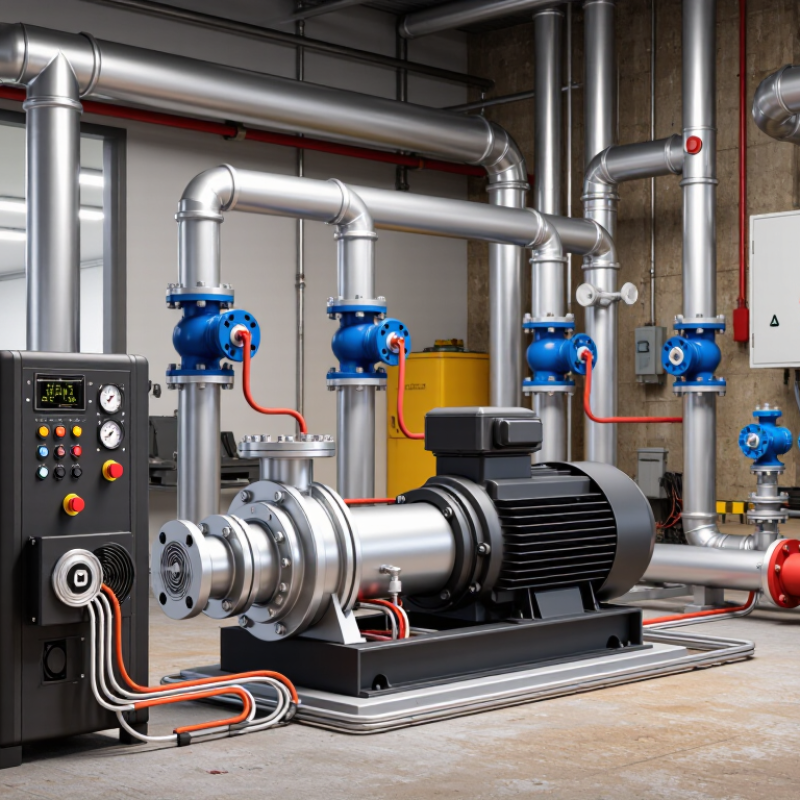
A pump inverter is an electronic controller that changes a pump motor’s speed. It is also called a variable frequency drive. In normal operation, the inverter converts incoming AC power into DC power. It then creates controlled AC output at a selected frequency. Lower frequency reduces motor speed, while higher frequency increases it.
A pressure sensor sends live data to the inverter. The controller compares that reading with the target pressure. It then adjusts motor speed through a feedback loop.
When several taps close, the pump slows down. When demand rises, the pump accelerates. This process can reduce water hammer, noise, and unnecessary energy use. It also provides smoother pressure than simple on-off control.
Choosing the correct unit requires more than matching horsepower. Check the motor voltage, full-load current, frequency range, enclosure rating, and cooling method.
Confirm that the inverter supports the pump’s starting current. The sensor range must also suit the required pressure. A poorly positioned sensor can create unstable operation.
The first calculation is rarely perfect.
In field commissioning, technicians should test low-flow behavior carefully. Some pumps overheat when running too slowly. Others lose stable pressure near their minimum speed.
Dry-run protection, overload protection, and automatic restart settings deserve equal attention. A practical test includes opening one outlet, then several outlets, while recording pressure and current. Small adjustments often reveal large installation problems.
Choosing the right pump inverter in 2026 starts with identification, not shopping. Record the pump type, rated flow, total dynamic head, fluid temperature, viscosity, density, and operating range. Then check available NPSH, suction conditions, impeller diameter, pump speed, and duty cycle. These details define torque demand and help prevent cavitation.
Capture the motor nameplate carefully. Note rated power, voltage, full-load current, frequency, speed, poles, efficiency, insulation class, enclosure rating, and service factor. Do not size the inverter by kilowatts alone. Compare its continuous output current with the motor’s full-load current. Check overload capacity, minimum speed, braking needs, and control method.
The IEA reports that electric motor systems consume about 53% of global electricity. U.S. DOE pumping guidance estimates pumping systems may use 25–50% of industrial motor energy.
A pump inverter also needs the correct feedback strategy. Pressure sensors suit variable-demand water systems, while flow control may fit process applications better.
During commissioning, measure actual current, pressure, flow, and vibration at several speeds.
I have seen a perfect spreadsheet fail because the fluid was colder and thicker than expected.
Recheck the assumptions. A small field correction can expose a serious sizing error.
How to Choose the Right Pump Inverter in 2026?
Matching inverter capacity with pumping requirements starts at the pump’s real duty point. Record the required flow, total head, motor voltage, and operating hours. A pump delivering 30 cubic meters per hour at 40 meters of head needs different control than one serving a low-pressure storage tank. Pipe length, friction losses, elevation, and water temperature also affect the calculation.
The inverter should handle the motor’s rated current, not only its nameplate power. Check starting current, overload capacity, ambient temperature, and installation altitude. For variable-speed systems, confirm the inverter can maintain stable pressure at low frequency. An oversized unit may waste money and reduce control accuracy. An undersized unit can overheat during long pumping cycles. Leave a practical margin, often around 10 to 20 percent, but verify it with the motor data.
Field measurements matter. I have seen projects fail because designers trusted old flow records. A pressure gauge near the pump and a clamp meter can reveal unexpected demand. A neat spreadsheet can still mislead. Recheck the system during peak use, especially when several outlets open together. Cable length, voltage drop, ventilation, and enclosure protection deserve equal attention. Small details become expensive faults. The best selection combines calculated load with observed site conditions, then tests the inverter under realistic pumping conditions.
| Pumping Application | Typical Flow Range | Typical Total Head | Example Motor Rating | Approximate Full-Load Current at 400 V, Three-Phase | Recommended Inverter Capacity Class | Minimum Continuous Output Current | Recommended Overload Capability | Important Selection Considerations |
|---|---|---|---|---|---|---|---|---|
| Small booster or domestic water pump | 5–15 m³/h | 20–45 m | 2.2 kW | Approximately 4.8–5.2 A | 2.2 kW inverter, subject to current rating | At least the motor nameplate current | 120% for 60 seconds or equivalent pump-duty rating | Use a pressure sensor or transducer for constant-pressure control. Confirm that the inverter supports the motor voltage and feedback signal. |
| Irrigation or light commercial transfer pump | 15–35 m³/h | 25–60 m | 5.5 kW | Approximately 11–12 A | 5.5 kW inverter, subject to current rating | At least 12 A continuous at the selected ambient temperature | 120% for 60 seconds; higher overload may be required for high-inertia loads | Check pipe friction, static head, dry-run protection, minimum frequency, and the pump manufacturer's minimum flow requirement. |
| Agricultural irrigation or process circulation | 30–70 m³/h | 35–80 m | 11 kW | Approximately 22–24 A | 11 kW inverter, subject to current rating | At least 24 A continuous, with derating applied where necessary | 120–150% for 60 seconds, depending on acceleration and load inertia | Use a ramp time that prevents water hammer. Select sensorless vector or closed-loop control when stable low-speed torque is important. |
| Municipal water supply or large booster set | 60–150 m³/h | 40–100 m | 22 kW | Approximately 43–47 A | 22 kW inverter, subject to current rating | At least 47 A continuous after temperature, altitude, and enclosure derating | 120% for 60 seconds or the manufacturer's heavy-duty rating | Evaluate bypass operation, redundant pumps, sleep and wake functions, pressure-loss detection, and automatic restart requirements. |
| High-capacity industrial water or cooling system | 120–300 m³/h | 45–120 m | 45 kW | Approximately 86–92 A | 45 kW inverter, subject to current rating | At least 92 A continuous after all applicable derating | 150% for 60 seconds where starting torque or system inertia requires it | Check harmonic limits, motor cable length, output reactor requirements, cooling conditions, and the availability of a suitable maintenance bypass. |
| Deep-well or high-pressure process pump | 20–100 m³/h | 100–300 m | 75 kW | Approximately 140–155 A | 75 kW inverter, subject to current rating | At least 155 A continuous after derating | 150% for 60 seconds or according to the motor and pump starting requirements | Verify submersible-motor cooling flow, permissible minimum frequency, motor cable capacitance, insulation stress, and maximum allowable starts per hour. |
Choosing a pump inverter starts with the pump’s real operating conditions, not its nameplate alone. Record flow, pressure, motor current, pipe length, and daily running hours. A variable-speed control with PID regulation can maintain stable pressure while demand changes. This matters in a building where several taps open at once.
Set acceleration and deceleration times carefully. Sudden changes can create water hammer and unnecessary mechanical stress.
Protection features deserve equal attention. Look for overload, overvoltage, undervoltage, phase-loss, short-circuit, and dry-run protection.
A reliable dry-run function should respond to pressure, current, or sensor feedback, rather than one fixed assumption.
In dusty pump rooms, an appropriate enclosure rating can prevent avoidable failures. Keep alarms visible and easy to interpret.
Technicians need useful fault records, not confusing codes.
Small detail.
Efficiency depends on correct sizing and sensible settings. Oversizing the inverter may increase cost and reduce control precision at low loads. Energy savings are strongest when the pump often operates below full speed.
However, a lower frequency is not always better. Poorly tuned PID settings can cause hunting, noise, and unstable pressure.
I have seen systems lose efficiency because installers trusted factory defaults too much. That mistake is easy to repeat.
Check motor compatibility, sensor accuracy, minimum speed, and cooling requirements during commissioning.
No checklist is perfect. Leave room for measured results and later adjustment.
A pump inverter should be judged beyond its purchase price. Installation often includes an electrician, control cables, sensors, enclosure upgrades, and commissioning time. Check the motor’s current rating, cable distance, and cooling requirements before choosing a unit. A technically suitable inverter may still require expensive site changes. That detail is easy to miss.
Look closely at maintenance access. A removable cooling fan, clear fault records, and locally available spare parts can reduce downtime. Dusty pump rooms need regular filter cleaning, while humid areas may require better protection. Ask who will diagnose faults and how quickly support can arrive. Cheap support is not always useful.
Energy savings deserve a realistic calculation. Compare the pump’s daily operating hours, pressure demand, flow changes, and electricity tariff. Variable-speed control usually performs best when demand changes often. It may offer limited value when the pump runs constantly at full load. Include software setup, periodic inspections, replacement parts, and possible motor stress in the five-year estimate.
A simple spreadsheet helps. Use measured data, not guesses.
My initial cost sheet would still be incomplete without downtime risk. The cheapest inverter can become costly after one failed cooling fan or poor commissioning. A qualified installer should verify settings, grounding, protection, and motor compatibility before operation.
Copyright © 2025 · All Rights Reserved · Franchino Mold & Engineering