
Behind a painted metal door, an Electric Distribution Box quietly directs power to the circuits in a building. It may sit in a hallway, utility room, workshop, or weather-resistant outdoor cabinet. Open the cover, and you may see rows of breakers, labeled switches, and insulated wiring. Its purpose is practical: distribute incoming electricity while allowing individual circuits to be isolated and protected. Small details matter. A faded label can make it harder to identify which breaker controls a kitchen outlet or a garage light.
The name can describe several related enclosures, and usage is not always consistent. Common types include a main distribution board, which receives power from the supply, and sub-distribution panels, which serve a particular floor or area. Residential consumer units are a familiar form; commercial and industrial boards may handle more circuits and higher loads. Outdoor versions add enclosures designed to resist moisture and dust, though the required protection depends on the location. These categories overlap, so product names alone may not tell the whole story.
This guide explains what the box does, how its main components work, and how common types differ. It also considers factors such as circuit capacity, installation environment, and future expansion. The right choice is not simply the largest box or the one with the most breakers. Ratings and layouts must suit the electrical system and be checked by a qualified professional. Labels, wiring condition, and available space deserve attention too. Some details are easy to overlook. That is worth remembering.
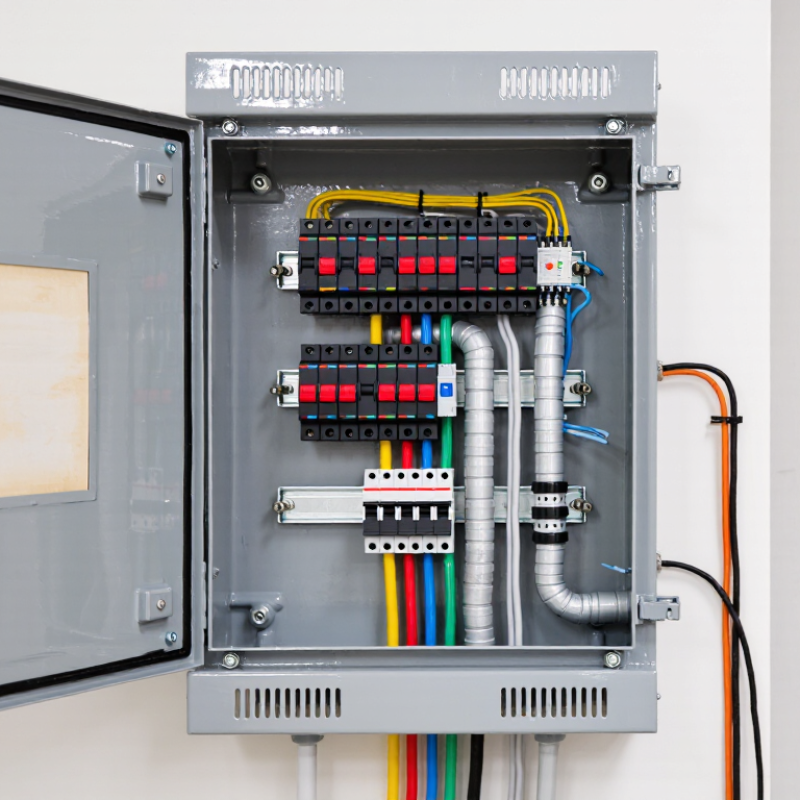
An electric distribution box, often called a distribution board or panel, receives power from the supply and divides it among branch circuits. Inside, busbars connect incoming power to circuit breakers or fuses. These devices help protect wiring by interrupting excessive current. The enclosure also keeps energized parts covered and provides an organized point for inspection. It is not simply a junction box: it distributes and protects circuits.
The International Energy Agency’s 2023 report, Electricity Grids and Secure Energy Transitions, says annual global grid investment needs to rise from about $300 billion to more than $600 billion by 2030. This figure covers grid infrastructure broadly, not distribution boxes alone. Still, it highlights the growing importance of reliable distribution equipment. A box must suit the supply, circuit load, environment, and expected expansion. A panel that looks adequate today may leave little room for future circuits. That detail is easy to overlook.
An electric distribution box receives power from the supply and divides it among a building’s circuits. Its enclosure protects internal parts from dust, accidental contact, and, in outdoor models, weather. The material and sealing level should suit the installation location. A poor fit can let moisture reach electrical connections.
Inside, busbars carry incoming power to individual circuit breakers or fuses. These devices disconnect a circuit when excessive current flows, helping limit overheating and equipment damage. A main switch can isolate the entire box during maintenance. It is not a substitute for safe working procedures. That distinction matters.
Neutral and protective-earth bars provide separate connection points for their respective conductors. Their arrangement depends on the electrical system; they should not be treated as interchangeable. Some boxes also contain residual-current protection, which can cut power when current leaks from its intended path. Labels identify circuits, such as kitchen sockets or hallway lighting, and save time during inspection. Distribution boxes vary by phase, capacity, and setting, including compact indoor units and weather-resistant outdoor enclosures. In practice, cramped wiring or unclear labels can make an otherwise suitable box harder to maintain. The components need enough space for secure connections and clear identification.
| Category | Type or Component | Main Function | Typical Characteristics or Use |
|---|---|---|---|
| Common Distribution Box Types | |||
| Type | Residential consumer unit | Distributes electricity from the supply to household circuits and provides circuit-level protection. | Typically serves lighting, socket, and dedicated appliance circuits in a home. |
| Type | Commercial or industrial panelboard | Supplies and protects multiple branch circuits in larger buildings or facilities. | Usually has a higher circuit capacity and may be designed for three-phase supplies, depending on the installation. |
| Type | Surface-mounted enclosure | Houses distribution equipment while mounted on the face of a wall. | Often selected where installation inside a wall is impractical or access to existing wiring is needed. |
| Type | Flush-mounted enclosure | Houses distribution equipment within a wall recess. | Leaves the front cover close to the wall surface; requires a suitable wall cavity and installation space. |
| Type | Weather-resistant distribution box | Encloses electrical devices to help protect them from environmental exposure. | Used outdoors or in damp locations when its enclosure rating and installation are suitable for the conditions. |
| Main Components and Their Functions | |||
| Component | Enclosure and cover | Provides a physical housing for electrical equipment and helps prevent accidental contact with live parts. | Material, ingress protection, and construction must suit the location and applicable electrical requirements. |
| Component | Main switch or isolator | Disconnects the distribution board from its incoming supply. | Allows the installation or board to be isolated for maintenance; its rating must suit the system. |
| Component | Busbar | Distributes incoming electrical power to protective devices. | Conductive bar or assembly rated for the board; arrangement varies by design and supply configuration. |
| Component | Miniature circuit breaker (MCB) | Disconnects a circuit when an overcurrent or short circuit occurs. | Typically protects an individual branch circuit; rating and trip characteristics must match the circuit design. |
| Component | Residual-current device (RCD) | Disconnects the supply when it detects residual current that may indicate current flowing through an unintended path. | Provides additional protection against electric shock in specified applications; it does not generally provide overcurrent protection by itself. |
| Component | Residual-current circuit breaker with overcurrent protection (RCBO) | Combines residual-current protection with overcurrent and short-circuit protection for a circuit. | Can provide individual circuit protection; the required device type and rating depend on the installation. |
| Component | Neutral bar | Provides a termination point for neutral conductors. | Connections must follow the board design and protection arrangement; neutrals may need to remain separated between protected circuits. |
| Component | Protective earth bar | Provides a termination point for protective conductors connected to exposed conductive parts and the earthing system. | Supports continuity of the protective earthing arrangement; it is distinct from the neutral bar. |
| Component | DIN rail or device mounting supports | Secure compatible modular protective devices within the enclosure. | Common in modern distribution boards; the arrangement depends on the enclosure and equipment design. |
| Component | Cable entries, glands, and wiring space | Allow conductors to enter the enclosure and provide space for routing and termination. | Entries should be suitable for the cable type and location, with wiring arranged to avoid undue strain or damage. |
An electric distribution box receives power from a building’s supply and directs it to separate circuits. Think of a small workshop: one circuit might feed ceiling lights, while another supplies wall outlets and a larger tool. This arrangement keeps power organized and lets each circuit be protected independently.
Inside the enclosure, incoming conductors connect to metal busbars. Circuit breakers attach to these bars and send power into branch-circuit wires. If a circuit draws too much current, its breaker opens and interrupts the flow. A fault may also cause a breaker to trip.
The neutral conductor provides a return path in many systems, while the grounding conductor helps carry fault current along a safer path. They serve different purposes and should not be treated as interchangeable.
In multi-phase installations, a qualified electrician can distribute circuits across phases to manage demand. Even a tidy panel can have outdated or inaccurate labels, so verify circuits with proper testing before any work.
The exact layout varies with the supply, equipment, and local installation requirements.
Electric distribution boxes are commonly classified by their purpose, installation, and environment. A main distribution board receives incoming power and directs it to major circuits or smaller boards. Sub-distribution boards serve a section of a building, such as one floor, workshop, or apartment. They can shorten cable runs, but their circuit capacity must match the expected load.
Panelboards typically group breakers for lighting, outlets, and equipment. In some regions, “panelboard” and “distribution board” describe similar equipment; local terminology can vary. That distinction matters. For outdoor locations, weather-resistant enclosures help protect electrical components from rain, dust, and corrosion. Indoor boxes usually do not need the same level of environmental protection. Temporary distribution boxes are used on construction sites or during events, where power needs may change frequently. They need secure connections and suitable protection against physical damage.
The right type depends on voltage, current, circuit count, installation conditions, and future expansion. Keep it accessible. A box that is too small can leave cramped wiring and make later maintenance harder. On the other hand, choosing a larger enclosure alone does not ensure safe capacity. I have seen specifications overlooked when attention stays only on box size.
A qualified electrician should assess the supply, protective devices, and installation before selection or replacement.
An electric distribution box routes power from an incoming supply to protected circuits. In homes, compact consumer units serve lighting, outlets, and major appliances. Workshops often need more circuits for motors or welding equipment, while offices and retail spaces may require separate panels for lighting, HVAC, and essential equipment. Outdoor installations need enclosures suited to moisture, dust, and temperature changes. Details matter. The International Energy Agency’s 2023 report, Electricity Grids and Secure Energy Transitions, says more than 80 million kilometres of grids must be added or refurbished by 2040. That estimate concerns electricity networks, not distribution boxes specifically, but it highlights the importance of dependable distribution infrastructure.
Choose a box by supply voltage, expected load, circuit count, available fault-current rating, and installation environment. Confirm that its protective devices match the wiring and connected equipment; a licensed electrical professional can verify these details. For a garage, for example, consider future tool circuits before filling every available position. A common mistake is choosing by enclosure size alone. It seems practical, yet leaves little room for expansion. Check enclosure protection ratings for exposed locations and allow appropriate working clearance. Solar or battery systems may need compatible isolation and protection equipment, depending on the system design. A rushed selection can fit today’s needs, but still create avoidable upgrades later.
Copyright © 2025 · All Rights Reserved · Franchino Mold & Engineering