
Choosing the right Spare Tire is not simply a matter of matching wheel diameter. It is a safety decision made before a roadside emergency occurs. Your vehicle’s owner’s manual provides the most reliable starting point. Check the approved tire size, load index, speed rating, and wheel specifications. These details must match your vehicle’s requirements. A compact temporary tire may save space, but it usually limits speed and driving distance. A full-size spare offers better handling, yet it requires more storage room.
Look closely at the tire’s age and condition. Rubber can deteriorate, even when the tread appears untouched. Check the sidewall for cracks, bulges, and uneven wear. Confirm that the spare fits over the brake assembly. Some larger brake systems reject older wheel designs. Do not forget the jack, wrench, adapter, and locking-nut key. Small omissions become frustrating beside a dark highway.
Pressure matters greatly. Inflate the Spare Tire to the manufacturer’s recommended pressure, not the pressure used by your regular tires. A temporary tire may require much higher pressure. Check it monthly, because unused tires still lose air. If your vehicle uses a tire-pressure monitoring system, understand how the spare affects its warning light. Professional tire retailers and vehicle manufacturers remain valuable sources when specifications seem unclear. Even careful owners make mistakes. Recheck the label before purchasing, and reconsider the tire after major vehicle modifications. A suitable Spare Tire should fit physically, perform predictably, and help you reach qualified service safely.
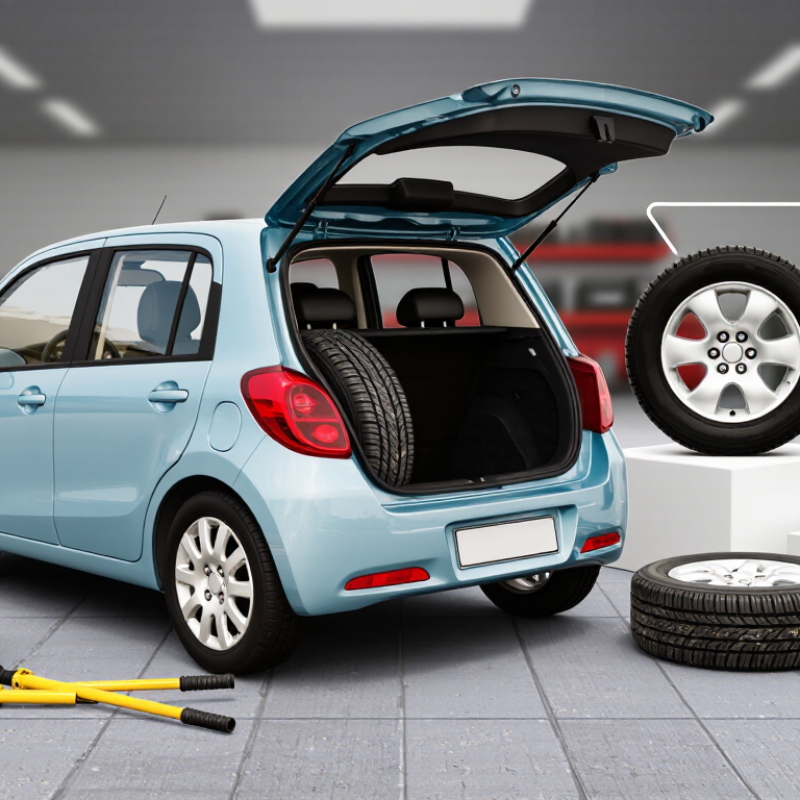
Identify your vehicle’s spare tire requirements before shopping. Check the owner’s manual and the tire-information placard, usually inside the driver’s door. Note the required tire size, load rating, and inflation pressure. A spare must also fit your wheel studs and clear the brakes. Close enough is not always close enough.
The American Automobile Association reported in 2017 that 28% of 2017-model-year vehicles came without a spare tire, instead relying on other mobility options. That finding makes it worth checking your trunk before an emergency. If your vehicle has a compact temporary spare, read its sidewall and manual for speed and distance limits. These limits vary. A full-size spare may match the regular tires, but its age and condition still matter. A dusty, underinflated spare can be a problem when you need it most.
Tips: Check the spare’s pressure monthly, using the vehicle manual’s specification. Confirm the jack and lug wrench are present, too. If you use a temporary spare, drive only as directed by the manufacturer, then repair or replace the damaged tire promptly. I still find this easy to overlook.
Choosing a spare tire starts with its intended use, not its appearance. A full-size matching spare offers familiar handling and braking. It can often remain on the vehicle for extended use. Proper tread depth and inflation are still essential. This option suits remote travel, heavy loads, or sensitive all-wheel-drive systems. However, it requires more storage space and adds weight.
A compact temporary spare saves space and reduces weight. Its smaller diameter changes steering feel, ground clearance, and braking response. Use it only for the distance and speed stated in the vehicle manual. Never assume a short trip is harmless. Wet roads can make the difference noticeable. Check its pressure monthly, because small spares can lose air quickly. Convenience sometimes encourages poor judgment.
Some vehicles use collapsible spares, while others provide no spare at all. A collapsible design needs inflation before driving. It may also require a working compressor. An inflation sealant kit can help with a small tread puncture. It cannot repair sidewall damage. Before buying, match the bolt pattern, tire diameter, load rating, and clearance. The door-frame label and owner’s manual are more reliable than generic online charts. One detail is easy to overlook: a spare may fit the hub but interfere with the brakes. A qualified technician can test-fit unfamiliar equipment.
Compare spare tire types and their intended uses
Compact temporary spares, including space-saver and donut designs, are generally intended for emergency use at a maximum of about 80 km/h and for approximately 80 km. Run-flat tires commonly provide a similar emergency range, although the exact limit depends on tire construction and vehicle specifications. A full-size spare is designed to match the vehicle's normal tire and does not normally have these temporary-use restrictions. Always follow the vehicle owner's manual and the limits printed on the tire sidewall.
Choosing a spare tire starts with the size printed on your vehicle’s door-jamb label or owner’s manual. The code must match the original tire’s width, aspect ratio, and rim diameter. Do not guess. A slightly different size can affect braking, steering, and electronic safety systems.
Load rating matters just as much. Select a spare with a load index equal to or higher than the vehicle’s original specification. Check the speed rating too, especially for full-size replacements. NHTSA reports that tire-related crashes cause about 11,000 crashes and nearly 200 deaths annually in the United States. That figure makes correct matching more than a paperwork exercise. It becomes a roadside safety decision. The Tire and Rim Association Year Book provides recognized dimensions for tire and wheel compatibility. Use those tables when fitment information is unclear.
The wheel must also match the bolt pattern, center bore, offset, and brake-clearance requirements. A tire may have the correct size but still fail to mount safely. In practical inspections, this is an easy detail to overlook. Measure twice. Check the spare’s inflation pressure when the tires are cold, using the vehicle manufacturer’s specification. Temporary spares often require higher pressure and lower speeds, so read the sidewall carefully. I once assumed a compact spare would fit every trim level; that assumption was wrong. Vehicle options can change brake size and wheel clearance, which is why a physical test fit remains useful.
Choosing a spare tire is not only about matching the tire size. Brake hardware and wheel clearance can decide whether the spare is safe. Check the vehicle manual for the approved tire diameter, wheel width, load rating, and bolt pattern. Confirm the wheel’s offset as well. A small offset difference can move the rim closer to the brake caliper or suspension.
In practical inspections, I check the space around the brake assembly before driving. Measure the gap between the wheel’s inner surface and the caliper. Do not rely on appearance alone. An identical tire diameter can still hide a dangerous clearance problem. If possible, fit the spare and rotate it by hand. Listen for contact. Turn the steering fully in both directions. The wheel should move freely without touching the caliper, strut, or control arm.
I once assumed that a compact spare would fit because its bolt pattern matched. That assumption was wrong. The brake caliper was larger than the original wheel opening. Temporary spares may also have lower speed and load limits. Read every marking on the sidewall. Check air pressure before installation, because stored spares often lose pressure. If clearance feels uncertain, ask a qualified technician to test-fit the wheel. A few minutes of checking can prevent vibration, brake damage, or loss of control.
Choosing the right spare tire involves more than matching its diameter. Check your vehicle manual for the approved size, load rating, wheel type, and driving limits. A temporary spare may look suitable, yet it can handle less weight than a full-size tire.
Storage deserves careful attention. Keep the spare in its designated compartment, away from sharp tools, moisture, and loose cargo. Inspect the sidewall for cracks, bulges, or deep cuts. I once assumed a rarely used spare was ready for emergencies. That assumption was wrong. Heat and age had weakened the rubber.
Inflation pressure is equally important. Measure it with a reliable gauge when the tire is cold, then compare the reading with the vehicle’s specified pressure. Do not use the pressure printed on the tire’s sidewall as the vehicle’s recommended setting. Check the spare monthly and before long trips. Five minutes can prevent a difficult roadside delay.
Replacement requirements vary by design and use. Replace a temporary spare after damage, improper storage, or the service period stated in the manual. A full-size spare also needs replacement when its tread, rubber condition, or age becomes unsafe. Follow the speed and distance limits carefully. Do not forget the wheel hardware; some spare wheels require different nuts or bolts. Small details matter.
| Spare Tire Type | Typical Use | Storage Requirements | Inflation Requirements | Driving Restrictions | Replacement Guidance |
|---|---|---|---|---|---|
| Full-Size Matching Spare | Designed to match the vehicle’s regular tire in size, load capacity, and speed rating. | Store securely in the designated compartment or cargo area. Protect it from moisture, chemicals, and prolonged direct sunlight. | Use the pressure listed on the vehicle placard or owner’s manual. Check pressure at least monthly and before long trips. | Usually suitable for normal driving when correctly matched and properly inflated. | Replace when the tread reaches the legal wear limit, the tire is damaged, or the rubber shows significant aging or cracking. |
| Full-Size Temporary Spare | Matches the wheel diameter or general tire size but may differ in tread design, width, or performance rating. | Secure it to prevent movement. Confirm that the wheel, tire, and fasteners fit the vehicle before relying on it. | Inflate according to the spare-tire pressure label or owner’s manual; do not assume the regular tire pressure applies. | Drive conservatively until the regular tire is repaired or replaced. Handling and braking may differ. | Inspect regularly for age, cracking, corrosion, and damage, even if it has never been used. |
| Compact Temporary Spare | Provides short-term mobility after a puncture or tire failure while saving space and weight. | Keep it in its intended storage well with the retaining hardware fitted. Avoid placing heavy cargo on top of it. | Often requires a higher pressure than regular tires. Follow the pressure printed on the spare or specified in the owner’s manual. | Use only for temporary travel. Observe the maximum speed and distance limits printed on the tire or stated by the vehicle manufacturer. | Replace if damaged, underinflated for an extended period, excessively aged, or past the manufacturer’s service recommendation. |
| Run-Flat Replacement Tire | Allows limited travel after a loss of air pressure when the vehicle is equipped for run-flat operation. | Store and fit only as approved for the vehicle. A standard spare may not be included or may not fit the available storage area. | Check pressure with a gauge because visual inspection may not reveal pressure loss. The tire-pressure monitoring system must be operational. | Follow the tire’s emergency distance and speed limits. Ride comfort and handling can change after pressure loss. | Have the tire inspected after driving deflated. Replace it if the manufacturer does not permit repair after pressure loss or if internal damage is suspected. |
| Inflation-Sealant Kit | Temporarily seals some small tread punctures and reinflates the tire; it does not replace a spare tire. | Store the compressor, sealant, hose, and power cable together. Keep the sealant within its expiration date. | Use only according to the kit instructions. Check the repaired tire pressure again after driving the specified short distance. | Temporary use only. Do not use for sidewall damage, large cuts, bead damage, or a tire that has come off the wheel. | Replace expired sealant cartridges and repair or replace the affected tire as soon as possible. |
| No Spare Tire Included | Some vehicles rely on roadside assistance, run-flat tires, or an inflation-sealant kit. | Verify what emergency equipment is present before a journey. Check the jack, wrench, towing eye, compressor, and sealant where applicable. | Maintain all regular tires at the pressure shown on the vehicle placard, normally located on the driver-side door area or in the owner’s manual. | Do not continue driving on a visibly damaged or severely underinflated tire unless a permitted emergency system specifically allows it. | Confirm replacement options, wheel compatibility, lifting points, and any required tire-pressure monitoring procedures. |
| Safety Check: Before choosing a spare, verify the correct wheel-bolt pattern, wheel offset, tire size, load rating, speed rating, brake-clearance fit, maximum speed, inflation pressure, and storage dimensions in the vehicle owner’s manual. The vehicle manufacturer’s instructions take priority over general guidance. | |||||
Copyright © 2025 · All Rights Reserved · Franchino Mold & Engineering