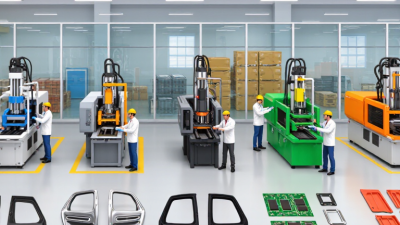
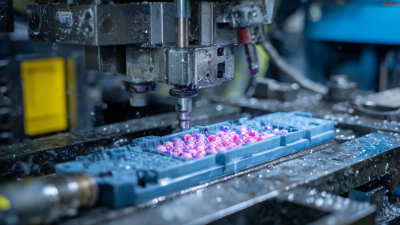
Plastic casting turns a liquid or softened polymer into a solid part by shaping it inside a mold. The method can suit prototypes, decorative components, and small production runs, especially when complex shapes or smooth surfaces matter. But “casting” does not describe one universal recipe. Material choice, mold design, and curing conditions all affect the result.
The wider plastics industry gives this process important context. The OECD’s Global Plastics Outlook (2022) estimates that global plastic production rose from 234 million tonnes in 2000 to 460 million tonnes in 2019. Plastic waste reached 353 million tonnes that year, while only 9% was ultimately recycled. These figures describe the industry as a whole, not plastic casting specifically. Still, they underline why material efficiency and careful process planning matter.
In a typical plastic casting workflow, a maker prepares the mold, measures and mixes the material, then pours it into the cavity. The polymer cures or cools before the part is removed and finished. Small details matter. Trapped air, damp molds, inaccurate ratios, or rushed curing can leave bubbles, weak spots, and uneven surfaces. Those issues are easy to underestimate when a process looks simple on a workbench. The exact steps vary: resin systems, thermoplastics, and mold materials each have different requirements. This guide explains how plastic casting works, where it is useful, and what to check before choosing it for a project. A mold can reproduce a shape; it cannot correct poor material selection.
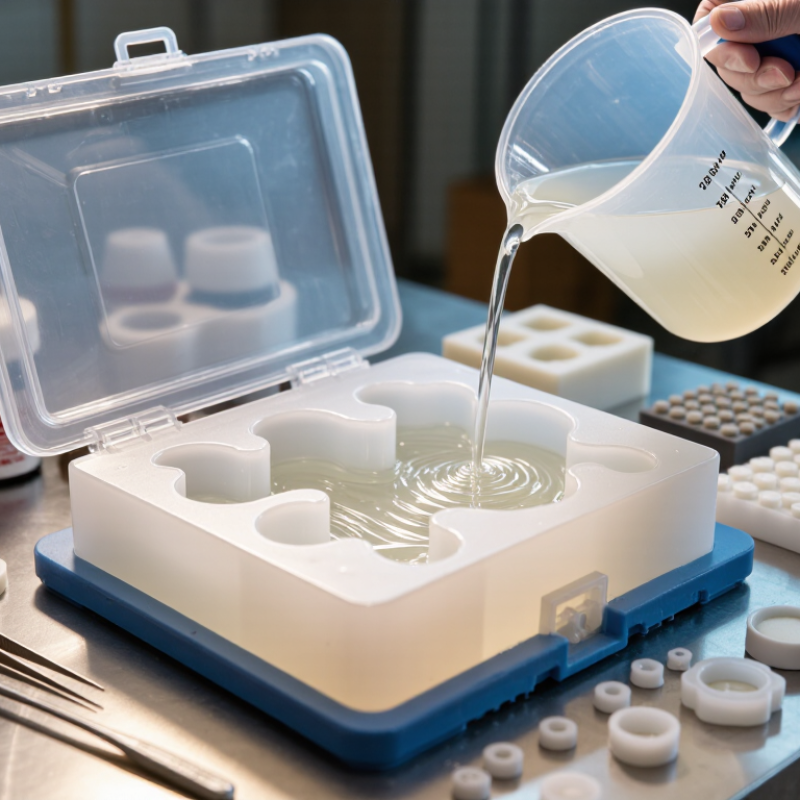
Plastic casting forms a part by pouring or injecting liquid polymer into a shaped cavity, then letting it harden. Many casting resins cure at room temperature, though some require controlled heat. The mold might be flexible silicone for a prototype or rigid material for repeated runs. The setup is simple. Care still matters: a trapped bubble can leave a visible pit on a smooth surface.
Injection molding works differently. It melts plastic, then forces it into a closed mold under pressure. That process is usually better suited to high quantities and repeatable parts, but its tooling can cost more. Casting often suits short runs, larger shapes, or designs that would be costly to tool. It is usually slower, and cure time can affect how soon a part is ready. These are tendencies, not strict rules; material and part geometry can change the comparison.
Compression molding also uses a closed, heated mold, but material is placed inside before the tool closes and presses it into shape. Casting generally relies more on liquid flow and gravity, or modest pressure. For a cast part, check wall thickness, resin compatibility, shrinkage, and venting. A clear casting may still turn cloudy or show bubbles. The boundary between processes is not perfectly neat, so compare actual material data and sample parts before choosing a method.
Plastic casting uses liquid resin that hardens inside a shaped mold. Small-batch parts often use polyurethane or epoxy casting resins. Polyurethane is available in flexible and rigid grades, making it useful for detailed parts and prototypes. Epoxy usually offers a longer working time and can produce clear or durable pieces, depending on its formulation. Check the technical data sheet for mixing ratios, cure time, and recommended working conditions. Small details matter.
Silicone molds are common because they flex around undercuts and release many shapes with less force. That flexibility can also make thin mold walls sag, so a supporting outer shell may be needed. Plaster molds can suit certain resin systems, but they usually need thorough drying and sealing. Rigid molds can hold their shape over repeated cycles, though their material must tolerate the resin’s curing heat. Mold choice is not just about shape.
Resin viscosity affects how well it reaches narrow grooves. A slow, careful pour can reduce trapped air, while vents give displaced air a path out. Follow the resin maker’s safety instructions, including ventilation and protective equipment. A warm mold may speed curing, but excess heat can distort a part or damage a mold. There is no perfect setup. A small test casting can reveal bubbles, sticking, or shrinkage before you commit to a larger run.
Plastic casting begins with a prepared mold and a measured liquid resin. The mold may be silicone for easy release or a rigid material for sharper dimensions. Workers clean it, check seams, and apply release agent where needed. Then they weigh the resin and hardener to the supplier’s specified ratio. Small details matter. Incorrect proportions can leave a part soft, brittle, or sticky.
Next, the components are mixed slowly to limit trapped air. For clearer or more precise parts, the mixture may be vacuum-degassed before pouring. The resin enters the mold in a thin stream, often along one edge, so air can escape. It then cures for the time and temperature specified for that material. A bubble can still survive. Room temperature, mold design, and mixing technique can all affect the result, so this step is not perfectly predictable.
Once cured, the part is removed and checked for surface defects, incomplete filling, and dimensional accuracy. Excess material may be trimmed, and edges can be sanded or polished. PlasticsEurope’s Plastics – the Fast Facts 2024 reports that global plastics production reached 413.8 million tonnes in 2023; this figure covers plastics broadly, not casting alone. It shows the scale of the material sector, while each casting job still depends on careful, small-batch control.
Plastic casting usually begins with liquid resin poured into a mold, where it hardens into the required shape. The method depends on part geometry, surface detail, and acceptable defect levels.
With open-mold gravity casting, resin flows into a simple mold without vacuum or pressure. It suits straightforward parts and small batches, but trapped air can leave pinholes, especially around narrow corners. Simple, but limited.
Vacuum casting commonly uses a silicone mold made from a master pattern. The mold and resin are placed in a vacuum chamber to reduce bubbles and help resin reach fine features.
This method can reproduce textures, lettering, and small undercuts more accurately than a basic hand pour. However, silicone molds wear with repeated use, so dimensions may gradually drift. That detail is easy to overlook.
Pressure casting uses a pressure chamber during curing. Increased pressure compresses small air bubbles, which can improve the appearance of clear or finely detailed parts. Unlike vacuum processing, it does not primarily draw air out of the resin.
It also requires suitable equipment and careful control of resin mixing and cure time. In practice, the categories can overlap: some workflows combine vacuum degassing with pressure curing. The best choice depends on the part, not just the machine. A thick test piece may cure well while a thin rib traps bubbles, so sample runs are useful.
Plastic casting pours liquid resin into a prepared mold, where it cures into a solid part. For small production runs, silicone molds can capture fine textures without the cost of hardened metal tooling. A maker can reproduce screw bosses, shallow lettering, or a curved enclosure in one piece. That flexibility is useful. It does not make every design easy to cast.
The benefits are modest setup costs, quick mold changes, and freedom to test shapes before committing to larger-scale production. Typical uses include prototypes, display models, custom housings, and short-run components. Plastics Europe’s 2024 Plastics—the Fast Facts report estimates global plastics production reached 413.8 million tonnes in 2023. That figure covers plastics overall, not cast parts, but it shows the broad material landscape these processes serve.
Casting also has limits. Curing takes time, and trapped air can leave visible bubbles or weaken thin sections. Resin shrinkage may affect dimensions, while repeated use can wear a soft mold. Results depend on careful mixing, mold design, and temperature control. A small batch can still need hands-on finishing. That part is easy to underestimate. Casting suits parts where detail and low tooling cost matter more than high-volume speed or identical output across thousands of units.
Plastic casting forms a part by pouring or introducing liquid resin into a mold, then allowing it to cure or solidify. The process, materials, and achievable results vary by casting method.
| Casting Method | How It Works | Common Materials | Key Benefits | Limitations | Typical Applications |
|---|---|---|---|---|---|
| Open-mold resin casting | Liquid resin is poured into an open or simple closed mold and left to cure, sometimes with heat or pressure control. | Polyurethane, epoxy, and polyester casting resins. | Relatively simple tooling; suitable for complex shapes, thick sections, and small production quantities. | Manual pouring can create bubbles or inconsistent results; curing may take longer than thermoplastic molding cycles. | Decorative objects, model components, small housings, prototypes, and encapsulated parts. |
| Vacuum casting with silicone molds | A master pattern is used to make a silicone mold. Resin is poured into the mold in a vacuum chamber to help reduce trapped air. | Cast polyurethane resins formulated to resemble ABS, polypropylene, or elastomers. | Can reproduce fine surface detail; useful for making multiple prototype parts without hard production tooling. | Silicone molds wear with use and are generally suited to short runs; part size and resin choices are limited by the mold and process. | Product-design prototypes, appearance models, fit checks, and short-run demonstration parts. |
| Cell casting of acrylic | Liquid acrylic monomer is polymerized between plates, commonly glass plates, to form solid acrylic sheet or blocks. | Polymethyl methacrylate (PMMA), commonly known as acrylic. | Can produce clear, weather-resistant material in thick sections and large sheet formats; cast sheet can be machined and polished. | Polymerization and cooling require careful control; residual stress, thickness variation, or bubbles can occur if processing is not controlled. | Signage, display panels, aquariums, lighting components, and transparent machine guards. |
| Potting and encapsulation casting | Liquid resin is poured around or over an electrical or mechanical component and cured in place. | Epoxy, polyurethane, or silicone compounds selected for the service environment. | Can protect components from moisture, dust, vibration, and some chemicals; also provides electrical insulation when the material is suitably specified. | Encapsulated components can be difficult to inspect, repair, or remove; heat dissipation and material compatibility require consideration. | Electrical connections, sensors, transformers, circuit assemblies, and protective component housings. |
Copyright © 2025 · All Rights Reserved · Franchino Mold & Engineering