
Buying an Electric Block Machine is not just a capacity decision. It affects product consistency, labor routines, power use, and delivery schedules. A machine advertised at 10,000 blocks per shift may not match your plant’s molds, mix, staffing, or curing space. The number needs context.
Industry data makes efficiency worth examining. The 2023 Global Status Report for Buildings and Construction, published by the United Nations Environment Programme and the Global Alliance for Buildings and Construction, estimated that buildings and construction accounted for 34% of global energy demand and 37% of energy- and process-related CO₂ emissions in 2022. Those figures describe the wider sector, not block machines alone. Still, they underline why buyers should look beyond purchase price and ask for realistic energy and production data.
Details matter. Check the block sizes and molds you actually need, then compare verified cycle times and usable output. Ask how operators change molds, clean the machine, and access replacement parts. Request references from plants making similar products, and clarify what installation and training include. A polished brochure is not proof. Neither is the lowest quote.
This guide presents seven practical tips for evaluating an Electric Block Machine, from production requirements to after-sales support. Some comparisons will remain imperfect; factory conditions differ, and suppliers may measure output differently. That is precisely why careful questions, documented specifications, and a little healthy skepticism belong in every buying decision.
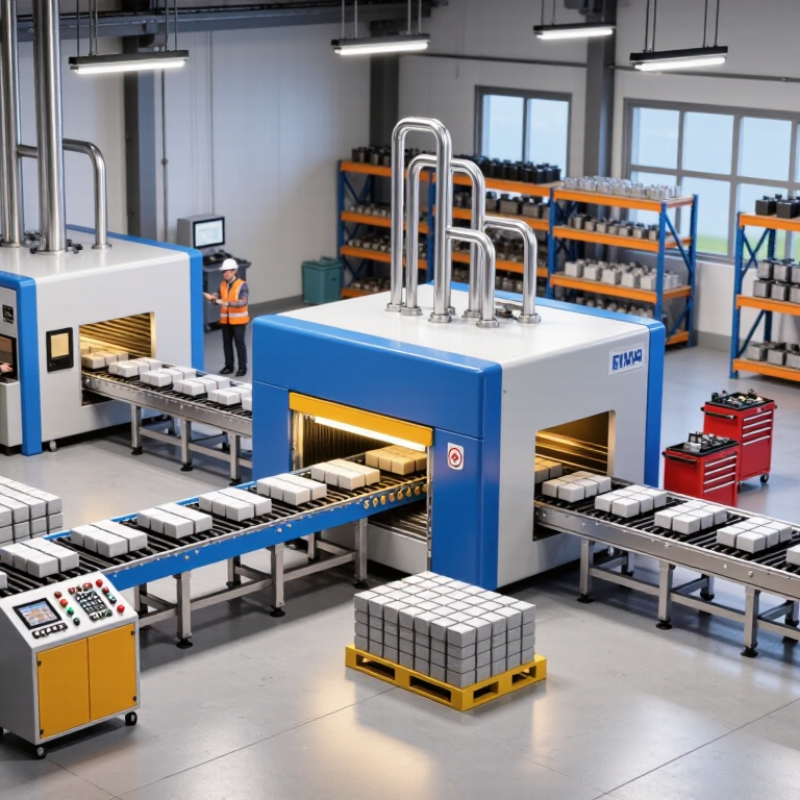
Before comparing electric block machines, define what your yard must produce each day. List block types, dimensions, hollow or solid cores, and surface finishes. Separate regular orders from seasonal peaks, then estimate daily output for each product. A single capacity figure can mislead: changeovers, mold cleaning, and rejected units reduce saleable production. Include curing space and pallet storage in the calculation. A fast machine is not useful if finished blocks have nowhere to go.
Tip: Calculate saleable blocks per shift, not theoretical machine cycles. Add a realistic allowance for changeovers and downtime, then check whether staffing and curing capacity can support that target.
Write down the tolerances customers require before selecting molds. ASTM C90-22, the specification for loadbearing concrete masonry units, allows actual dimensions to vary by up to 1/8 inch from specified dimensions. Confirm the project’s required dimensions and applicable specification with its designer; do not assume every market uses the same block. Also note the smallest and largest products you expect to make. Frequent size changes may need extra molds and setup time. That cost is easy to overlook. Review your estimates against actual orders after a few months; early forecasts are often imperfect.
An electric block machine should match your product mix, not just its advertised output. A manual-feed model suits small yards with steady, limited orders; a semi-automatic line reduces repetitive handling; a fully automatic system needs dependable material supply, trained maintenance, and space for conveyors and curing racks. The Global Cement and Concrete Association estimates that the world produces about 14 billion cubic metres of concrete annually. That scale does not guarantee local demand. Check actual orders for hollow blocks, solid units, and pavers before paying for unused capacity. Fit matters.
Compare rated capacity with saleable output per shift. Ask suppliers to demonstrate a full cycle using your mix, mold, and target block size. Record cycle time, changeover time, rejected units, and labor needed at each station. A high hourly figure can hide long mold changes or curing bottlenecks. Calculate output from your real shift schedule, then leave room for maintenance and demand swings. Automation can cut manual handling, but it also adds sensors, controls, and repair needs. The International Federation of Robotics reported 4.28 million industrial robots operating worldwide in 2023; this shows broad adoption, not guaranteed savings for a block plant. A site visit helps. Inspect wiring, guarding, spare-part access, and finished blocks after curing. I would still question any quote that promises peak output without a documented production trial.
Tip 1: Check real power use, not just motor size. Ask suppliers for measured kilowatt-hours per operating hour, including vibration, hydraulic pumps, and standby time. The U.S. Department of Energy’s 2014 motor-systems sourcebook estimates that motor-driven systems use about 68% of U.S. manufacturing electricity. That figure is not specific to block machines, but it shows why motor efficiency and idle consumption deserve attention. Request a test under a production load similar to yours.
Tip 2: Inspect build quality where wear begins. Look closely at welds, mold guides, vibration mounts, and hydraulic hose fittings. Ask how often components need adjustment, and whether replacement parts are readily available. A thick steel frame may look reassuring, but finish and alignment matter too. I would want to see a machine cycle before purchase; a tidy brochure cannot show looseness or uneven vibration.
Tip 3: Test safety features in person. Check guards around moving parts, emergency stops, clear controls, and safe access for cleaning. Ask for the operating and maintenance instructions, then confirm workers can reach service points without entering hazardous motion areas. Try the emergency stop. Does it respond clearly? OSHA’s machine-guarding guidance stresses protecting workers from points of operation and moving parts, but real inspection still matters. A checklist helps; it does not replace careful observation.
How to read this chart: These are illustrative calculations, not standard machine ratings. At continuous rated load, energy use equals power in kilowatts multiplied by operating hours: an 8-hour shift at 5, 10, or 15 kW would use 40, 80, or 120 kWh, respectively. Actual consumption varies with load and idle time. Before buying, confirm electrical requirements, inspect build quality, and check for guards and accessible emergency stops.
7 Tips for Buying an Electric Block Machine
When assessing an electric block machine, look beyond its purchase price and ask what routine maintenance requires. Request the recommended service intervals for motors, gearboxes, bearings, hydraulic components, and electrical connections. Ask whether inspections need specialist tools or a technician. Small details matter. A grease point hidden behind a guard can turn a quick check into a longer shutdown.
The U.S. Department of Energy’s Operations & Maintenance Best Practices Guide (2010) reports that predictive maintenance can reduce maintenance costs by 25–30% and downtime by 35–45% in industrial settings. Treat these figures as broad benchmarks, not guaranteed savings for a block machine. Ask whether the supplier can provide maintenance logs, fault-code guidance, and training for operators. A brief demonstration of checking vibration, loose terminals, or unusual motor heat is more useful than a polished brochure.
Confirm which spare parts are stocked locally and how quickly wear items can be shipped. Get a written list covering sensors, belts, contactors, and seals, including part numbers and lead times. Downtime gets expensive. Clarify the technical-support hours, response method, and whether remote troubleshooting is available. Still, a detailed checklist cannot prevent every failure; production pressure may cause skipped inspections. Ask how the maintenance plan fits real shift routines, not just ideal ones.
7 Tips for Buying an Electric Block Machine
An electric block machine’s purchase price is only the starting point. Compare the full cost of delivery, installation, operator training, energy, routine maintenance, and replacement parts. NIST Handbook 135’s life-cycle costing framework includes these expenses, helping buyers avoid decisions based on price alone. The U.S. Department of Energy’s 2014 motor-systems sourcebook estimates that motor-driven systems use about 68% of manufacturing electricity. That figure is not a machine-specific forecast, but it shows why actual power consumption deserves careful checking.
Ask suppliers for measured energy use under comparable production conditions, not just rated motor power. Request a written warranty and inspect its limits: coverage period, labor, shipping, wear parts, and response time. Small print matters. A longer warranty may still offer little protection if service visits are costly or excluded. Price the commonly replaced parts and ask how quickly they can be shipped.
Supplier reliability needs evidence. Request references from operators using similar machines, then ask about downtime, service response, and spare-part availability. If possible, inspect a running machine and watch a full production cycle; note vibration, noise, and how quickly an operator clears a jam. Ask for proof. A spreadsheet can still miss local service delays or real operating conditions, so leave room in the budget for uncertainty.
| Tip | What to Compare or Check | Evidence to Request | Why It Matters |
|---|---|---|---|
| 1. Compare total installed cost | Include the machine, molds, mixer, conveyor or batching equipment, freight, insurance, import duties, installation, commissioning, training, and site preparation. | An itemized quotation showing included and excluded items, delivery terms, payment schedule, and any optional equipment. | A low machine price can lead to a higher project cost if essential equipment, shipping, or setup is excluded. |
| 2. Check production claims against your product | Compare cycle time and stated output for the exact block size, mold configuration, mix, and operating conditions you plan to use. Distinguish theoretical output from sustained production. | A written production specification and, where practical, a sample run using the intended mold and mix design. | Output depends on the product, curing and handling arrangements, material supply, and operator workflow—not only the machine cycle. |
| 3. Estimate operating and maintenance costs | Review connected electrical load, expected operating hours, routine lubrication and cleaning, wear parts, mold replacement, and any required compressed-air or hydraulic services. | Electrical requirements, recommended maintenance schedule, parts list, and prices or ordering details for common wear items. | Ongoing energy, maintenance, and replacement-part costs affect the machine’s cost over its service life. |
| 4. Read the warranty terms closely | Compare warranty duration, start date, covered components, labor coverage, travel costs, response process, and exclusions. Check whether the warranty differs for electrical, hydraulic, and wear components. | The full written warranty, including claim steps, required maintenance records, and who pays for parts, labor, shipping, and on-site service. | A headline warranty period alone does not show what is covered or how costly it may be to make a claim. |
| 5. Verify spare-parts and service support | Ask which parts are stocked, typical dispatch times, available remote troubleshooting, technician availability, and service coverage for your location. | A parts catalog, support contact process, service description, and written estimates for common replacement parts. | Long waits for critical parts or technical help can interrupt production and increase downtime costs. |
| 6. Assess supplier reliability | Check the supplier’s relevant installation experience, documentation quality, communication, delivery commitments, and ability to provide support after commissioning. | Recent customer references for comparable installations, a clear project schedule, machine documentation, and a defined escalation contact. | Reliable delivery and support are important for installation, operator training, troubleshooting, and future maintenance. |
| 7. Confirm site, safety, and acceptance requirements | Confirm dimensions, foundation and floor requirements, electrical supply, guarding, emergency stops, operator access, and the agreed inspection or acceptance criteria. | Installation drawings, utility requirements, safety documentation, commissioning checklist, and written acceptance-test conditions. | Early checks help prevent site modifications, commissioning delays, and misunderstandings about whether the equipment is ready for production. |
Copyright © 2025 · All Rights Reserved · Franchino Mold & Engineering