
Choosing reliable Air Rock Picks is not simply a matter of comparing prices. Global buyers need tools that match rock hardness, working depth, compressor capacity, and maintenance conditions. This guide, “China Top 10 Air Rock Picks Manufacturers for Global Buyers,” examines manufacturers through practical purchasing criteria. These include product durability, striking performance, air consumption, shank compatibility, vibration control, quality management, and export support.
Rock-engineering authority Dr. Evert Hoek stated, “The objective of rock engineering is to design structures in rock that are safe, stable, and economical.” His principle also applies to tool selection. A suitable air pick should deliver steady impact energy without exhausting the compressor or tiring the operator too quickly. Buyers should inspect test data, material specifications, replacement parts, and after-sales communication. Small details matter. A worn bushing can change the tool’s feel within hours.
The manufacturers discussed here serve mining, quarrying, construction, foundry, and maintenance applications. Their products may appear similar in photographs, yet performance can differ under wet stone, fractured concrete, or continuous underground work. Some companies provide stronger documentation than others. That difference deserves attention.
No ranking is perfectly neutral. Factory audits, sample testing, and direct technical questions remain necessary before purchasing. A polished catalogue can still hide inconsistent tolerances. Conversely, a lesser-known supplier may provide excellent engineering and responsive service. This introduction offers a practical starting point, not a substitute for field verification. Air Rock Picks should be judged by measurable performance, dependable supply, and honest technical support.
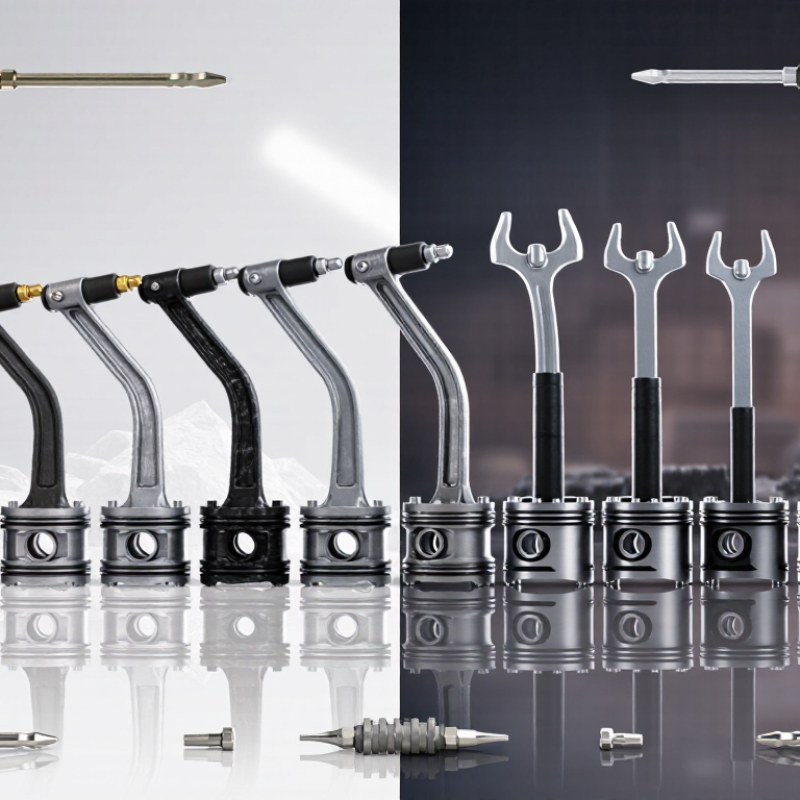
China Top 10 Air Rock Picks Manufacturers for Global Buyers
Air rock picks are compact pneumatic tools for breaking concrete, masonry, rock, and compacted soil. They work through compressed air, which drives an internal piston against a steel shank. Each piston stroke transfers impact energy to the attached chisel. The operator controls pressure through a trigger, while the tool’s valve regulates repeated blows. In practical use, a sharp chisel removes material faster than a worn one. That detail is easy to overlook. ISO 11148-4 covers safety requirements for handheld non-electric power tools, including many chipping and scaling tools.
Performance depends on more than advertised impact force. Air pressure, airflow, hose diameter, lubrication, shank design, and operator technique all affect output. U.S. Department of Energy guidance notes that compressed air can consume about 10% of industrial electricity, while system leaks may waste 20% to 30% of compressor output. For global buyers, this makes air efficiency a purchasing issue, not merely a workshop concern. Product reports often group air rock picks within the wider pneumatic tools market, so direct comparisons can be imperfect. Buyers should request tested impact frequency, operating pressure, air consumption, vibration data, and service-part availability. A tool can look powerful on paper but perform poorly with an undersized compressor.
Air rock picks are pneumatic impact tools that convert compressed-air energy into rapid hammer blows. The representative operating ranges below show how light-, standard-, and heavy-duty models are commonly differentiated by impact frequency and compressed-air consumption. Actual specifications vary by tool design, working pressure, bit type, and material hardness.
Evaluating Chinese air rock pick manufacturers requires more than comparing unit prices. A buyer’s audit should verify impact energy, air consumption, operating pressure, weight, vibration, and noise. These figures must come from repeatable tests, not sales estimates. A polished factory video proves little.
The ISO Survey 2023 recorded more than 1.26 million ISO 9001 certificates worldwide. Certification does not guarantee tool quality, but it indicates documented process controls. Ask for current certificates, calibration records, incoming-material checks, and batch traceability. Inspect forged components, piston tolerances, hose fittings, and trigger performance. Request samples from normal production, not specially prepared units. That difference matters.
Safety evidence deserves equal attention. NIOSH identifies 85 dBA over an eight-hour workday as a recommended exposure limit, while pneumatic tools can exceed it quickly. Ask manufacturers for measured noise and vibration results under defined conditions. EN or ISO test references should accompany every number. Check spare-part availability, repair instructions, warranty exclusions, and response times. Market research from Fortune Business Insights places the global pneumatic tools market at several billion dollars, with steady growth expected through 2030. Growth can encourage rushed expansion. I would treat unusually low prices carefully, because lower purchase cost may hide higher air use, downtime, or inconsistent machining. Some suppliers still provide incomplete test data. That is a weakness worth documenting before approval.
China’s Top 10 Air Rock Pick Manufacturers for Global Buyers deserve careful comparison, not quick ranking.
These tools support quarrying, construction, tunneling, and repair work. MarketsandMarkets estimated the global pneumatic tools market at about USD 3.1 billion in 2024. It also projects growth toward USD 4.0 billion by 2029. This demand increases pressure on Chinese manufacturers to prove consistency, not only offer low prices.
A reliable shortlist should examine impact energy, air consumption, operating pressure, vibration control, and spare-part availability. Factory experience matters here. Ask for test records, material certificates, and production inspection procedures. ISO 12100-based risk assessment can indicate a more disciplined engineering process.
However, paperwork alone cannot confirm field performance. Request a sample unit and measure output during a realistic shift. Check hose fittings, trigger response, lubrication points, and noise levels. Small defects become expensive beside a tunnel wall.
Tips:
Compare air consumption at the same working pressure. Confirm whether replacement pistons and seals are stocked locally. Review warranty exclusions carefully.
The World Mining Data 2025 report shows China remains a major producer across several mineral categories, supporting strong domestic demand for rock-breaking equipment. Still, export buyers should not assume every factory has equal experience.
Some product pages look excellent; actual inspection may reveal uneven machining. That is an uncomfortable point, but it deserves attention. Survivor bias can distort “top 10” lists.
When comparing China’s top air rock pick manufacturers, buyers should examine working performance, not catalog language alone. Common models use forged steel bodies, hardened chisels, and replaceable bushings. Reliable units deliver steady impact under suitable air pressure, often around 0.63 MPa. Weight also matters. A lighter tool reduces fatigue during quarrying, concrete breaking, and road maintenance. However, lighter construction may reduce durability in severe applications. This trade-off deserves a field test.
Certification records help separate experienced factories from simple traders.
ISO 9001 can indicate controlled production processes, but it does not prove every tool is excellent. CE or UKCA documentation may support access to certain markets, while material reports and inspection records add practical confidence. Buyers should request current certificates, test dates, and the exact model numbers covered. Some documents look complete but lack traceability. That is a warning sign.
Export capability includes more than shipping a carton overseas.
Strong manufacturers provide clear packing lists, commercial invoices, spare-part catalogs, and consistent labeling. Export teams should understand container loading, wooden-case requirements, and destination customs procedures. Ask about sample testing, production lead times, warranty handling, and replacement seals. Communication can still be uneven, especially after the purchase order is signed. A small trial order often reveals more than a polished factory tour. Personally, I would compare vibration, air consumption, noise control, and chisel wear before choosing the lowest quotation. Price is useful, but incomplete.
Selecting a Chinese air rock pick manufacturer requires more than comparing catalog prices. Define the application, rock hardness, shank dimensions, air pressure, and expected impact frequency.
Ask for material certificates and a clear drawing before requesting a quotation. A reliable supplier should explain steel grade, heat treatment, carbide composition, and tolerances clearly.
Request production photos, inspection records, and a video call with the quality team. Factory evidence matters.
Check whether testing covers hardness, runout, weld quality, and repeated impact performance. Independent inspection helps when order value is high. It costs money, but one failed shipment costs more.
Purchase a small sample batch before signing a large contract. Test picks on your actual equipment, not only on a laboratory block.
Record penetration rate, wear after each shift, vibration, and tip damage. Compare results with your current operating baseline.
Confirm packaging, spare quantities, labeling, lead time, payment stages, and replacement terms in writing. Ask how rejected pieces are traced and corrected.
A supplier may offer the lowest price and still create expensive downtime. My own mistake was trusting a polished sample without checking batch consistency. The second delivery performed differently. That lesson remains uncomfortable.
Keep drawings, approved samples, inspection rules, and change-control requirements attached to the purchase order. Review communication speed too; sales delays can become delivery delays.
Copyright © 2025 · All Rights Reserved · Franchino Mold & Engineering