China Top 10 Residential Lighting Manufacturers?
China’s Residential Lighting industry combines large-scale production with increasingly refined design. This guide examines China’s top 10 residential lighting manufacturers through practical and professional criteria. It focuses on product quality, design capability, manufacturing experience, export performance, and customer support.
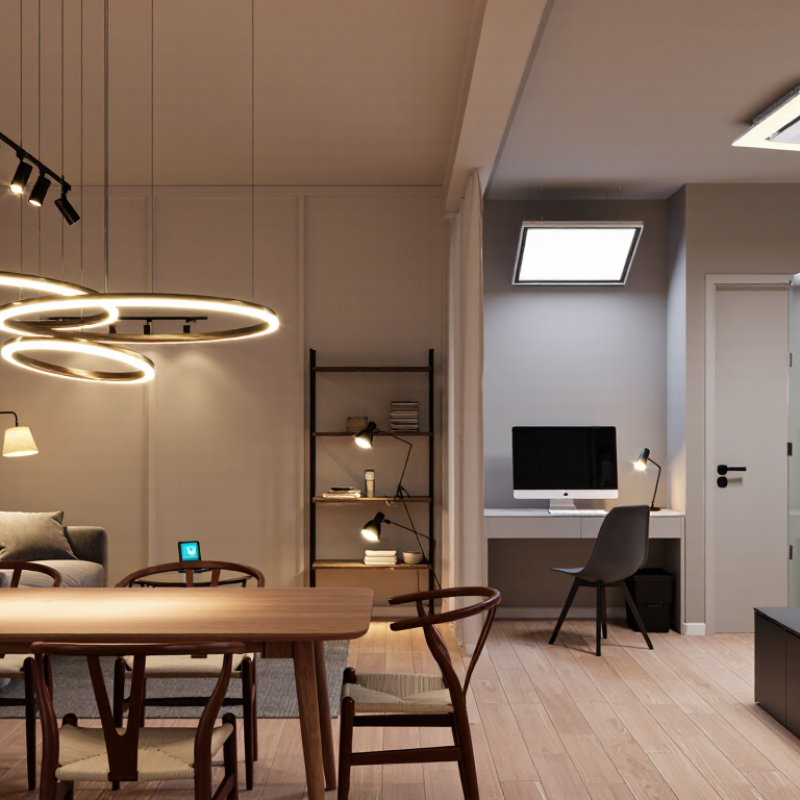
Residential Lighting should do more than brighten a room. It should create comfortable spaces, reduce glare, and support everyday routines. Reliable manufacturers usually offer LED downlights, pendant fixtures, wall lamps, track lights, and smart control systems. Their products may include adjustable color temperature, high color rendering, flicker reduction, and suitable IP ratings for bathrooms or balconies. Small details matter. A warm 3000K pendant can soften a dining area, while a 4000K ceiling light may suit a home office.
The selection also considers factory capacity, quality control, certifications, customization, minimum order quantities, and warranty policies. Product samples, driver performance, heat management, and packaging deserve careful review before a purchase. Public rankings are never completely objective. Some manufacturers have stronger design portfolios, while others provide better pricing or faster customization. That difference can be difficult to measure fairly. Buyers should verify current certifications, testing reports, lead times, and after-sales terms directly with each supplier. This article offers a practical starting point, not a final purchasing decision. Real project results may vary by market, installation conditions, and procurement standards. A thoughtful comparison can still reduce risk and reveal manufacturers suited to specific residential projects.
How China’s Residential Lighting Manufacturing Industry Is Defined
China’s residential lighting manufacturing industry is more than a list of lamp factories. It includes designers, component suppliers, assembly plants, testing laboratories, and export service teams. Products range from ceiling lights and wall fixtures to smart bulbs, cabinet lamps, and outdoor residential fittings. The industry is defined by how these parts work together.
In practical factory assessments, production capability matters as much as product appearance. A reliable manufacturer should control housing materials, LED modules, drivers, wiring, and heat management. It should also provide clear test records for electrical safety, photometric performance, and energy efficiency. Stable supply chains help reduce delays. They do not remove every risk.
Customization is another defining feature. Many Chinese manufacturers adjust beam angles, color temperatures, dimming methods, finishes, and packaging for different housing markets. Some operate as original equipment manufacturers, while others develop their own technical designs. This difference can affect quality ownership and after-sales support. Buyers should inspect samples, review production records, and confirm applicable market requirements before placing large orders.
The definition is not perfectly clean. A factory may assemble attractive fixtures but outsource critical components without clear control. That weakness is easy to miss. Manufacturing scale alone does not prove expertise. Experienced evaluation should examine process consistency, worker training, material traceability, and communication during revisions. Small details matter, such as whether a driver label matches the test report or whether a sample reflects regular production. Mistakes still happen, and honest documentation is often more valuable than polished claims.
Criteria for Ranking China’s Top Residential Lighting Manufacturers
China Top 10 Residential Lighting Manufacturers?
A credible ranking needs more than factory size or online popularity. Production capacity matters, but quality controls matter more in daily home use. I would assess each manufacturer through verified output, product testing, warranty records, and residential project experience. The International Energy Agency reports that LEDs use about 75% less energy than incandescent lamps. Therefore, efficiency should receive serious weight in any ranking. Color rendering, flicker control, heat management, and dimming stability also deserve practical testing.
Certification provides another useful filter. Products should show traceable compliance with relevant Chinese and international standards, supported by ISO 9001 quality systems where applicable. The U.S. Department of Energy notes that quality LEDs can last up to 25 times longer than incandescent bulbs. Still, advertised lifetime figures may depend on temperature and operating hours. A laboratory report is stronger evidence than a sales brochure. I would also review defect rates, sample consistency, packaging protection, delivery reliability, and after-sales response. No scoring model is perfect.
Tips: Request three samples from different production batches. Test them for flicker, color temperature, heat, and dimming noise. Check whether test reports match the exact model number. The strongest suppliers usually explain limitations clearly, rather than promising every performance claim. Sustainability should include recyclable materials, repairability, and realistic energy data. Price remains relevant, but the cheapest quotation can become expensive after early failures or uneven color.
Profiles of the Top 10 Chinese Residential Lighting Manufacturers
China’s residential lighting sector now combines large-scale LED production with fast design changes. The International Energy Agency reports that LEDs already dominate new lighting sales because of their efficiency and longer service life. Against this background, the following ten manufacturer profiles focus on practical strengths, not advertising claims.
One profile represents high-volume LED panel production for apartments and public housing. Another specializes in recessed downlights with low-glare optics. A third develops smart lamps using wireless controls and scene automation. The fourth focuses on decorative pendants with metal, glass, and fabric components. A fifth supplies flexible strips for kitchens and wardrobes. The sixth serves export customers through OEM and ODM engineering. A seventh emphasizes human-centric lighting and adjustable color temperature. The eighth produces outdoor residential fixtures for gardens and balconies. The ninth builds modular systems that simplify maintenance. The tenth combines lighting with sensors, gateways, and home-control platforms.
Market data supports this direction. Grand View Research identifies energy efficiency, connected controls, and renovation demand as major residential lighting drivers. Mordor Intelligence also expects China’s LED lighting market to maintain steady growth through this decade, although forecasts differ by research method. Public information remains uneven. Some manufacturers disclose testing, photometric files, and warranty terms clearly; others provide only attractive product images. That difference matters. In practical project reviews, beam angle, flicker performance, heat management, and replacement access often matter more than showroom brightness. The ranking is therefore useful, but not absolute. เครดิตฟรี
Product Categories and Technologies Offered by Leading Manufacturers
China Top 10 Residential Lighting Manufacturers: Product Categories and Technologies
China’s leading residential lighting manufacturers usually cover downlights, ceiling lamps, wall lights, pendants, track lights, and flexible strips. Their product catalogs often include kitchens, bedrooms, balconies, and smart-home projects. Downlights may use COB LEDs for concentrated beams, while panel lamps provide softer ceiling illumination. Decorative pendants focus on form, finish, and glare control.
Technology separates serious suppliers from catalog sellers. The U.S. Department of Energy reports that LED products can use at least 75% less energy than incandescent lighting and last up to 25 times longer. Leading factories therefore offer high color-rendering options, often above CRI 90, alongside tunable white systems. Some models adjust from warm 2700K to cool 6500K. Others integrate occupancy sensors, daylight dimming, Zigbee, Bluetooth Mesh, or Matter-compatible controls. Heat sinks matter. A beautiful lamp can still fail early when its thermal design is weak.
Industry reports from the International Energy Agency continue to identify lighting efficiency as a practical route to lower household electricity demand. Yet specifications can mislead. “Smart” does not always mean reliable. App dependence, unstable pairing, and poor dimming remain common concerns. Buyers should examine lumen maintenance, driver quality, flicker performance, warranty testing, and photometric files. The best manufacturers provide test records and installation guidance, not only polished product images. I would still question exaggerated lifetime claims. Real homes are messier than laboratories.
How to Select a Suitable Chinese Residential Lighting Manufacturer
China Top 10 Residential Lighting Manufacturers?
How to Select a Suitable Chinese Residential Lighting Manufacturer
When comparing China’s top residential lighting manufacturers, do not rank them by catalog size alone. A suitable supplier should match your home’s voltage, ceiling structure, and lighting goals. Ask for test reports, material details, and production photos. This is practical verification, not sales language.
Request samples before approving a large order. Check the color temperature in a living room, not only under showroom lights. Inspect solder joints, diffuser thickness, cable labels, and packaging protection. Ask how the factory handles dimming compatibility and replacement parts. A responsive engineer can be more valuable than a polished brochure. Keep written records of tolerances and delivery dates.
Reliable manufacturers explain certifications for your destination market and provide traceable quality checks. Confirm whether testing covers heat buildup, insulation, and repeated switch cycles. I once underestimated installation instructions; a beautiful fixture still caused delays when the mounting plate was unclear. That mistake is worth remembering. Price matters, but unstable color, missing hardware, or slow communication can cost more. Compare at least three factories using the same specification sheet, payment terms, warranty scope, and after-sales process. Factory promises need evidence.
