
Choosing the right aluminum window means balancing energy performance, comfort, durability, and cost. Energy efficient aluminum windows can reduce unwanted heat transfer, but the frame material alone does not guarantee strong results. Glass type, thermal breaks, seals, and installation all influence how a window performs in a real home.
A well-designed thermal break separates the frame’s inner and outer sections, helping limit heat flow. Low-emissivity coatings and insulating glass can also improve performance, though the best combination depends on your climate and home design. Check published ratings, including U-factor and solar heat gain coefficient, rather than relying only on broad efficiency claims. Details matter.
This guide explores the features that distinguish leading aluminum windows and explains what to compare before choosing a product. It looks at glazing options, frame construction, air leakage, and manufacturer documentation. A window with impressive ratings may still disappoint if it is poorly installed or mismatched to local conditions. That part is easy to overlook. The comparisons ahead can help you ask better questions and identify a practical fit. No single model is best for every home, and ratings do not capture every comfort concern. Consider them alongside careful product details and advice from a qualified window professional.
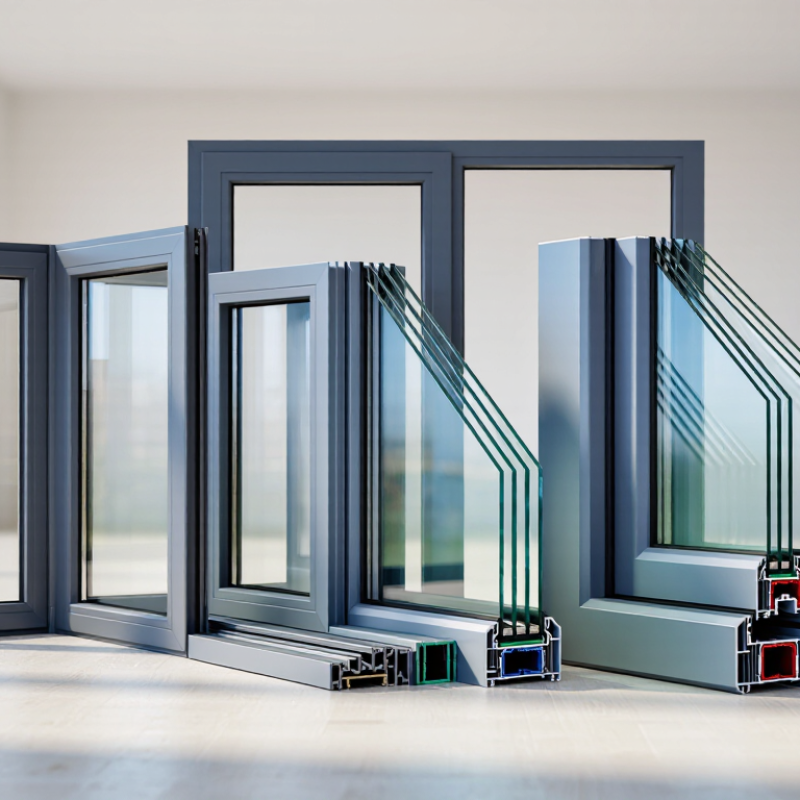
Energy efficiency in aluminum windows is measured across the complete window, not just its glass. The U-factor indicates how quickly heat passes through the unit; a lower value generally means better insulation. Check that ratings describe the same window size and configuration. Numbers matter.
Solar heat gain coefficient, or SHGC, measures how much sunlight becomes indoor heat. A lower SHGC can help limit overheating in sunny climates, while a higher one may be useful where winter sun is welcome. There is no single best number for every home. Climate and window direction matter.
Air leakage ratings show how much air passes through a closed window under test conditions. Lower leakage can reduce drafts, though installation quality also matters. Aluminum conducts heat readily, so thermal breaks—a low-conductivity barrier between interior and exterior frame sections—can improve performance. Look for ratings for the whole assembly, including frame and glazing. I still find this detail easy to miss: an excellent glass rating cannot compensate for a poorly fitted frame. Check the test label, then compare the same measures across options.
Which Aluminum Window Designs Minimize Heat Loss
Aluminum is strong, but it conducts heat readily. The U.S. Department of Energy estimates that windows account for 25–30% of residential heating and cooling energy use. That makes frame design more than a cosmetic choice. Look for thermally broken frames, where a low-conductivity barrier separates the interior and exterior aluminum. This interrupts a direct path for heat to escape.
Not just glass. Choose double- or triple-pane units with low-emissivity coatings and sealed insulating-gas cavities. A warm-edge spacer can also reduce heat flow around the glass perimeter. Compare whole-window U-factors in the National Fenestration Rating Council’s certified ratings; lower values indicate less heat transfer. Check the whole unit, not a center-of-glass figure, because frames and edges affect real performance.
Installation matters, too. Even an efficient design can leak around an uneven opening. Ask how the installer will seal the frame and manage drainage, then inspect the perimeter for gaps. Small details matter. I would not assume triple glazing is always the best answer: its extra weight and cost may not suit every climate or opening. Match rated performance to local winter conditions, and consider air leakage alongside U-factor. A warm frame cannot compensate for a poorly sealed joint.
Energy-efficient aluminum windows depend on the whole assembly, not the frame alone. The U.S. Department of Energy’s Energy Saver guidance estimates that windows account for 25–30% of residential heating and cooling energy use. That makes small design choices matter. Aluminum is strong and slim, but it conducts heat readily. A thermal break—a low-conductivity barrier between the frame’s inner and outer sections—slows that transfer. On a cold morning, this can reduce the chilly feel near the frame, though it cannot fix poor installation or air leaks.
Glazing matters just as much. The National Fenestration Rating Council’s ratings let buyers compare whole-window U-factor and solar heat gain coefficient, or SHGC. Lower U-factor means less heat passes through; SHGC indicates how much solar heat enters. Low-emissivity coatings and insulated glass can improve performance, but the best combination depends on climate, orientation, and shading. South-facing glass may welcome winter sun; the same glass can overheat a room in summer. A low U-factor alone is not the whole story. Check the certified rating for the complete window, including frame and glass, and inspect the sill and frame joints during installation. Even a strong specification can disappoint when those details are overlooked.
| Aluminum Window Configuration | Frame and Thermal Break | Typical Whole-Window U-Factor (Btu/h·ft²·°F) | Typical Glazing and Solar Heat Gain | Performance Notes | Best Fit |
|---|---|---|---|---|---|
| Non-thermally broken, double-pane | Aluminum frame without an insulating barrier between the interior and exterior frame surfaces | About 0.45–0.70 | Clear or basic low-emissivity (low-e) double glazing; solar heat gain coefficient (SHGC) varies by glass selection | Conductive frame can be a major source of heat transfer, even when the glass is insulated. | Projects where initial cost or slim frame profiles take priority over maximum thermal performance |
| Thermally broken, double-pane | Frame sections separated by a low-conductivity thermal barrier | About 0.30–0.50 | Insulating glass unit; clear glass generally admits more solar heat than solar-control low-e glass | The thermal break reduces heat flow through the frame. Glass type, spacer, window size, and frame design affect the final rating. | Moderate climates and projects seeking a balance of daylight, cost, and efficiency |
| Thermally broken, low-e double-pane with argon | Continuous thermal barrier paired with an insulated frame design | About 0.25–0.40 | Low-e coated glass with an argon-filled insulating cavity; SHGC can be selected for the climate and orientation | Low-e coatings reduce radiative heat transfer; argon can reduce heat transfer across the sealed cavity compared with air. | A strong all-around option for many energy-conscious projects |
| Thermally broken, triple-pane low-e | Thermal-break frame designed to support a heavier, deeper glazing unit | About 0.18–0.30 | Three panes with low-e coatings and insulating gas-filled cavities; SHGC depends on the coating package | Often provides the lowest heat transfer, but added weight, cost, frame depth, and installation details need consideration. | Cold climates, exposed locations, and projects prioritizing low heat loss |
| Thermally broken, solar-control low-e | Thermal-break frame; glazing selected to limit unwanted solar gain | About 0.25–0.45, depending on the full assembly | Solar-control low-e glazing commonly has a lower SHGC than clear or high-solar-gain glass | Lower SHGC can help reduce cooling loads, but may also reduce useful winter solar heat and visible light. | Hot climates, west-facing windows, and areas with strong summer sun |
| Thermally broken, high-solar-gain low-e | Thermal-break frame paired with glazing that allows more solar heat indoors | About 0.25–0.45, depending on the full assembly | Low-e glazing selected for relatively higher SHGC than solar-control glass | Can admit useful winter sunlight; shading, orientation, and summer overheating risk should be assessed. | Cold climates and carefully designed south-facing elevations |
U-factor measures heat transfer: lower values indicate better insulation. SHGC measures the fraction of solar heat admitted: the most suitable value depends on climate, orientation, shading, and heating or cooling priorities. Figures above are broad indicative ranges for complete window assemblies, not guarantees for a particular product. Compare independently certified whole-window ratings for the exact size and configuration; installation and air sealing also affect real-world performance.
Energy-efficient aluminum windows should be compared by their ratings and by the climate they will serve. The U.S. Department of Energy estimates that heat gain and loss through windows account for about 25–30% of household heating and cooling energy use. That makes the label worth reading closely. On an NFRC label, a lower U-factor means less heat passes through the window. Solar heat gain coefficient, or SHGC, measures how much sunlight becomes indoor heat.
Climate changes the best balance. In a cold region, a lower U-factor can help keep warmth indoors; on a sunny, hot façade, a lower SHGC may reduce unwanted heat. A south-facing room with large windows can behave very differently from a shaded north-facing one. Small numbers matter. Compare ratings across the same measurement basis, and check local climate guidance rather than choosing one “best” figure for every home. Aluminum frames also conduct heat readily, so look for a thermal break that separates the interior and exterior metal.
Ratings do not tell the whole story. Poor installation can leave gaps around a carefully selected window, and air leakage can undermine comfort. I would not choose by U-factor alone; that is an easy shortcut, but an incomplete one. Ask for the full NFRC rating, verify the window’s climate suitability, and consider orientation, shading, and frame construction together. Some details are easy to overlook.
ENERGY STAR Version 7.0 criteria show the maximum whole-window U-factor and, where specified, the minimum solar heat gain coefficient (SHGC).
Lower U-factor means better insulation. SHGC measures how much solar heat passes through a window; a lower value can help limit unwanted heat in warmer climates, while a higher minimum can allow useful solar heat in colder regions. These criteria apply to whole windows, not aluminum frames alone. When comparing aluminum windows, check the certified whole-window ratings and whether the frame has a thermal break. “Any” means no SHGC minimum is specified for that zone.
Source: ENERGY STAR Residential Windows, Doors, and Skylights Version 7.0 criteria. U-factor is in Btu/(h·ft²·°F); SHGC is unitless.
An efficient aluminum window is not defined by its frame alone. Before comparing options, check whether the frame has a thermal break that separates indoor and outdoor metal. Without one, aluminum can conduct heat quickly, leaving a cold strip near the sill on winter mornings. Look for whole-window performance data, not glass-only claims. U-factor indicates heat loss; a lower value generally means better insulation. Solar heat gain coefficient describes admitted sunlight and heat. Choose a balance suited to your climate, room direction, and cooling needs. Numbers matter.
Check air-leakage ratings and corner seals, too. On a windy day, even good glazing can disappoint if sash edges leak. Ask for data on the complete window, including its size and opening style; larger or operable units can perform differently. Warm-edge spacers and careful installation can help limit condensation around glass edges. Easy to miss. Compare ratings from a recognized testing program, and confirm they apply to the exact configuration being quoted. Do not assume thicker frames always save more energy; glass area, seals, and installation all affect results. Inspecting sample corners and hardware in person can reveal small fit issues that specifications may not show.
Copyright © 2025 · All Rights Reserved · Franchino Mold & Engineering