
In 2026, choosing the right Rubber Dam For River Water Level Control requires more than comparing prices or storage height. River managers must examine flood behavior, sediment movement, foundation conditions, maintenance access, and nearby community needs. A dam that performs well in a clear mountain stream may struggle in a muddy urban channel.
Hydraulic engineering specialist Dr. M. Hanif Chaudhry offers a useful reminder: “A river responds to every change in its channel, control structure, and flow.” This principle should guide every product comparison. The strongest rubber dams combine reinforced membrane materials, dependable anchoring systems, automatic deflation options, and precise water-level monitoring. Operators should also inspect air or water inflation equipment before seasonal floods arrive.
This guide reviews leading 2026 rubber dam solutions for river water regulation. It considers overflow safety, resistance to abrasion, installation complexity, service life, and operating costs. Field experience matters here. Small leaks, trapped gravel, or delayed deflation can create serious operational problems.
No single model fits every river.
A careful selection process should include hydraulic modeling, local rainfall records, sediment analysis, and consultation with qualified engineers. Some manufacturers provide impressive performance figures, yet real results may depend heavily on installation quality. That point is easy to overlook.
The following outline compares practical rubber dam technologies and explains where each design may work best. It also highlights limitations, because reliable water control depends on realistic planning, not marketing claims alone.
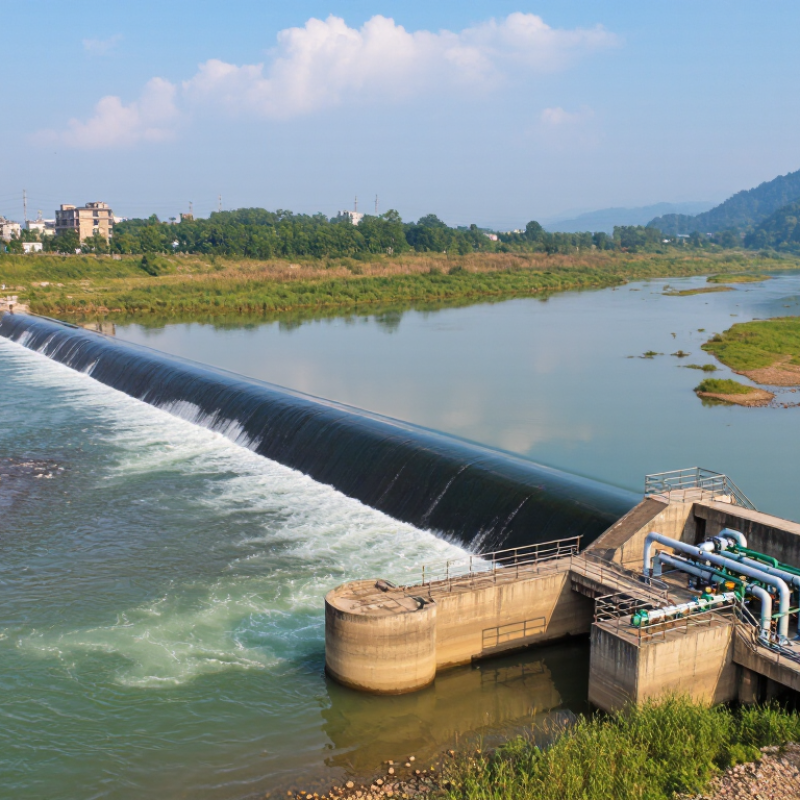
Rubber dams are flexible barriers installed across rivers to regulate water levels. A reinforced rubber membrane is anchored to a concrete foundation. Pumps fill the membrane with air or water, raising the dam and slowing downstream flow. Releasing the filling medium lowers it quickly.
This simple movement gives operators practical control during changing river conditions. A raised dam can support irrigation intake, stabilize a shallow urban reach, or create a temporary storage pool. During heavy rain, operators can deflate the membrane and increase discharge. Water sensors, rainfall forecasts, and manual inspections should guide each adjustment. A five-centimeter change can affect nearby banks.
The system needs careful engineering. Foundation leakage, sharp debris, ultraviolet exposure, and ice can weaken the membrane. Sediment may also build up behind the barrier, changing the riverbed and reducing capacity. Regular checks should examine seams, anchors, valves, and unusual bulging. The dam is flexible, but not careless. It cannot replace flood forecasting or a proper emergency plan.
A common planning mistake is treating water-level control as fully automatic. Real rivers behave unevenly. One side may erode faster than the other. Operators should compare sensor readings with visible conditions before changing the dam height. Small adjustments are safer than dramatic ones, although this approach may not always respond quickly enough. That limitation deserves attention during design and daily operation.
Rubber dam systems respond differently to each river condition. In dry seasons, operators inflate the flexible membrane gradually, raising the upstream level for irrigation or habitat support. During heavy rain, the dam can deflate and reopen the channel. This reduces pressure from rising flows. However, fast inflation may disturb banks and create sudden turbulence. Careful adjustments matter.
Sediment is a persistent challenge. Sand and gravel can collect near the structure, reducing storage and affecting fish movement. Regular inspections should check the membrane, anchor bolts, control pipes, and nearby scour holes. Cold regions require additional planning because ice can damage exposed components. A design may look reliable on paper, yet local debris can reveal weaknesses quickly. That is where hydraulic modelling and experienced site supervision become valuable.
Tips: Measure upstream and downstream levels continuously. Set operating limits before storms arrive. Inspect after floods, even when no damage is visible. Keep an emergency deflation plan ready. Do not rely on sensors alone; muddy water and power interruptions can mislead operators. A practical design should also include safe access for maintenance crews and clear records of every adjustment.
Top Rubber Dams for River Water Level Control in 2026
Modern rubber dams need more than a flexible membrane and an air pump. Their design must match river width, flood frequency, sediment load, and seasonal water changes. A reinforced rubber body should resist ultraviolet exposure, abrasion, and repeated inflation cycles. Strong anchor systems are equally important. Poor anchoring can create leaks, movement, or uneven crest levels.
Accurate control matters. Pressure sensors and water-level gauges can adjust dam height gradually, protecting nearby banks from sudden flow changes. Automatic deflation systems should respond quickly during floods. Separate control chambers may improve stability across wide river sections. Designers should also provide inspection paths, safe access points, and clear emergency controls. Fish passage and sediment movement require attention, not assumptions. One design may work well in a clean channel but perform poorly where gravel collects.
Tips: Check the riverbed after heavy rain. Inspect seams, valves, anchors, and sensors at scheduled intervals. Keep manual controls available. Test alarms before the wet season. Small failures become expensive quickly. Field conditions can surprise even experienced engineers, so hydraulic models should be compared with on-site measurements. Overlooking local debris patterns is a common weakness. A practical design leaves room for maintenance, seasonal adjustments, and lessons learned from real operation.
| Design Feature | Typical Design Range or Configuration | Water-Level Control Benefit | Key Engineering Consideration |
|---|---|---|---|
| Dam Body | Flexible reinforced-rubber membrane anchored to a concrete foundation; commonly manufactured as a single or segmented inflatable body. | Allows the crest height to change without using rigid mechanical gates across the full channel width. | Membrane abrasion, ultraviolet exposure, temperature, chemicals, and repeated flexing must be considered in material selection. |
| Typical Inflated Height | Approximately 0.5–5 m for many river, irrigation, flood-control, and small hydropower applications; larger installations require project-specific verification. | Provides adjustable upstream storage and helps maintain a target operating level during normal flow conditions. | The selected height must account for flood discharge, upstream backwater, foundation elevation, and downstream water levels. |
| Typical Crest Length | Often installed across channels from roughly 10 m to more than 100 m; length is governed by river width, abutments, and segmentation requirements. | Enables broad-channel level regulation while keeping the spillway profile comparatively low when deflated. | Long crests may need multiple cells or independent control zones to limit the effect of local damage. |
| Inflation Medium | Air-inflated systems provide rapid adjustment; water-inflated systems provide higher unit mass and are often selected where stable, gradual operation is preferred. | Supports automated or semi-automated crest adjustment in response to river level, flow, or weather conditions. | Air systems require reliable compressors and controls, while water systems require pumps, valves, filtration, and suitable water quality. |
| Automatic Deflation | Common arrangements use upstream level sensors, pressure sensors, programmable controls, emergency release valves, or hydraulic bypass systems. | Allows the dam to lower before or during high-flow events, reducing upstream flood risk when correctly designed and maintained. | The release logic must be fail-safe and coordinated with flood forecasting, sensor redundancy, power backup, and manual override procedures. |
| Foundation and Anchorage | Reinforced-concrete sill, embedded anchor bolts, clamping bars, side seals, and protected transition zones are typical components. | Transfers membrane loads to the riverbed and abutments while limiting leakage and edge uplift. | Geotechnical investigation, scour protection, uplift resistance, settlement control, and concrete durability are essential. |
| Flood-Passage Capability | Designed to operate in a fully or partially deflated condition during selected flood events; final capacity depends on channel hydraulics and freeboard. | A lowered membrane can reduce obstruction to flood flow compared with a fixed-height barrier. | Hydraulic modelling is required to check backwater, velocities, debris passage, sediment transport, and downstream scour. |
| Operating Response | Adjustment speed varies by membrane volume, inflation medium, pump or compressor capacity, valve size, and control strategy. | Enables gradual seasonal adjustment or faster emergency lowering when supported by adequately sized equipment. | Response time should be established through hydraulic calculations, full-scale commissioning tests, and emergency operating procedures. |
| Sediment and Debris Management | Design may include sediment flushing, debris booms, trash racks, low-level outlets, maintenance access, and sacrificial protection zones. | Helps preserve storage capacity, reduce abrasion, and maintain reliable movement of the membrane. | Sediment deposition and floating debris should be assessed using site surveys and seasonal flow records. |
| Durability Target | Service life is project-specific; membrane life is commonly assessed over multiple decades when exposure, inspection, and maintenance are properly managed. | A planned inspection and replacement strategy can reduce unplanned outages and lifecycle risk. | Actual life depends on compound formulation, reinforcement, operating cycles, water chemistry, abrasion, UV exposure, and maintenance quality. |
| Monitoring and Maintenance | Recommended systems typically include pressure, water-level, valve-position, leakage, and power-status monitoring, with regular visual inspections. | Early detection of pressure loss, abnormal deformation, leakage, or control faults improves operational reliability. | Inspection intervals should reflect flood exposure, debris loading, operating frequency, and the consequences of failure. |
| Environmental and Fish-Passage Measures | Possible measures include fish passages, bypass channels, seasonal drawdown, minimum downstream flows, and controlled sediment release. | Supports more responsible river-level management while reducing impacts on aquatic habitats. | Environmental requirements vary by river basin and must be confirmed through local permits, ecological studies, and operating rules. |
Material selection controls how a rubber dam behaves under heat, sunlight, abrasion, and repeated inflation.
EPDM generally offers strong resistance to ozone, weathering, and ultraviolet exposure. Neoprene can provide better resistance to oils and some mechanical damage. However, actual performance depends on compound quality, fabric reinforcement, curing, and installation.
The Japan Rubber Dam Association reports a planning service life of approximately 20–30 years for many rubber dam installations, when inspections and repairs remain consistent. That figure is not a promise. Flood debris, sharp gravel, and ultraviolet exposure can shorten it quickly.
ASTM D573 aging tests help compare rubber compounds, while ASTM D412 measures tensile strength and elongation. Laboratory results still cannot fully predict river conditions.
Maintenance needs are practical and frequent.
Operators should inspect anchor bolts, clamping strips, air or water valves, seams, and sediment deposits before and after major floods. A 2023 U.S. Bureau of Reclamation maintenance report stresses documented inspections, corrosion control, and timely defect repair for water-control assets.
Small leaks matter. A slow pressure loss can create an uneven crest, change upstream levels, and increase stress on the membrane.
I would not rely on visual checks alone. Pressure logs, photographs, and periodic thickness measurements provide better evidence, although many smaller sites underuse them.
Choosing the right rubber dam for river water level control starts with site evidence, not catalogue rankings. The WMO State of Global Water Resources 2023 reported that only about one-third of monitored river basins had normal conditions. Seasonal uncertainty matters.
Measure the river first. Record peak discharge, low flow, sediment load, ice, debris, and foundation conditions. A dam must match the channel width and required storage height. USACE hydraulic guidance emphasizes flood routing, energy dissipation, freeboard, and downstream scour protection. These checks should use several return-period events, not one convenient flood estimate. A neat design can still fail in an unusual storm.
Select reinforcement and membrane materials for ultraviolet exposure, abrasion, temperature, and repeated inflation cycles. Water-filled systems may suit sites needing simpler operation, while air-operated systems can offer faster adjustment. Both require dependable valves, pressure monitoring, alarms, and manual backup controls. ISO 9001 certification alone does not prove field performance. Ask for tested seam strength, aging results, installation records, and independent inspection data.
Sediment is often underestimated. It can bury anchors, abrade the membrane, and reduce effective capacity near the crest. Include flushing access and safe maintenance zones. The dam should also preserve fish movement and downstream ecological flows where required by local permits. I would inspect nearby projects after heavy floods, not only review brochures. Specifications are useful. Site behavior is better evidence. You may need to revise the design after the first wet season.
Copyright © 2025 · All Rights Reserved · Franchino Mold & Engineering