
Top Salinity Meters for Accurate Water Testing

Reliable water testing starts with knowing what salinity can—and cannot—tell you about a sample. It influences water density and can affect aquatic environments, irrigation decisions, and process monitoring. Small errors matter. A Salinity Meter estimates or measures salinity, commonly through electrical conductivity, and may display results in practical salinity units or parts per thousand. The exact method and units vary by model, so readings should be interpreted against the instrument’s specifications.

For field users, a compact meter with a clear display and sturdy probe can be easier to manage beside a stream or tank. In aquariums and laboratories, repeatability, a suitable measurement range, and temperature compensation may matter more than portability. The right choice depends on the water being tested and how precise the result needs to be. Check whether the device supports calibration with appropriate standards, and follow its instructions. Calibration matters. Rinse the probe between samples; residue or trapped air can distort a reading. Conductivity-based estimates can also be influenced by sample composition, so no single meter makes every water test definitive.

This guide compares salinity meters by accuracy, usability, durability, and value. It also considers display units, calibration features, and the practical needs of different users. Specifications can look impressive on a product page, but they do not guarantee dependable results in every setting. That distinction is easy to overlook. The comparisons that follow aim to help readers choose a meter that fits their testing routine, while encouraging careful handling and sensible interpretation of each reading.
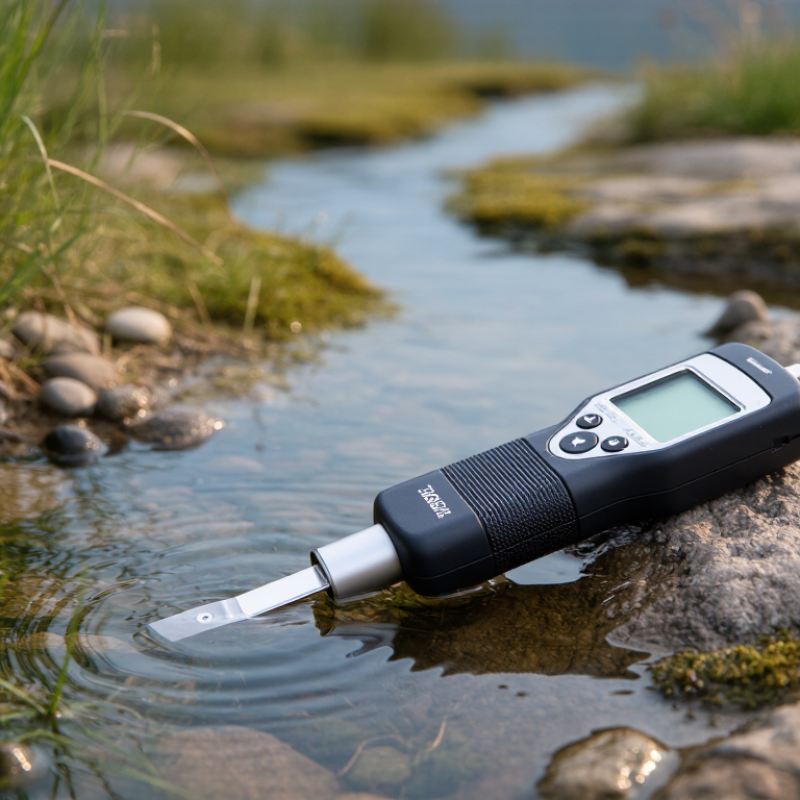
Top Salinity Meters for Accurate Water Testing

What Salinity Meters Measure and Why Accuracy Matters

A salinity meter estimates dissolved-ion content, usually by measuring electrical conductivity and converting that signal into a salinity value. It does not directly count salt. UNESCO’s Practical Salinity Scale of 1978 defines practical salinity using conductivity ratios, a distinction that matters when comparing instruments or test results. NOAA describes average ocean salinity as about 35 parts per thousand, but freshwater, estuaries, and aquaculture tanks can differ sharply from that reference. Context matters.

Temperature can shift the reading. USGS field guidance notes that water conductivity commonly changes by roughly 2% per degree Celsius, so a sample measured warm may appear more saline than the same sample measured cool. Automatic temperature compensation helps, but it cannot fix a dirty probe, poor calibration, or a sample that has not stabilized. Small details count. Rinse the sensor between samples, use an appropriate conductivity standard, and record the water temperature alongside the result. A display showing several decimal places may look convincing; it is not proof of accuracy. I would question a precise reading that cannot be repeated under the same conditions, especially when decisions depend on small changes.

How Salinity Meters Detect Salt Levels in Water

A salinity meter does not usually count salt particles directly. Most handheld meters measure electrical conductivity: how easily dissolved ions carry an electric current through water. More dissolved salts generally mean higher conductivity. The meter then converts that reading into a salinity estimate using a calibration scale or calculation. That distinction matters. Different waters contain different mixtures of ions, so conductivity is not a perfect measure of salt alone.

Temperature can change conductivity, so many meters compensate for it automatically. Check that this feature is enabled, and calibrate the meter with a suitable standard solution before important measurements. For a field test, collect water in a clean cup and keep the probe’s sensing area fully submerged. Rinse between samples. Wait for the display to settle, then record the result and water temperature. A rushed reading can look convincing but still be unreliable.

A stable number is useful, not unquestionable. Mud, air bubbles, residue on the probe, or an unsuitable calibration can affect results. Natural water chemistry also varies, which may complicate comparisons between locations. The display may show parts per thousand, practical salinity units, or another scale; check the manual before interpreting it. It is easy to trust extra decimal places. They do not necessarily mean extra accuracy.

Key Features Used to Compare Top Salinity Meters

Range and resolution should match the water being tested. The USGS Water Science School reports average ocean salinity near 35 parts per thousand, while freshwater is generally below 0.5. A meter used for both needs enough range for brackish samples and fine resolution near freshwater levels. Check accuracy, not just the number of displayed digits. Extra digits can look reassuring without being meaningful.

Temperature compensation matters because conductivity changes as water warms or cools. Compare meters by how they compensate and by their stated operating range. Calibration is equally important. ASTM D1125 describes methods for measuring water conductivity; follow the meter’s calibration instructions and use suitable reference solutions. Keep the probe clean. Salt crystals on its sensing surface can distort readings.

Field details count. A readable screen helps in bright sunlight, and a replaceable probe can reduce downtime. Check the housing’s water-resistance rating before taking a meter onto a wet dock or boat. Also compare response time and unit options, such as ppt or practical salinity units. These units are related, but they are not always interchangeable in every application. No meter is maintenance-free. Even a well-specified model can drift if calibration is neglected. That part is easy to overlook.

Choosing a Meter for Different Water Testing Needs

Choosing a salinity meter starts with the water you actually test. A freshwater aquarium may need clear readings at low concentrations, while seawater work calls for a wider range and dependable temperature compensation. For hydroponic solutions, check whether the meter reports conductivity or salinity, since those values are related but not interchangeable. Read the specifications carefully. A useful display cannot fix a poor fit.

Think about where testing happens, too. A compact pen can slip into a field kit, while a benchtop meter may suit repeated checks in a workshop. For shallow containers, confirm that the probe can measure a small sample. That matters. Look for simple calibration steps and standards suited to your expected range. Rinse the probe between samples; a little residue can skew the next reading. Check the range.

It is tempting to choose the most precise-looking display, but extra decimal places do not guarantee accuracy. Regular calibration, clean sensors, and consistent sampling often matter more. A meter may also drift as its probe wears, so note readings that seem out of character and test them again. In practice, the best choice is the one you can use correctly every time, even when conditions are less than ideal.

Top Salinity Meters for Accurate Water Testing — Choosing a Meter for Different Water Testing Needs
Meter Type Typical Salinity Range Typical Accuracy or Resolution Best Suited For Key Considerations
Portable conductivity salinity meter Freshwater through seawater; many models cover approximately 0–70 ppt Model-dependent; commonly displays salinity in 0.1 ppt increments Field checks of seawater, aquaculture systems, brackish water, and environmental samples Look for automatic temperature compensation and a range appropriate to the samples being tested. Rinse the probe between samples.
Benchtop conductivity meter with salinity mode Depends on the probe and settings; often suitable for freshwater to high-salinity samples Typically offers finer display resolution than basic field meters; accuracy depends on calibration and instrument specifications Laboratory testing, repeated measurements, and quality-control work Requires calibration with suitable conductivity standards. Use a salinity scale or conversion method appropriate to the application.
Digital refractometer Commonly designed for seawater or brine ranges; check the instrument’s stated scale Often displays salinity in 0.1 ppt increments; stated accuracy varies by model Quick checks of aquarium water, seawater, and prepared brines Uses refractive index rather than electrical conductivity. Keep the prism clean and follow the instrument’s temperature and calibration instructions.
Optical refractometer Depends on the scale; many seawater models cover approximately 0–100 ppt Scale divisions are commonly around 1–2 ppt, so readings are less precise than many digital instruments Low-cost, occasional checks where approximate salinity is sufficient Requires a clear sample and careful visual reading. Temperature and calibration can affect results.
Multiparameter water-quality meter with conductivity probe Probe-dependent; may cover freshwater, brackish water, or seawater ranges Varies by probe and meter; may report conductivity, temperature, and calculated salinity Field surveys where salinity is measured alongside parameters such as temperature, pH, or dissolved oxygen Confirm that the probe supports the required salinity range and that its salinity calculation matches the reporting method needed.
Hydrometer or specific-gravity instrument Usually intended for aquarium or seawater measurements; range depends on the scale Typically provides an approximate specific-gravity reading rather than a direct high-resolution salinity result Basic aquarium monitoring and educational demonstrations Results depend on temperature and correct handling. It is generally less convenient for precise field or laboratory measurements.
Selection note: Specifications vary by instrument. For comparable results, calibrate as directed, measure at a controlled or compensated temperature, and use the salinity scale required for your application. Conductivity-based meters and refractometers use different measurement principles, so their readings may not be directly interchangeable.

How to Calibrate and Maintain a Salinity Meter

Top Salinity Meters for Accurate Water Testing

A salinity meter is only as dependable as its calibration. Let the meter and calibration solution reach the same room temperature before testing. Rinse the probe with distilled water. Blot it gently with a lint-free tissue. Choose a certified standard suited to your samples, and follow the instrument’s calibration steps. Wait for the reading to stabilize before confirming. Small pauses matter.

Follow the manual’s calibration schedule for routine checks. Recalibrate after cleaning or when readings drift. If sample salinity varies widely, use standards that bracket the expected range, when the meter supports them. Record each standard value, temperature, and date in a simple log. This can reveal gradual changes. A familiar reading is not proof of accuracy.

After testing, rinse away salt promptly; dried crystals can affect later readings. Inspect the probe for cracks or cloudy residue, and clean it only as directed for its sensor type. Avoid abrasive cloths and household cleaners. Store the sensor as instructed: some probes need a moist cap or storage solution, while others must stay dry. It is tempting to skip the log when water looks ordinary. That shortcut is hard to defend.