
What Are the Top Tank Truck Types in 2026?
In 2026, choosing a Tank Truck starts with a practical question: what must it carry, and how will it be unloaded? A stainless-steel food-grade tanker serves a different purpose from a stainless or lined chemical tanker. A petroleum tanker’s compartments can help separate products, while a pneumatic dry-bulk truck uses air pressure to move powder through a hose. The differences are visible at the loading bay: fittings, hoses, valves, and cleaning routines all matter.
Tank-truck fleet engineer Daniel Reyes sums up the choice this way: “The right tank matches the product, route, and unloading method—not simply the largest capacity.” That principle helps explain why no single design suits every fleet. Liquid tankers, dry-bulk pneumatic trucks, refrigerated food tankers, water trucks, and pressurized gas tankers each answer a distinct transport need. Their materials, insulation, internal structure, and equipment vary accordingly. Small details count.
This guide compares the leading Tank Truck types expected to matter in 2026, focusing on common uses, defining features, and practical selection factors. It also considers where buyers may need to look more closely: payload, cleaning access, temperature control, and discharge equipment can affect daily operations. A polished specification sheet never tells the whole story. Actual routes and loading conditions may expose trade-offs that looked minor during planning. The categories are useful, but real fleets do not always fit neatly into them.
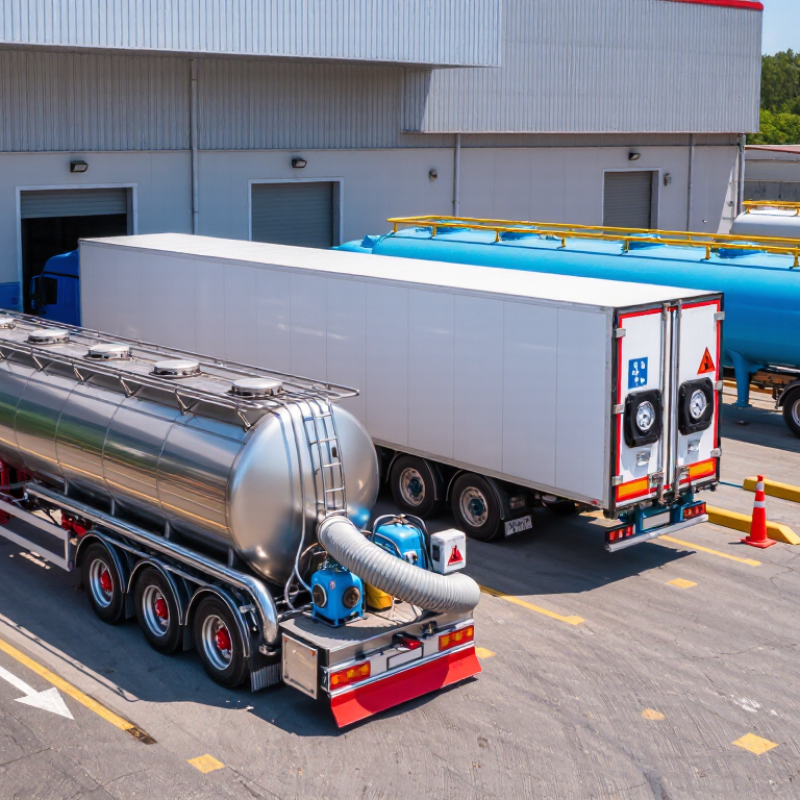
How Tank Trucks Are Classified by Cargo and Tank Design
What Are the Top Tank Truck Types in 2026?
Tank trucks are easiest to compare by cargo and tank design. Liquid tankers carry products such as milk, water, or fuel. Their smooth interiors and controlled unloading help protect cargo quality. Some tanks use separate compartments. That lets one truck carry different liquids without mixing them.
Dry-bulk tankers move powders like flour or cement. They often use air pressure to discharge material through hoses. Refrigerated or insulated tanks help keep temperature-sensitive cargo stable during a trip. Pressure-rated tanks are built for cargoes that need controlled pressure. The categories overlap more than a chart suggests. That can make choosing a truck less simple.
Tips: Match the tank lining and temperature controls to the cargo, not just the truck’s capacity. Check valves, hoses, and cleaning records before loading. Small details matter. Baffles can reduce liquid movement during braking, though they do not remove it entirely. Always confirm that the vehicle’s specifications suit the cargo and route.
| Tank Truck Type | Typical Cargo | Tank Design | Common Materials and Features | Typical Discharge Method | Main Considerations |
|---|---|---|---|---|---|
| Petroleum Tank Truck | Gasoline, diesel fuel, and other petroleum products | Atmospheric tank, often divided into separate compartments | Usually aluminum or steel construction; may include vapor-control equipment and compartment-specific outlets | Gravity unloading or pump-assisted transfer | Compartment layout helps deliver different products or quantities on one trip. Flammable-cargo rules and grounding procedures apply. |
| Chemical Tank Truck | Industrial chemicals, acids, alkalis, and solvents | Atmospheric or pressure-rated tank, selected for the cargo | Stainless steel or compatible lined materials; fittings, seals, and linings are chosen to resist the specific chemical | Pumping, gravity unloading, or pressure-assisted discharge where permitted | Cargo compatibility is essential. Tank material, lining, valves, and cleaning procedures must match the chemical’s properties. |
| Food-Grade Tank Truck | Milk, edible oils, syrups, and other liquid food products | Sanitary tank, commonly insulated; may have multiple compartments | Typically smooth-finished stainless steel with sanitary fittings and cleanable interior surfaces | Pump-assisted or gravity unloading | Hygienic design, documented cleaning, and separation from non-food cargo help protect product quality. |
| Potable Water Tank Truck | Drinking water and treated water | Atmospheric tank designed for hygienic water transport | Food-contact-compatible tank and fittings; protected fill openings and dedicated hoses are commonly used | Gravity discharge or pump-assisted delivery | Materials and handling practices should preserve water quality and prevent contamination during filling, transport, and delivery. |
| LPG Tank Truck | Liquefied petroleum gas, including propane and butane | Sealed, pressure-rated vessel for liquefied gas | Pressure vessel with valves and fittings designed for the gas service; safety devices are selected in accordance with applicable codes | Pressure transfer or pump-assisted transfer, depending on the system | Requires pressure-vessel inspection and gas-specific operating procedures. Design pressure and equipment depend on the cargo and jurisdiction. |
| LNG Tank Truck | Liquefied natural gas | Vacuum-insulated cryogenic tank | Double-wall construction with insulation to limit heat transfer; cryogenic-compatible valves and piping | Controlled transfer through cryogenic liquid connections | Designed to keep cargo at very low temperatures. Boil-off management and cryogenic safety are important operating considerations. |
| Bitumen / Asphalt Tank Truck | Hot bitumen and asphalt products | Insulated tank, often fitted with a heating system | Thermal insulation and heating equipment help maintain cargo temperature and flow characteristics | Usually pump-assisted; some systems use gravity discharge | Temperature control helps keep the cargo workable. Heating and handling procedures must suit the specific product. |
| Pneumatic Dry-Bulk Tank Truck | Cement, lime, flour, and other dry powders or granules | Sealed vessel with internal air lines or fluidizing equipment | Pressure-capable tank designed for dry bulk; configuration varies with product flow properties | Compressed-air or pneumatic discharge through a delivery hose | Although it carries dry cargo rather than liquid, it is commonly grouped with tank trucks because of its enclosed tank-shaped vessel. |
| Vacuum Tank Truck | Wastewater, sludge, and other liquid or semi-liquid waste | Sealed tank designed for vacuum loading; some models also support pressure-assisted unloading | Corrosion-resistant materials and service-specific fittings; construction depends on the waste being handled | Vacuum suction for loading; gravity or pressure-assisted discharge where suitable | Tank and hose materials should be compatible with the waste. Cleaning, disposal, and transport requirements vary by cargo and location. |