Choosing a manufacturing partner in China requires more than comparing unit prices. Global buyers must assess tooling expertise, material control, inspection methods, production capacity, and communication. A polished website is not enough. The factory floor tells a clearer story.
The phrase “die cast plastic” can cause confusion. Die casting generally shapes molten metal, while plastic parts are commonly made through injection molding. Some suppliers offer both processes, or combine metal frames with molded plastic housings. Buyers should confirm exactly which process a quotation covers. Details matter.
Casting authority John Campbell expressed a useful quality principle: “The quality of a casting is determined by the quality of the liquid metal.” That insight applies to metal die-cast components, where alloy control and process discipline affect the finished part. Plastic components need their own checks, including resin traceability, dimensional consistency, and surface finish. One checklist cannot cover every process.
This guide introduces Chinese manufacturers serving international buyers and explains how to compare their capabilities. It looks at engineering support, tooling, quality practices, communication, and delivery planning. A sample part with sharp edges, a rough seam, or uneven paint can reveal more than a sales presentation. Still, no supplier is automatically the right fit. Buyers should verify claims, request relevant samples, and match each factory’s strengths to the actual design.

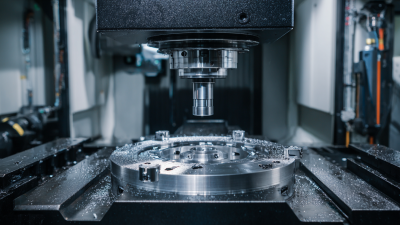
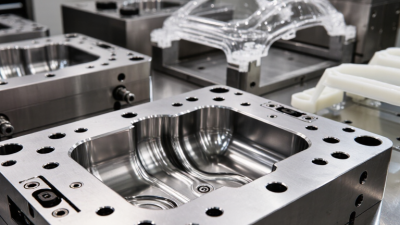
“Die-cast” and “plastic” describe different manufacturing categories, not interchangeable product labels. In die casting, molten metal is injected into a reusable steel die under pressure. Aluminum and zinc alloys are common choices for housings, brackets, and compact mechanical parts. The process can produce detailed shapes with consistent dimensions at higher volumes. Tooling costs and design changes, however, need careful review.
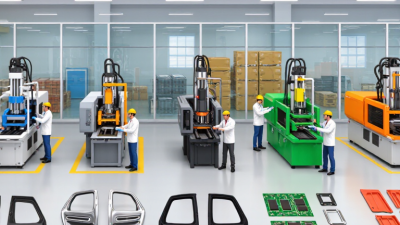
Plastic manufacturing usually refers to injection molding. Heated thermoplastic is pushed into a mold, cooled, and ejected as a finished component. It suits items such as covers, clips, knobs, and cable guides. Resin selection affects strength, flexibility, heat resistance, and surface finish. A drawing that says only “plastic” leaves too much unclear. Specify the resin, color, texture, and any expected working conditions.
Some products combine both categories, such as a molded plastic cover fitted over a die-cast metal body. That matters. When evaluating Chinese suppliers, buyers should ask which process makes each part, review material and tooling details, and inspect samples against the approved drawing. A catalog can make capabilities look simpler than they are. I would also verify who controls the mold and how dimensional changes are documented; these details are easy to overlook, yet they can affect repeat orders.
China Top Die Cast Plastic Manufacturers for Global Buyers
Compare Aluminum (2.70 g/cm³) and Zinc (7.14 g/cm³) Casting Options
For global buyers comparing die-cast parts, density affects shipping weight, handling, and assembly. ASM Handbook, Volume 2, reports typical densities of about 2.70 g/cm³ for aluminum and 7.14 g/cm³ for zinc. For equal solid volumes of 100 cm³, that means roughly 270 g versus 714 g. Zinc is about 2.6 times heavier. A small bracket can feel surprisingly substantial.
Aluminum is often preferred when low mass and heat dissipation matter, such as in motor housings. Zinc can suit compact parts that need fine detail and dimensional stability. But performance depends on alloy, wall thickness, and finishing—not density alone. A neat spreadsheet can still mislead. Ribs, holes, and machining allowances change finished weight. Ask suppliers for the alloy designation, tolerances, and sample-part measurements.
Tips: Request quotes for both materials using the same part geometry. Compare actual part weight, minimum wall thickness, and machining needs. Test a sample in its intended assembly. Density is a useful filter, not a final decision. Supplier estimates may omit finishing mass, which can skew comparisons.
For global buyers, a useful shortlist compares process capability, verified output, and export experience—not just quoted prices. The Grand View Research Die Casting Market Size, Share & Trends Analysis Report estimated the global market at USD 76.7 billion in 2023, underscoring demand across automotive, electronics, and industrial components. Its figures describe the market, not any supplier’s capacity. Numbers need context.
For die-cast parts, ask about alloy options, machine clamping force, part-size limits, and in-house trimming or machining. For plastic components, check resin handling, injection-machine tonnage, mold maintenance, and whether sample parts match production tolerances. The Grand View Research Plastic Injection Molding Market Size, Share & Trends Analysis Report estimated that market at USD 330.4 billion in 2023. These estimates help explain scale, but cannot confirm factory performance.
Request recent production records, a process flow, and capacity stated by shift or month. Then compare those figures with the proposed order volume. Export claims also deserve evidence: ask for destination-region experience, packaging specifications, and references that can be checked. A supplier may list many processes, yet outsource critical finishing. That matters. Factory visits, third-party audits, and sample inspections can reveal gaps, though even a clean audit is only a snapshot. Ask what changes when demand peaks.
Industry-level supplier-screening guide. Equipment ranges are indicative machine clamping or locking forces, not annual production figures. Actual capabilities and export destinations vary by facility and should be confirmed directly with suppliers.
| Manufacturing Process | Common Materials | Indicative Machine Capacity | Typical Production Fit | Key Capability Checks | Common Buyer Markets |
|---|---|---|---|---|---|
| Aluminum high-pressure die casting | Aluminum alloys, commonly A380, ADC12, and comparable grades | Approximately 160–4,000 tonnes of locking force; machine range depends on part size and projected area | Repeat production of thin-walled, relatively complex metal components | Porosity control, die design, trimming, machining, leak testing, and alloy traceability | North America, Europe, East Asia, and other international industrial markets |
| Zinc hot-chamber die casting | Zamak zinc alloys and other zinc-based die-casting alloys | Commonly around 20–400 tonnes of locking force | Small, detailed components suited to high-volume production and close dimensional control | Thin-section filling, dimensional inspection, surface finishing, plating, and corrosion testing | North America, Europe, Japan, South Korea, and other export markets |
| Magnesium die casting | Magnesium alloys, including AZ91D and AM-series grades | Machine capacity varies widely; cold-chamber equipment is commonly in the hundreds to over 1,000 tonnes | Lightweight structural and enclosure parts where low mass is important | Melt handling, fire safety, porosity management, machining, and surface protection | Automotive, electronics, and industrial buyers in North America, Europe, and East Asia |
| Plastic injection molding | Thermoplastics such as PP, ABS, PC, PA, and POM; grades depend on application | Approximately 50–3,000 tonnes of clamping force across common production equipment | From small precision parts to large housings; suitable for repeat production with dedicated tooling | Resin control, mold maintenance, dimensional capability, color consistency, and cycle-time validation | North America, Europe, Australia, Japan, and other global consumer and industrial markets |
| Insert and overmolding | Thermoplastics combined with metal inserts or a second molded material | Often uses injection presses within roughly the 50–1,000-tonne range; tooling and part geometry determine requirements | Components combining molded polymer with threaded inserts, contacts, or soft-touch surfaces | Insert positioning, bonding, cycle repeatability, electrical or mechanical testing, and material compatibility | Electronics, automotive, medical-device, and industrial supply chains worldwide |
For supplier comparisons, request the machine list, verified annual output for the relevant part family, quality-system certificates, material and process records, export references, and a recent sample inspection report. Machine tonnage alone does not establish production capacity.
Global buyers sourcing die-cast and plastic components should check a supplier’s quality system, not just its certificate. ISO 9001 provides a framework for managing processes, customer requirements, and corrective actions. IATF 16949 adds automotive-specific controls, where relevant. Neither certificate guarantees every part will meet your drawing. Confirm the certificate is current and covers the actual factory, processes, and product scope. A valid document for another site offers little reassurance. Ask how certification details can be verified with the issuing body.
Then compare the system on paper with production evidence. Review inspection plans, equipment calibration records, material traceability, and recent corrective actions. On a factory visit, follow one lot from incoming material to final inspection. For die casting, look at process checks and mold maintenance. For plastic molding, ask about resin handling and parameter control. Do records match what operators actually do? Paper can look perfect. Sometimes it doesn’t. Request sample inspection reports and ask how the supplier handles a failed measurement or an unapproved process change. Clear answers, dated records, and consistent practice are more convincing than polished presentations. A gap is not automatically a deal-breaker, but vague explanations deserve follow-up.
For global buyers comparing die-cast plastic components and tooling, a tolerance grade is more useful than a vague promise of “high precision.” ISO 8062-3:2007 defines 16 casting dimensional tolerance grades, DCTG 1–16. Lower numbers represent tighter tolerances. The standard’s tables relate the selected grade to the nominal dimension range, so DCTG 6 does not mean one fixed allowance in millimeters for every feature. Check the relevant size band before approving a drawing.
That matters. On a small connector housing, a tight fit around a metal insert may be critical, while a broad outer wall may not need the same control. NADCA’s Product Specification Standards for Die Castings also provide dimensional tolerance guidance for die-cast parts. Use these references to identify critical dimensions, then confirm achievable limits with the supplier against part geometry, material, tooling, and measurement method. Ask for inspection records on key features, such as hole spacing or a sealing face. A grade alone cannot prove process capability. I have seen drawings specify tight limits everywhere; that can add cost without improving fit. A short review with the toolmaker can expose that mismatch early.
Copyright © 2025 · All Rights Reserved · Franchino Mold & Engineering