China’s die cast equipment sector spans high-pressure cold-chamber machines, hot-chamber systems, automation, and supporting cell technology. Choosing a supplier is not just a question of clamping force or quoted price. Buyers also need to examine repeatability, service response, spare-parts access, and evidence from comparable production lines.
Grand View Research’s Die Casting Market Size, Share & Trends Analysis Report estimates the global die-casting market at USD 73.57 billion in 2023, with projected growth of 6.4% annually from 2024 to 2030. This measures the wider die-casting market, not equipment sales alone. Still, it signals why equipment decisions matter. A large machine under a bright factory roof can look impressive. The harder test is stable output across real shifts.
Casting metallurgist John Campbell wrote, “The casting process is a process of making defects.” His warning is useful when comparing die cast equipment suppliers: machine specifications cannot guarantee sound castings without process control, tooling, and skilled support. This guide examines leading Chinese suppliers through practical criteria, including machine range, customization, automation, quality systems, and after-sales service. Company claims deserve verification through technical documents, customer references, and, where possible, factory acceptance tests. No ranking can replace that work. Supplier capabilities also change, and public information may be incomplete. That limitation matters. The goal here is to help buyers ask sharper questions before investing—not to treat a polished brochure as proof.
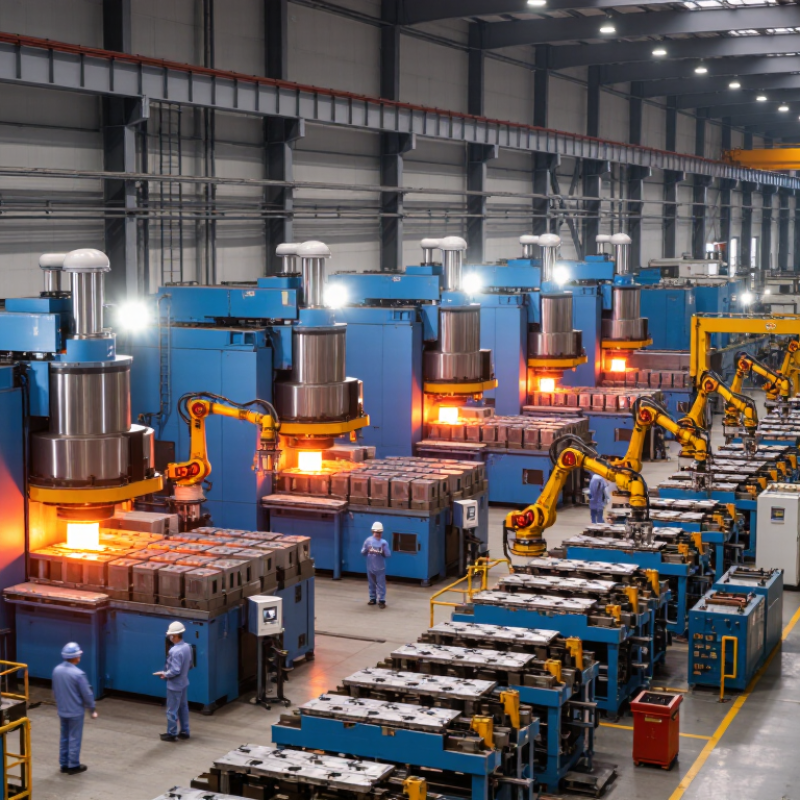
Die casting equipment suppliers in China typically provide more than a press. Their packages may include cold-chamber machines, melting and holding furnaces, metal dosing systems, die-temperature controllers, and automated ladling. Some also supply trimming presses, robotic part handling, vacuum systems, and production-line integration. The right setup depends on alloy, part size, required cycle time, and annual volume. A machine rated for a large shot may still be a poor fit for a small, thin-walled component. Check the actual die dimensions and locking force.
Demand is shaped partly by vehicle manufacturing. The China Association of Automobile Manufacturers reported 31.28 million vehicles produced in 2024, including 12.89 million new-energy vehicles. The International Energy Agency’s Global EV Outlook 2025 also reports that China sold more than 11 million electric cars in 2024. These figures show a large manufacturing base, but they do not guarantee that every supplier offers the same technical depth. Ask for cycle-time records, sample castings, installation scope, operator training, and local spare-parts response times. Not every line is turnkey. Some proposals leave integration work to the buyer, and that detail is easy to miss. Compare energy use, uptime assumptions, and maintenance access before choosing equipment.
Assessing a Chinese die casting equipment supplier takes more than comparing prices. Start with the machine’s intended alloy, part dimensions, projected area, and expected production volume. Ask for the clamping force, injection controls, cycle-time assumptions, and energy use. These figures should match your parts, not just a catalog example. A mismatch can mean slow cycles or costly upgrades.
Request a live machine trial using a part similar to yours. Watch how the supplier controls metal temperature, injection speed, and repeatability across several cycles. Ask for measured results, maintenance intervals, and a clear list of included components. Check whether operators receive practical training and whether common spare parts can be supplied promptly. Paper can look polished. Production is less tidy.
Speak with existing customers, ideally those making comparable components. Ask how the equipment performs after months of use, not only during installation. Review the service process, response times, and technical documentation before signing an order. A detailed quotation should identify setup, testing, shipping, and support costs. No checklist catches everything. Leave room for questions, and record any unresolved technical assumptions before production begins.
Leading die casting equipment suppliers in China serve manufacturers producing automotive parts, appliance housings, and electronic enclosures. Their offerings may include cold-chamber or hot-chamber machines, melting furnaces, ladles, spray systems, and automation. The right setup depends on the alloy, part dimensions, expected cycle time, and available floor space. A large machine is not automatically a better fit.
Experienced suppliers can discuss clamping force, injection control, and die temperature using practical production examples. Ask how they test a machine before delivery. A sample trial should show repeatable shot weight, stable cycle times, and clear inspection records. Details matter. Watch how the supplier responds when a part shows porosity or flash; careful troubleshooting is more useful than a quick promise.
Support after installation deserves close attention. Confirm spare-part availability, technician response times, operator training, and the language used in manuals. If possible, inspect a working machine and speak with its operators. Brochures rarely show maintenance delays or awkward control layouts. No supplier is perfect, and a polished demonstration can hide small weaknesses. Record your questions, compare written specifications, and check that proposed equipment suits your actual production conditions.
Who Are the Top Die Cast Equipment Suppliers in China?
How Suppliers Differ in Machinery, Services, and Expertise
Die-cast equipment suppliers in China differ less by catalog size than by how well their machines fit a plant’s process. Some focus on cold-chamber or hot-chamber machines, while others provide complete cells with furnaces, ladles, extractors, and trim presses. Compare shot capacity, tie-bar spacing, platen dimensions, and controls against actual part drawings. Small mismatches matter. A machine may meet tonnage targets yet struggle with a deep cavity or a narrow production aisle.
Service can separate a workable purchase from a dependable production line. Ask what commissioning includes: installation checks, operator training, process trials, and documented acceptance criteria. Clarify spare-part lead times and remote support hours before signing. A fast reply helps only when the diagnosis is accurate. That sounds simple. It rarely is.
Expertise should show in engineering questions, not sales language. Strong technical teams discuss alloy behavior, cycle stability, die temperature, and scrap patterns using measured data. Still, no supplier can promise identical results across every die and alloy. Request a trial with a representative mold, then review cycle records and rejected castings with your production team. Comparisons may reveal gaps in your own process, too. That can be uncomfortable, but useful.
This is an anonymous comparison framework, not a verified supplier ranking. The profiles describe common supplier capabilities; actual machine specifications, service coverage, and project experience should be confirmed directly with each supplier.
| Anonymous supplier profile | Machinery and equipment | Services commonly offered | Typical technical expertise | Potential best fit | What buyers should verify |
|---|---|---|---|---|---|
| Full-line equipment manufacturer | May supply die casting machines alongside related equipment such as furnaces, dosing systems, die temperature-control units, and metal handling equipment. | Equipment selection, installation support, commissioning, operator training, and spare-parts supply may be available. | Coordinating machine and auxiliary-equipment specifications into a production cell. | Buyers seeking a coordinated equipment package from one source. | Confirm which components are manufactured in-house, system-integration responsibility, acceptance-test criteria, and parts availability. |
| Machine-focused specialist | Concentrates on die casting machines, commonly including cold-chamber machines for aluminum or magnesium and hot-chamber machines for zinc. | Machine sizing, setup assistance, commissioning, maintenance guidance, and technical troubleshooting. | Machine configuration, clamping and injection systems, repeatability, and process controls. | Buyers who already have auxiliary equipment or prefer to select it separately. | Request specifications for the exact machine configuration, cycle conditions, control system, safety features, and factory acceptance testing. |
| Automation-oriented supplier | May integrate casting machines with ladling, extraction, spraying, trimming, conveyors, and robotic handling. | Cell layout, automation integration, programming, commissioning, and production-line support. | Automation interfaces, material flow, cycle coordination, and safety integration. | Facilities aiming to reduce manual handling or connect equipment into an automated line. | Verify cycle-time assumptions, interface compatibility, safety documentation, robot service support, and recovery procedures after downtime. |
| Custom-engineering supplier | May configure machines, peripheral equipment, or production cells around specified castings, dies, and factory constraints. | Application review, layout planning, custom integration, commissioning, and project-specific training. | Matching equipment to part geometry, alloy, die design, production targets, and site conditions. | Projects with unusual part requirements, restricted floor space, or non-standard integration needs. | Check the scope of design responsibility, engineering-change process, project milestones, documentation, and commissioning commitments. |
| Export-service-focused supplier | Equipment range can vary; some suppliers focus on export-ready machine packages and configurable options. | Export documentation, remote technical assistance, installation coordination, training materials, and parts shipment. | International project coordination and adapting documentation or support arrangements for overseas buyers. | Buyers importing equipment who need clear logistics and after-sales arrangements. | Confirm local service availability, response times, language support, warranty terms, spare-parts lead times, and applicable electrical and safety requirements. |
Who Are the Top Die Cast Equipment Suppliers in China?
When comparing Chinese die-cast equipment suppliers, begin with the part, not the advertised clamping force. Record the alloy, projected area, wall thickness, annual volume, and acceptable scrap rate. Then match machine tonnage, shot capacity, tie-bar spacing, and platen size to the actual die. Close fit matters. An oversized press can increase energy and tooling costs; an undersized one may cause flash or unstable fills. Request cycle-time and repeatability data from a comparable casting, not just a showroom demonstration.
The IEA’s Global EV Outlook 2024 reports nearly 14 million electric cars sold in 2023, about 18% of global car sales. This market shift brings greater attention to large structural castings, but it does not mean every plant needs a large press. Treat demand as context, not a specification. Ask suppliers to run a factory acceptance test using your alloy and die, recording cycle time, shot weight, and reject causes.
Check service coverage, critical-spare-part lead times, control-system access, and operator training in writing. Ask how technicians diagnose recurring defects and how quickly they can provide support. Paper promises fade. I would still leave room for unknowns; production rarely follows the first trial perfectly. A measured trial can reveal gaps that polished specifications miss.
Compare a supplier’s available machine capacity with your part size, material, and production requirements. The ranges below are indicative examples of commercially available equipment, not fixed limits; specifications vary by manufacturer and model.
When evaluating a supplier, confirm the exact machine model’s clamping force, shot capacity, tie-bar spacing, and platen dimensions against your part and tooling requirements.
Copyright © 2025 · All Rights Reserved · Franchino Mold & Engineering